The Pentagon Wanted $350 Billion More. The Senate Found $69 Billion.
The Senate's $1.07 trillion defense bill folds in only about $69 billion of the $350 billion the Pentagon planned to draw from reconciliation. Golden Dome, drones and F-35 buys are being repriced to fit the annual bill.
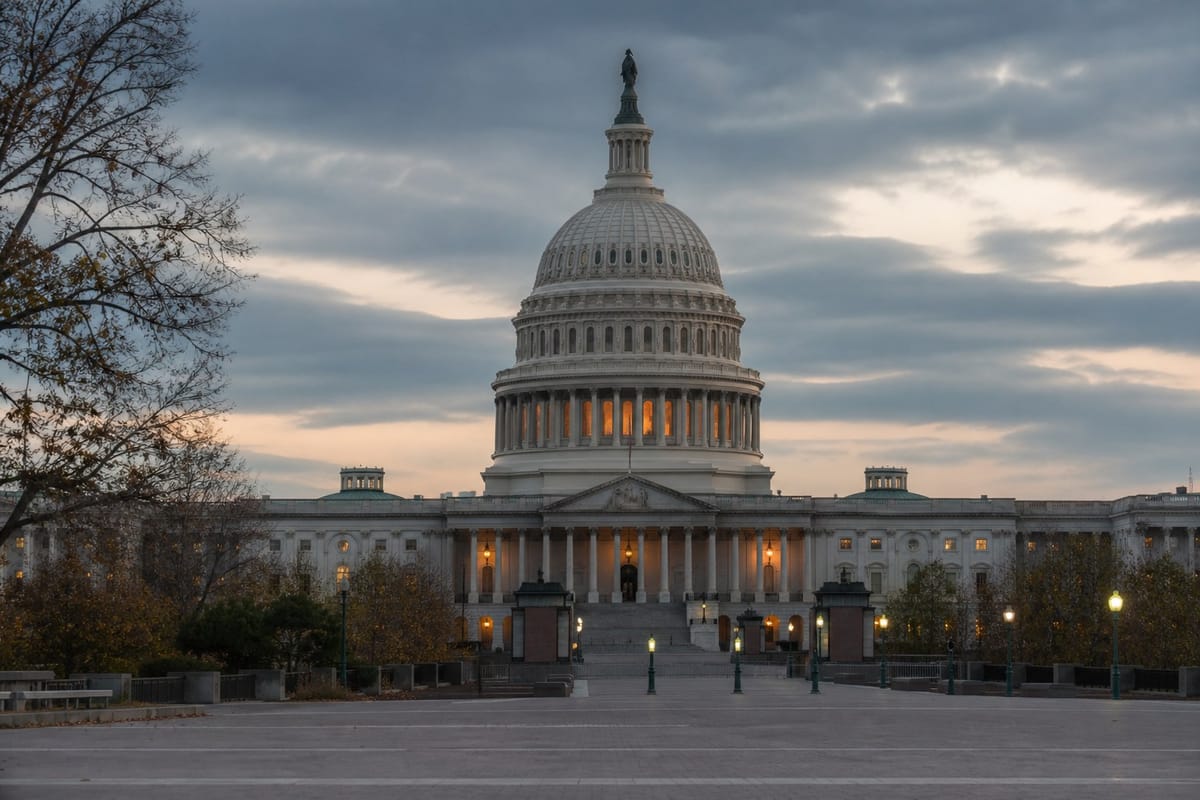
When the Pentagon laid out its fiscal 2027 budget in the spring, the $1.15 trillion base request was only part of the plan. Another $350 billion, close to a quarter of the total national defense ask, was to arrive through a third reconciliation bill, structured as one-time mandatory spending that would skip the annual appropriations fight altogether. That second book of money is now the least certain part of the budget, and the Senate is rewriting the plan around its absence.
On Nov. 16, the Senate Appropriations Committee's defense subcommittee released its fiscal 2027 defense bill, nearly $1.1 trillion in discretionary funding for the Department of Defense and the U.S. Intelligence Community, with the DoD share at $1.072 trillion. Of the $350 billion the administration wanted through reconciliation, the bill salvages close to $69 billion. The rest is waiting on a political process that is showing every sign of running out of road.
Golden Dome, Drones and Jets Get Repriced
The clearest evidence is line by line. Golden Dome, the missile defense architecture the administration requested at $17.5 billion for fiscal 2027, was supposed to draw $17.1 billion of that from reconciliation; the Senate bill provides $9.4 billion instead. The Pentagon's new autonomous warfare group known as DAWG, the successor to Replicator, fared worse: the $54.6 billion request carried just $1 billion in the base budget, and the bill funds it at $3 billion.
The F-35 buy tells the same story. The administration counted on reconciliation to fund 53 jets alongside the 32 in its base request; the Senate bill adds roughly $4.1 billion to buy 25 more, split among 15 F-35Cs ($2.4 billion), 5 F-35Bs ($1 billion) and 5 F-35As ($704 million).
Where the Base Bill Absorbs the Overlap
The committee did more than trim. The bill provides $47.2 billion for munitions, including $40.6 billion to fund new multiyear procurement contracts for AMRAAM, GMLRS, PAC-3 MSE, PrSM Increment 1, SM-3 Block 1B, SM-3 Block IIA, SM-6, THAAD and Tomahawk, and its summary says the committee is deliberately moving multiyear contracts that should be funded annually into the base bill. Shipbuilding gets $42 billion, including $1.9 billion in additional funding for a second DDG 51 destroyer.
Sen. Mitch McConnell, who chairs the defense subcommittee and is retiring at the end of this Congress, said the shift is intentional. "Deterring these threats is a project bigger than one-time surges of cash," he said in a statement, adding that tomorrow's joint force "will need consistent investment, year after year." Where the department assumed the annual process would eventually have to carry part of the load, the Senate started carrying it now.
Sixteen Days and an Open Question
The politics explain the rest of the gap. Senate Republicans put off a decision on a defense-only reconciliation package on Wednesday after closed-door meetings; Majority Leader John Thune called it an open question whether Republicans have the votes and said they want to explore whether Democrats will help fund defense. Budget Chairman Ron Johnson said the Senate probably will not move forward this week but that reconciliation is not off the table at all.
In the House, the objection is starker: Republicans there say the $350 billion package is dead on arrival without offsets, and outgoing Budget Chairman Jodey Arrington warned, "My concern is we squander these very few days we have left on something that won't get out of the House." Rep. Andrew Clyde put it more briefly: "It needs to have offsets."
Time is the tighter constraint. House Republicans have 16 days left in session before Democrats take control in January, and the chamber left Thursday for Thanksgiving recess. Even the House's own fiscal 2027 budget resolution, passed in July, would put only $60 billion of reconciliation money toward defense, a fraction of what the Pentagon's plan assumes. Meanwhile the House has not passed its defense appropriations bill, the Senate committee has not voted on its version, and its chair has not announced when it will. The current continuing resolution expires Dec. 11.
What Contractors Were Counting On
Pentagon comptroller Jules Hurst said in September that the department would work with Congress to fold reconciliation priorities into discretionary appropriations if lawmakers did not pass the full request. The Senate bill is that contingency, executed at a fraction of the scale the request assumed: a rebuilt Golden Dome line, a slimmed drone group, a shorter F-35 buy and a munitions account absorbing multiyear contracts it was never designed to carry alone.
For the contractors booked against that surge, the arithmetic is now set by the regular bill rather than by the reconciliation plan. The $1.07 trillion base appropriation is real money; the remaining hundreds of billions are a request that the Senate has not scheduled a vote on and the House has already pronounced unpassable without offsets.