
Why the Pentagon Finally Admitted It Fielded Weapons in Orbit
Air Force Secretary Troy Meink revealed the Space Force operates on-orbit space control weapons as the service pushes a $71.2 billion budget against a frozen continuing resolution.

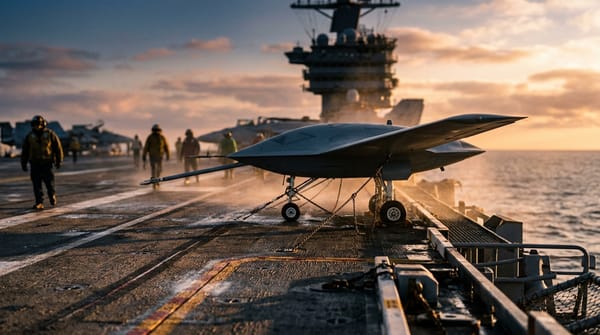
The Navy has put Boeing's MQ-25A Stingray into low-rate production, a $562 million Lot 1 start that leaves Super Hornets doing tanker duty until 2029 to extend the carrier air wing's strike radius.
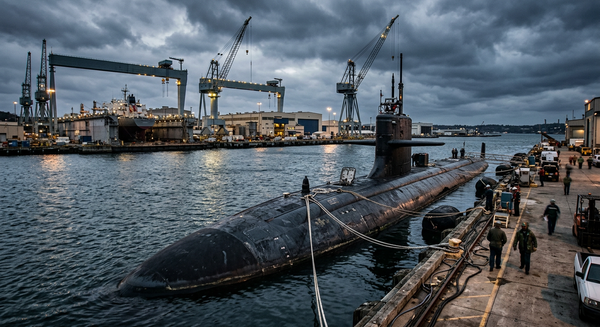
A new GAO report finds the Navy will spend $3.1 billion keeping 15 retired attack submarines manned and fueled because public and private dry docks have no room to defuel them. The same yards already burned $3.4 billion on active boats that sat idle for a decade.
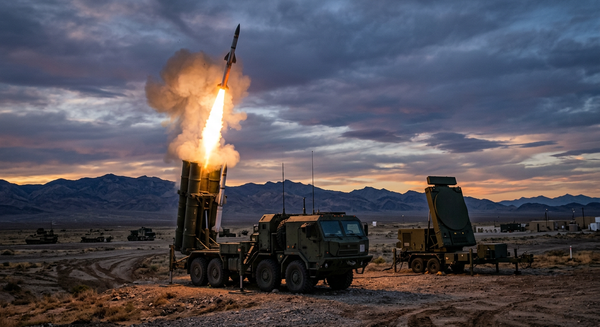
The Army selected Lockheed Martin and a Boeing-Anduril team for Phase 2 of its Second Interceptor competition, aiming to fill a critical mid-tier missile gap and preserve strategic Patriot stockpiles.
Pentagon contracts, primes, and the stocks that move with them.
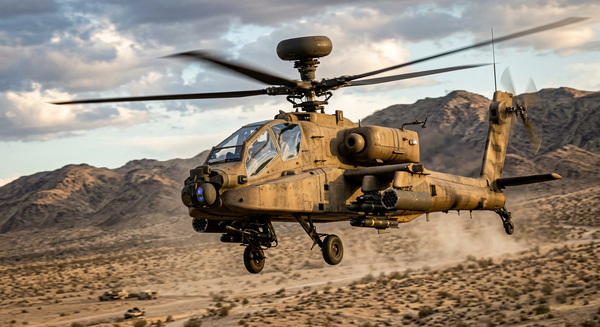
The U.S. Army awarded Northrop Grumman a $4.84 billion contract for Common Infrared Countermeasure systems through 2035, cementing a sole-source transition from pyrotechnic flares to continuous laser jamming across its combat helicopter fleet.
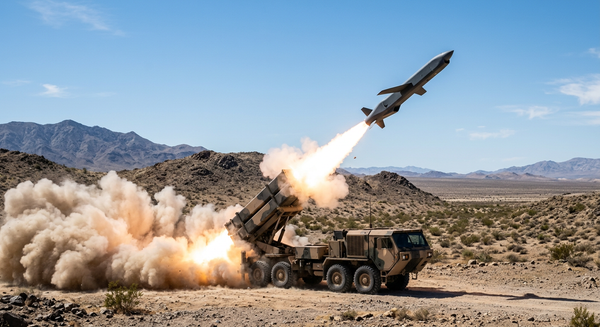
Covenant emerged from stealth with Anthem, a mid-six-figure cruise missile designed for serial production as Tomahawk and JASSM inventories have been burned down in Iran. The company is trying to fill the gap between affordable mass and strategic range before allied magazines define deterrence.
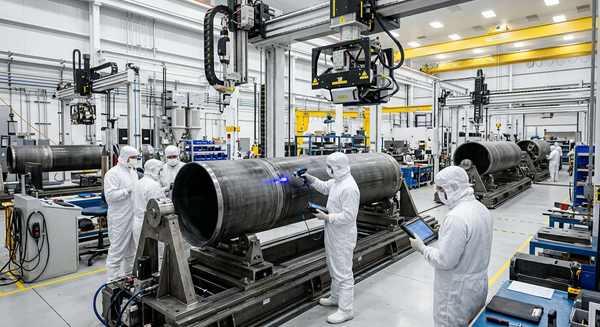
Lockheed Martin and L3Harris have locked in a seven-year propulsion deal to triple PAC-3 MSE interceptor output, pairing multiyear capital certainty with dual-source manufacturing to overcome a chronic missile bottleneck.
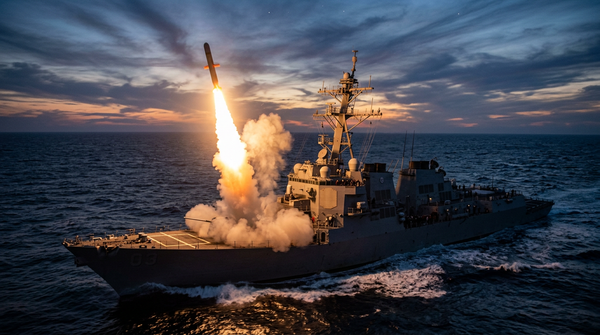
The Pentagon wants 1,000 Tomahawks a year to replenish spent stockpiles, but prime contractor Raytheon cannot scale output until General Dynamics delivers more titanium warhead cases from Alabama.
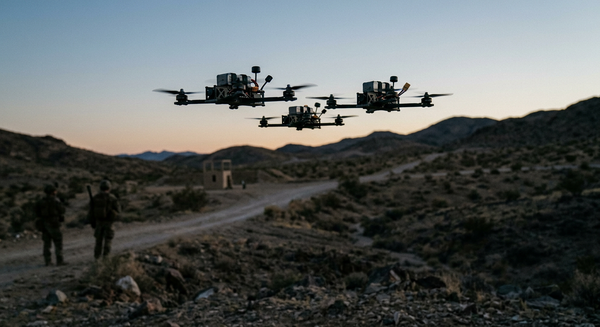
Israeli-founded Aitan is coming out of stealth with a $41 million round and a blunt argument: attritable drones are commodities, and the sovereign asset is the software that flies them together.
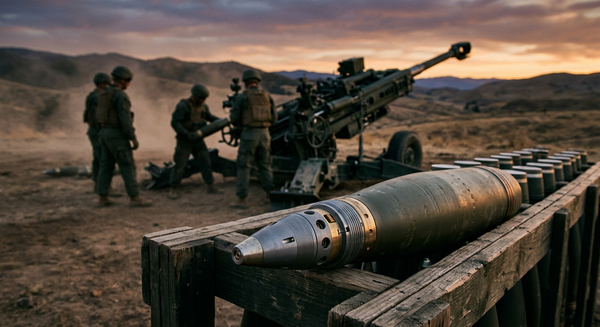
The Army locked a five-year, $862.8 million IDIQ for Northrop Grumman's M1156 Precision Guidance Kit, the $15,000 screw-in fuze that turns stock 155mm shells into GPS-corrected rounds. The next variants are built for jammed battlefields, and the line already belongs to one producer.
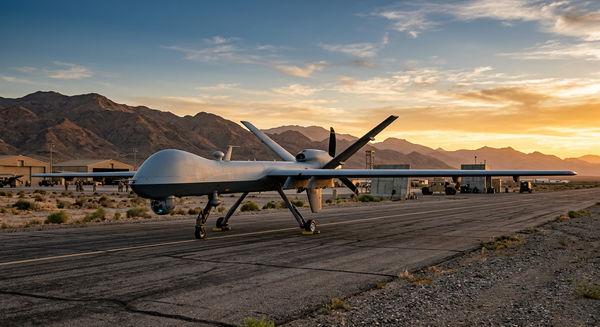
After losing at least 45 MQ-9 Reapers in 2026 combat operations, the Air Force is accelerating its Massed Modular Aircraft program to field low-cost attritable drones within three years.
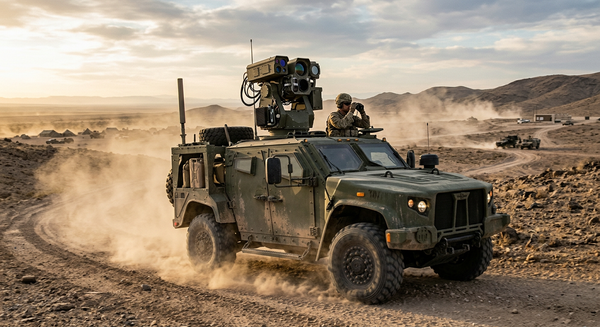
The U.S. Army awarded AeroVironment a $464.8 million agreement for the Enduring High Energy Laser program, marking the first series-production contract for a laser weapon system in U.S. military history.
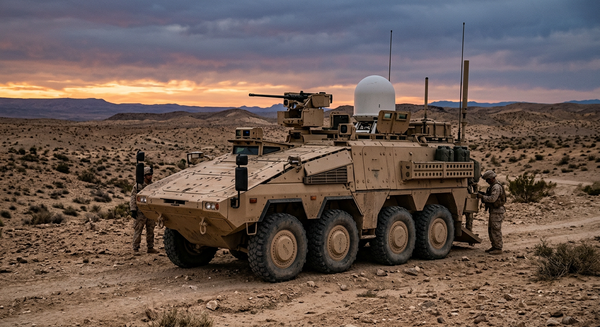
The U.S. Army awarded Palantir and Anduril a combined $192 million in delivery orders for the TITAN mobile intelligence ground station, marking a pivotal transition from experimental prototypes to fielded production hardware.
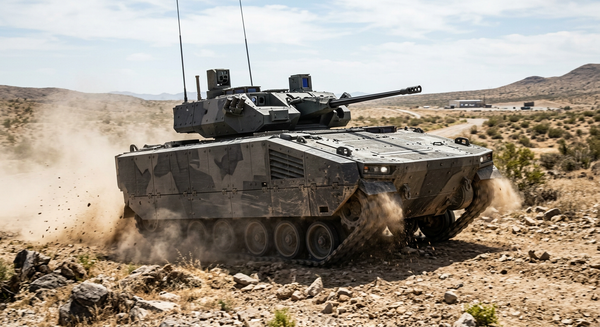
General Dynamics Land Systems delivered its first physical XM30 Wolf prototype to Aberdeen Proving Ground, Maryland in late August 2026. The milestone advances a head-to-head $45 billion competition against American Rheinmetall to replace the M2 Bradley.
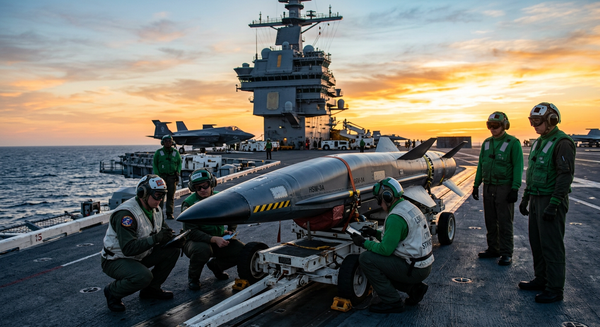
The U.S. Navy awarded Castelion an $89,997,162 firm-fixed-price order to take Blackbeard to Early Operational Capability. The buy tests whether a Mach 5 strike weapon can be produced cheaply enough for the fleet to field it in numbers.
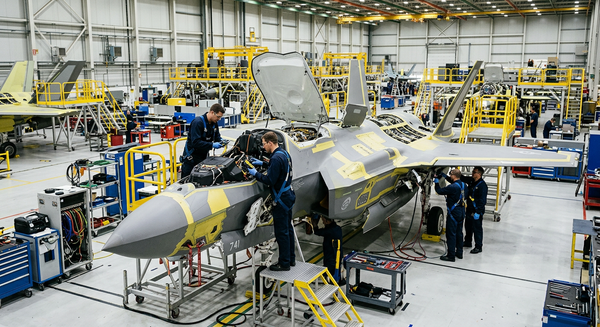
The Pentagon set an eye-popping $131.2 billion ceiling on Boeing's F-15 line through 2037, even as delivery delays officially breached the fighter's operational baseline and pushed full readiness to 2028.