Covenant Emerges From Stealth With $250 Million to Mass-Produce Tomahawk-Class Cruise Missiles
Covenant emerged from stealth with Anthem, a mid-six-figure cruise missile designed for serial production as Tomahawk and JASSM inventories have been burned down in Iran. The company is trying to fill the gap between affordable mass and strategic range before allied magazines define deterrence.
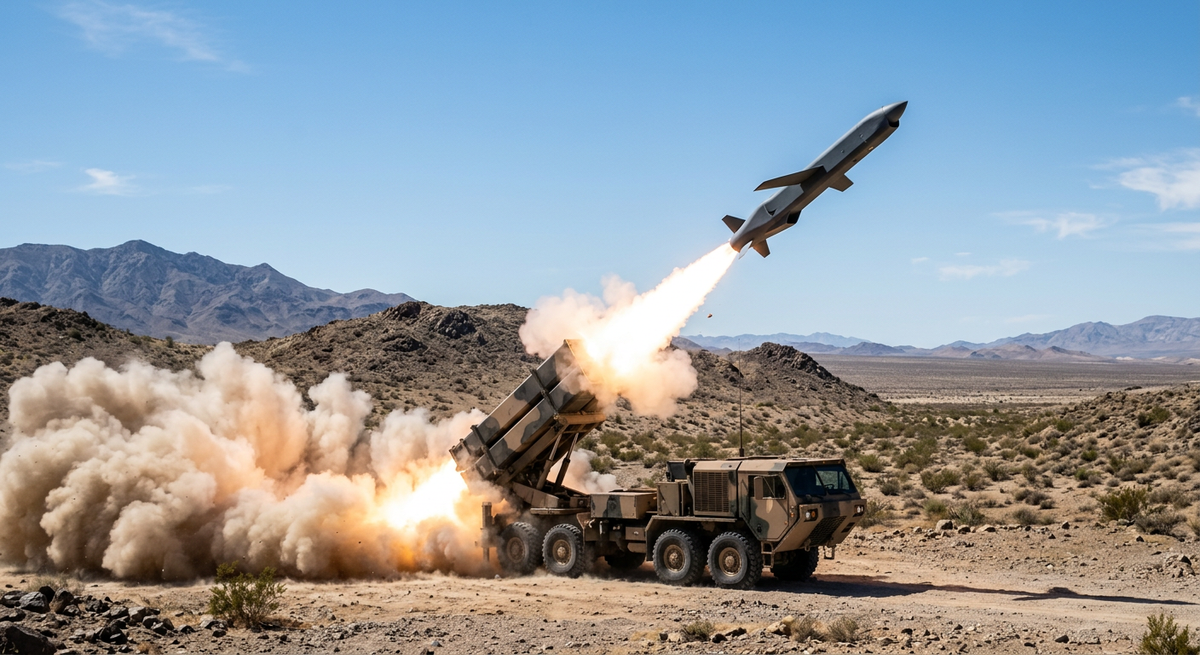
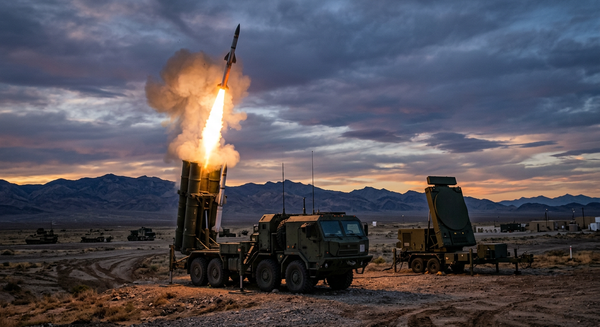
Covenant, a Washington, D.C. defense technology startup that operated in near-total secrecy since 2024, emerged from stealth on Wednesday, September 9, 2026, with a cruise missile built for a magazine problem the Pentagon can no longer treat as theoretical. Western deep-strike stocks are running down faster than factories can refill them. Covenant's answer is Anthem: a long-range, heavy-payload round designed to be produced in the thousands, not the boutique lots that have defined allied cruise missiles for a generation.
CSIS estimates that more than 1,000 Tomahawks and 1,100 JASSMs have been expended in the war in Iran. The United States has historically procured fewer than 200 Tomahawks a year, with years-long lead times, and RTX's missile can cost up to about $5 million each. Anthem is priced in the "mid-six figures," carries more than 200 kilograms (441 pounds), and flies 1,000 to 2,000 kilometers, or about 620 to 1,240 miles.
Abby Denburg, Covenant's president and chief growth officer, put the product in that hole. "There is a gap in the middle of that for affordable mass and strategic range, and that's the gap that Anthem was filling," she said. CEO Michael Kaufman was blunter. "When you look at our adversaries, you see thousands of hardened targets, beyond the range of current capabilities. Anthem was built to credibly hold those targets at risk in a prolonged conflict. If our stockpiles run thin, so does our deterrence," he told Calcalist.
A missile sized for prolonged war
Kaufman, an American-Israeli entrepreneur who worked at the Thiel Foundation before moving to Israel to build the company, co-founded Covenant in 2024 with CTO Ofir Dayan. Headcount exceeds 200. The firm announced more than $250 million raised across three rounds, with its latest valuation estimated above $1 billion. Backers include Andreessen Horowitz through its American Dynamism fund, led by general partner David Ulevitch; Peter Thiel's Founders Fund; Lux Capital; 8VC; Lightspeed Venture Partners; and Israeli venture firm Aleph, founded by Michael Eisenberg.
The engineering is the challenge to the primes. Anthem is built predominantly from commercial off-the-shelf parts, with redundant allied supply chains in the United States, Germany, and Israel so a single vendor cannot freeze the line. Proprietary mission-planning and command-and-control software is meant to synchronize high-density salvos against thousands of hardened aimpoints. Tomahawk remains the gold-standard naval land-attack round, and JASSM remains the Air Force's standoff workhorse. Neither was designed to be spent by the thousand in a months-long campaign and then replenished on a commercial cadence.
Orders, tests, and three factories
Covenant has booked about $150 million in qualification, research and development, and production orders. It is operating under an Other Transaction Agreement with the U.S. Army for accelerated testing and qualification, and it completed a live-fire demonstration at Project Convergence Capstone 6 in summer 2026. It also signed an approximately $70 million cost-share agreement with the U.S. Navy's Rapid Capabilities Office to adapt Anthem into a Maritime Anthem variant with Defense Exportability Features, and it secured a production contract in Germany. More than 200 test flights of the full-scale article have flown since the maiden flight in August 2025.
The industrial map landed the same day as the unveiling. Covenant opened a 105,000-square-foot factory in Dallas, Texas, on September 9, 2026. Serial production is scheduled for the first quarter of 2027, with a first-year target of 1,000 Anthems and a path toward 5,000 units a year. The company already runs a 110,000-square-foot plant in Saxony, Germany, planned for 1,000 units annually, and a 32,000-square-foot research, development, and manufacturing site in Northern Israel, according to reporting from Calcalist. Three plants in three allied countries are the COTS argument in steel: if one line is hit, sanctioned, or bottlenecked, the others still exist.
What mass changes about deterrence
Deep strike has always been sold as precision. The Iran campaign turned it into attrition. If the CSIS figures hold, the West spent years of planned Tomahawk and JASSM procurement in a single theater, against thousands of remaining hardened targets beyond cheaper, shorter-range munitions. Kaufman's line is the operational case: thin stockpiles are thin deterrence.
Covenant still has to prove the hard part. Mid-six-figure unit cost only matters if the missile hits, survives the threat ring, and comes off the Dallas and Saxony lines at the rates on the slide. An Army OTA, a Navy Rapid Capabilities Office adaptation, a German production contract, and 200-plus test flights are a serious start, not a 5,000-round year. Allied deep strike is no longer only whether RTX or Lockheed Martin can stretch an existing missile. It is also whether a stealth-era startup can industrialize a 1,000-to-2,000-kilometer round fast enough to restock magazines before the next prolonged fight. Anthem is Covenant's bid that mass, not another exquisite round, is the missing half of long-range strike.