What Replaces the Patriot? The Army Named Lockheed to Find Out
The Army selected Lockheed Martin for Future Interceptor, a $1.08 billion PAC-3 Edge program that includes $423 million of company cash as Patriot stockpiles stay tight.
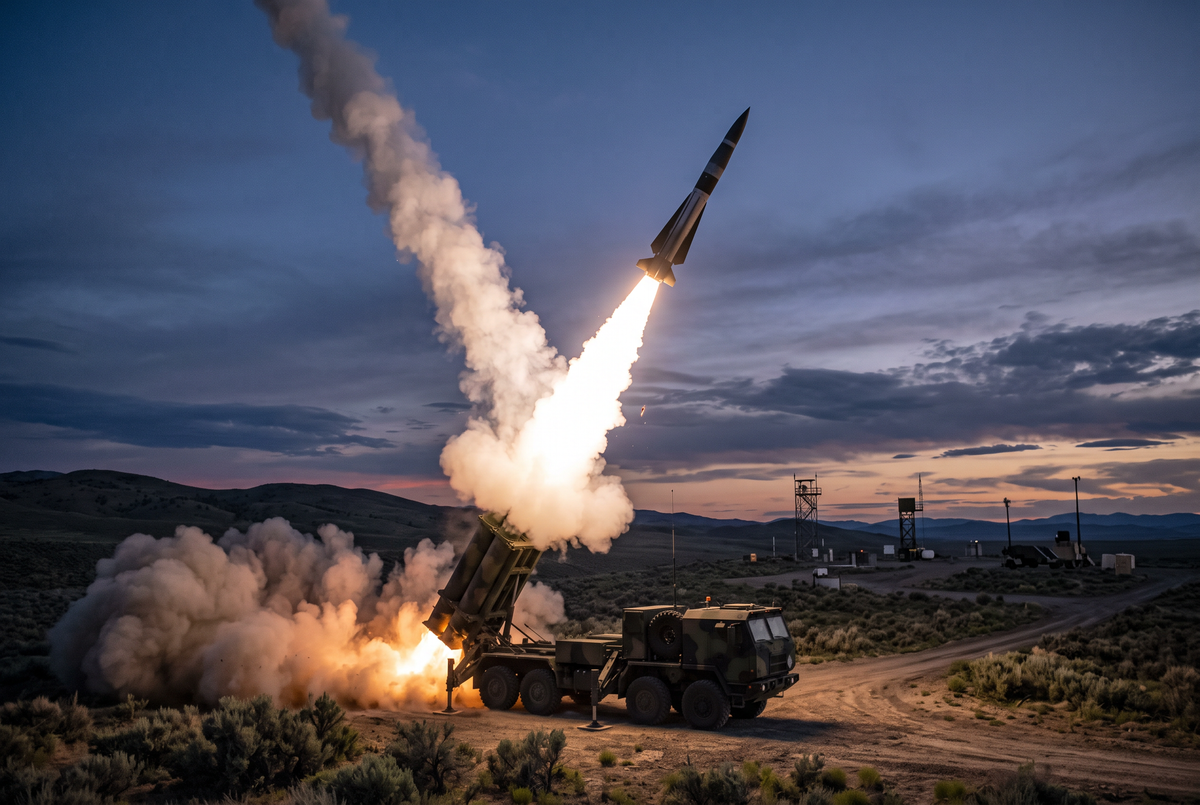
The U.S. Army has named Lockheed Martin to develop the interceptor meant to follow Patriot. On October 29, 2026, the service announced an Other Transaction Agreement for its Future Interceptor program, a next-generation missile intended to improve engagement range, altitude, velocity, and maneuverability and to complement the Army's Integrated Air and Missile Defense portfolio.
The estimated project value is $1.08 billion. The government is contributing $660.4 million. Lockheed Martin is committing $423 million of its own in cost sharing.
That split is the story as much as the hardware. Patriot's PAC-3 family remains the Army's primary lower-tier defense against aircraft, cruise missiles, and ballistic threats, and the inventory is under strain from heavy use. The service wants a higher, faster, more maneuverable successor, and it is pairing a large development award with a large company check to get there.
A successor that still fits today's battery
Lockheed's offering is PAC-3 Edge, which the company debuted on October 9, 2026. The missile is designed to counter air, missile, and hypersonic threats at higher altitudes and longer ranges. It is built to integrate with the Integrated Battle Command System, the M903 launcher, containerized launchers, and HIMARS Flex. A new interceptor that still rides the launchers and command system already in the field is easier to absorb than a clean-sheet battery.
PAC-3 Edge uses a Lockheed-built seeker made at the company's Strigo Product Center, into which Lockheed says it invested $250 million, and a multi-pulse solid rocket motor designed by Northrop Grumman, plus upgraded control systems. Tim Cahill, president of Lockheed's Missiles and Fire Control business, describes the weapon as building on combat-proven PAC-3 MSE technology. Higher altitude, longer range, and more maneuverability all depend on the seeker and the motor outperforming the round already in production.
Lockheed plans to begin testing PAC-3 Edge in 2027, with deployment targeted for 2031. That calendar leaves the Army firing today's PAC-3 MSE for the rest of this decade.
The company check behind the franchise
Cahill has said Lockheed intends to invest hundreds of millions of dollars of its own cash in the missile, on top of additional investment in its seeker and solid rocket motor, and that around $800 million is planned into the seeker in total. The $423 million cost-sharing line in the Future Interceptor agreement is the piece visible in the Army's award. The seeker figure is the larger claim about who is funding the next Patriot.
The PAC-3 Edge will be produced on Lockheed's existing PAC-3 line in Camden, Arkansas. Lockheed is ramping PAC-3 MSE production under a Pentagon agreement to triple interceptor output over seven years, alongside a new automated production facility. Putting Edge on that line is an argument that the successor can inherit the factory the Pentagon is already paying to enlarge.
The Army canceled an earlier Patriot successor effort, the Lower-Tier Future Interceptor program, in 2024, in which Raytheon and Lockheed had competed. The service later signaled it would revive a next-generation interceptor effort. The October award is that revival, structured as a single Other Transaction Agreement with the company that already builds PAC-3.
Stockpiles are driving the calendar
Interceptor missiles are in heavy use and limited supply. In July 2026 the Pentagon announced deals with L3Harris and Lockheed to expand production of key PAC-3 and THAAD components. The same week as the Future Interceptor award, the Pentagon named Poland for a new PAC-3 maintenance facility estimated around $250 million. The United States is trying to make more missiles and keep more of the ones it already has in service, at the same time it is starting a successor.
Acting Army Chief of Staff Gen. Christopher LaNeve framed the program as part of a strategy to pursue "a mix of exquisite and low-cost munitions." PAC-3 Edge is the exquisite side of that mix, a higher-end round meant to stretch the Patriot family against faster and higher threats. Until cheaper interceptors arrive in volume, the Army will keep buying the expensive ones it already trusts.
Testing in 2027 and a 2031 fielding target mean several more years of PAC-3 MSE consumption, Camden output, and overseas repair. The Army is paying to keep the Patriot franchise relevant. Lockheed is underwriting its own claim to it.