How Much of RTX's Q3 Earnings Growth Came From Tariff Recoveries?
RTX lifted its full-year 2026 guidance after an 11% sales quarter. IEEPA tariff recoveries supplied $0.25 of a $0.56 adjusted EPS gain, even as operating cash flow fell 38% year over year.
RTX reported third-quarter 2026 sales of $24,965 million for the period ended September 30, up 11% year over year and up 12% organically. Adjusted earnings per share came in at $2.26, 33% above the prior year's $1.70. The company then lifted its full-year 2026 outlook for adjusted sales, organic growth, adjusted EPS, and free cash flow.
That raise is real and demand-driven. Company backlog reached a record $340 billion, split between $176 billion commercial and $164 billion defense. More than $81 billion of new commercial and defense awards landed in the quarter, among them Tomahawk and AMRAAM multi-year undefinitized production contracts. CEO Chris Calio attributed the quarter to strong execution and operational focus and said demand for RTX products remains robust.
A measurable slice of the earnings step-up still came from cost recovery under the International Emergency Economic Powers Act, the tariff authority. Of the $0.56 increase in adjusted EPS, $0.25 came from IEEPA recoveries, according to the same release.
How much of the EPS gain was IEEPA
GAAP EPS was $1.89, which included $0.26 of acquisition accounting adjustments and $0.11 of restructuring and other net significant and non-recurring items. Adjusted net income of $3,091 million rose 34%, driven by $1.1 billion of adjusted segment operating profit growth across all three segments, including $0.4 billion of IEEPA recovery, and was partially offset by higher taxes and lower pension income.
Collins Aerospace posted sales of $8,382 million, up 10%, or 12% organically excluding divestitures. Adjusted operating profit of $1,788 million rose 50% and included roughly $250 million of IEEPA recovery. Commercial original-equipment sales were up 23%, commercial aftermarket up 9%, and defense up 7%. Pratt & Whitney sales of $9,231 million rose 10%, with military up 2%, commercial aftermarket up 21%, and commercial original equipment down 5%. Reported operating profit of $608 million fell 19% and included a $363 million charge tied to a customer bankruptcy. Adjusted operating profit of $968 million rose 29% and included roughly $160 million of IEEPA recovery.
Those two recoveries combine to about $410 million of segment profit at Collins and Pratt, the bulk of the $0.4 billion IEEPA contribution the company cited at the adjusted net-income level. Strip that recovery out of the $0.56 adjusted EPS increase and the remaining $0.31 still implies a solid operating quarter. The IEEPA dollars are not fictional; they are recoveries of tariff costs. They are also not the same thing as missile volume that repeats on next year's schedule.
Missiles and air defense carried Raytheon
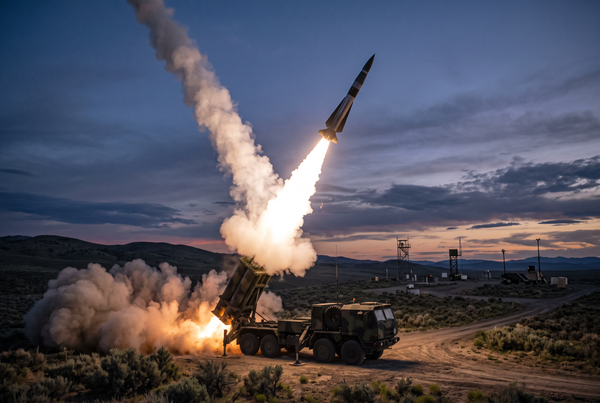
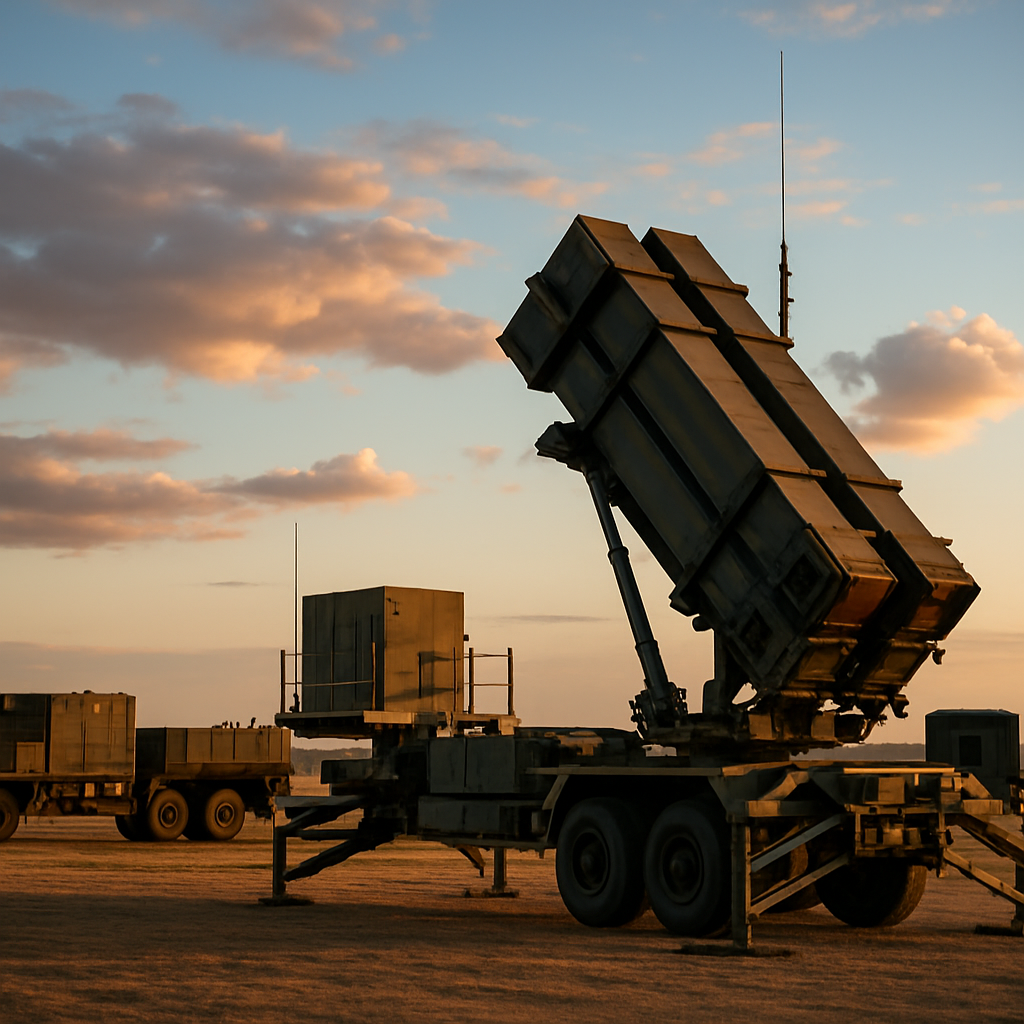
The defense segment is the cleaner read on durability. Raytheon sales of $8,031 million rose 14%, driven by higher volume on naval programs and on land and air defense systems, including Patriot, Standard Missile, and Tomahawk. Adjusted operating profit of $1,134 million rose 32% at a 14.1% return on sales. That productivity included roughly $85 million of benefits from an international contract modification and a favorable adjustment related to an offset obligation.
That mix, Patriot batteries, Standard Missile, Tomahawk, plus the Tomahawk and AMRAAM multi-year undefinitized production contracts awarded in the quarter, is the part of the story that does not depend on tariff reimbursement. RTX is not a pure munitions company: the commercial engine aftermarket at Pratt and the original-equipment rebound at Collins still matter. The defense book is what makes the guidance raise look like more than a one-quarter tariff artifact.
Cash flow moved the other way
Operating cash flow of $2.9 billion, including roughly $0.3 billion of IEEPA recovery, was down 38% from $4,639 million a year earlier. Free cash flow of $2.1 billion was down 47% from $4,025 million. Capital expenditures were $0.7 billion. That year-over-year drop is the honest offset to a 33% adjusted EPS gain and a 34% jump in adjusted net income.
Management still raised the full-year 2026 outlook. Adjusted sales are now $97.0-$97.5 billion, up from $95.0-$96.0 billion. Organic sales growth is now 10-11%, up from 8-9%. Adjusted EPS is now $7.65-$7.75, up from $7.10-$7.25. Free cash flow is now $9.0-$9.2 billion, up from $8.50-$8.75 billion.
The quarter splits into two ledgers. Raytheon volume on Patriot, Standard Missile, and Tomahawk, plus multi-year munitions awards, is the durable demand supporting the higher full-year range. IEEPA recoveries of $0.25 in adjusted EPS, roughly $410 million of Collins and Pratt segment profit, and about $0.3 billion of operating cash flow are a real, disclosed, and finite boost. Both can be true at once, and the cash-flow drop is the reminder that this quarter earnings growth and cash conversion did not travel together.