How the Navy Is Using a 2019 Missile Contract to Unclog Tomahawk Production
The Pentagon wants 1,000 Tomahawks a year to replenish spent stockpiles, but prime contractor Raytheon cannot scale output until General Dynamics delivers more titanium warhead cases from Alabama.
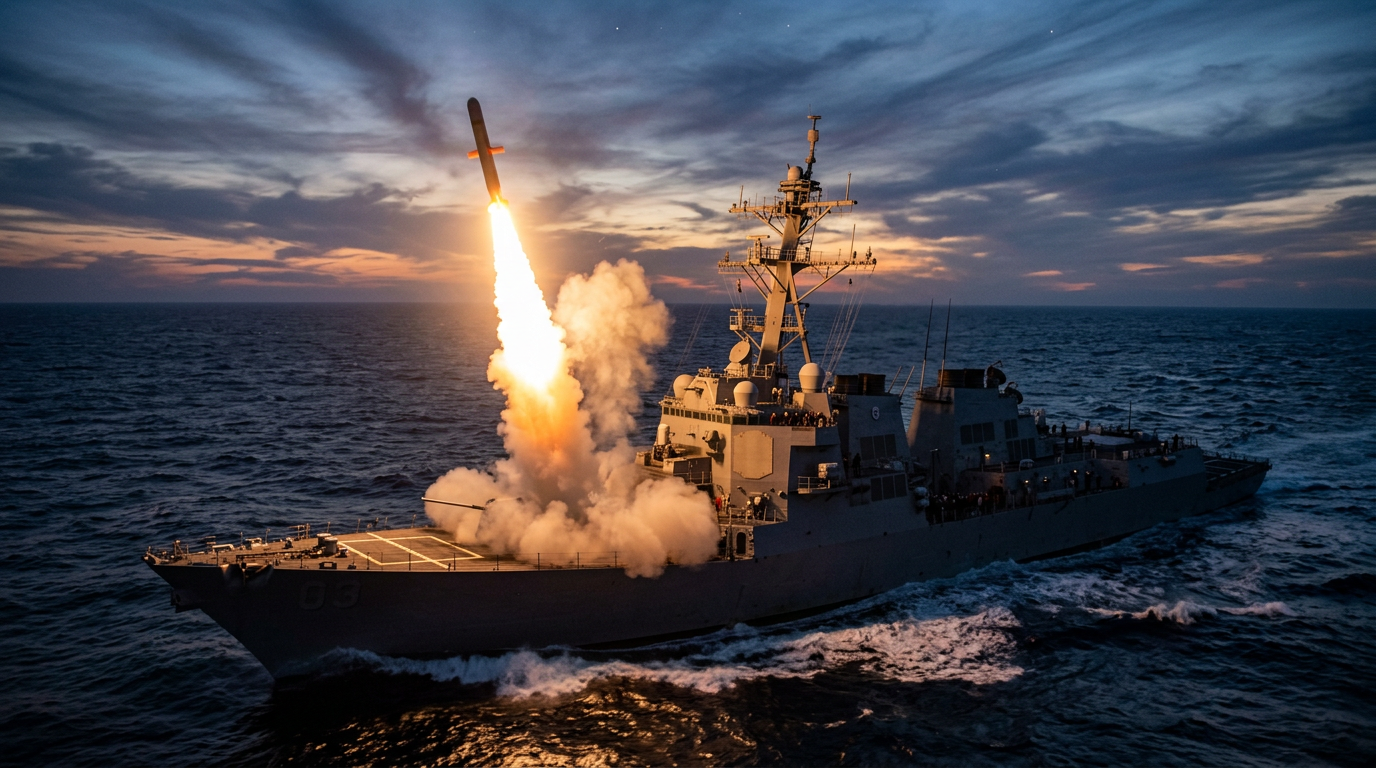
The U.S. Navy is stretching a 2019 missile contract to keep Tomahawk production from stalling at the warhead. On Sept. 2, 2026, it issued a sole-source modification under contract N6893619C0039, a vehicle originally written for the Stand-Off Land Attack Missile-Expanded Response, or SLAM-ER. The notice tasks General Dynamics Ordnance and Tactical Systems with manufacturing and delivering warhead housings for the U/RGM-109E Tactical Tomahawk within nine months. First article inspections are required no later than the first quarter of calendar year 2027.
The contracting file is explicit about the hurry. The notice states that the accelerated schedule is driven by "immediate demand for increased missile production for the United States Navy, as a result of current international conflict." Using the existing SLAM-ER contract avoids the multi-year lead times required to award a new contract or qualify a secondary warhead supplier. Raytheon still assembles the missile. GD-OTS has to deliver the titanium case.
The same vehicle already funds a larger Alabama lot. On Aug. 20, 2026, GD-OTS received a $41.57 million modification, P00016, to produce 559 WDU-36/B warhead cases and 559 fuzewells for Tactical Tomahawk missiles. Work is performed 99 percent in Anniston, Alabama, running through April 2028 and managed by Naval Air Warfare Center Weapons Division China Lake. The Sept. 2 tasking adds a nine-month delivery clock for housings on top of that 2028 lot.
The 1,000-missile target still runs through Alabama
On Aug. 17, 2026, RTX subsidiary Raytheon was awarded an umbrella $22.9 billion, seven-year multiyear contract by the U.S. Navy under the Department of War's "Arsenal of Freedom" initiative. The contract aims to ramp annual Tomahawk production to more than 1,000 missiles per year, up from pre-2026 U.S. procurement rates of roughly 60 missiles per year, over a 15-fold increase. In the first half of 2026, RTX delivered three times more Tomahawks than in the first half of 2025.
Acting Secretary of the Navy Hung Cao and Under Secretary of War for Acquisition and Sustainment Michael P. Duffey have highlighted the push to expand munitions industrial capacity, led by the Navy's Portfolio Acquisition Executive for munitions, Van Hendrey. Those statements sit on a supply chain in which the prime does not make the warhead case. Tucson can book a seven-year umbrella. It cannot machine 559 titanium cases in Anniston.
The warhead that bought the range
The WDU-36/B is a titanium blast-fragmentation warhead weighing roughly 690 pounds (310 kilograms) and carrying 265 pounds (120 kilograms) of PBXN-107 high explosive. It replaced the heavier WDU-25/B in 1993, freeing internal space for fuel and giving the Tomahawk its roughly 1,000-mile (1,600-kilometer) range. The U/RGM-109E Tactical Tomahawk features a two-way satellite datalink that allows in-flight retargeting and loitering.
That 1993 weight cut still governs the factory. The lighter titanium housing is what makes the long-range loadout possible, and it is the component the Navy is now buying on an emergency schedule. Qualifying another shop to cut the same case would, on the Navy's own justification, take years. The first-article inspections due by early 2027 are the near-term check that Anniston can feed the prime's higher rate.
Magazines after Epic Fury
Operational expenditures in the Middle East, through Operation Epic Fury and Red Sea defense, included more than 850 Tomahawk launches and burned through deep stockpiles. Headline multiyear contracts put billions of dollars in front of primes such as Raytheon in Tucson. The speed of replenishment, and of scaling to 1,000 rounds per year, is gated by tier-2 and tier-3 manufacturers such as GD-OTS machining titanium cases in Alabama.
Tacking Tomahawk casings onto a 2019 SLAM-ER contract is an emergency procurement workaround to keep missile assembly lines fed. For Navy munitions inventories, the Raytheon umbrella sets a ceiling. The floor is the rate at which warhead housings ordered on that 2019 land-attack missile contract actually show up in Tucson.