John F. Kennedy (CVN 79) Clears Acceptance Sea Trials at Newport News
HII says CVN 79 completed acceptance sea trials on August 15 after earlier builder’s trials. Preliminary acceptance and Navy underway test and evaluation come next—without a delivery date in the release.
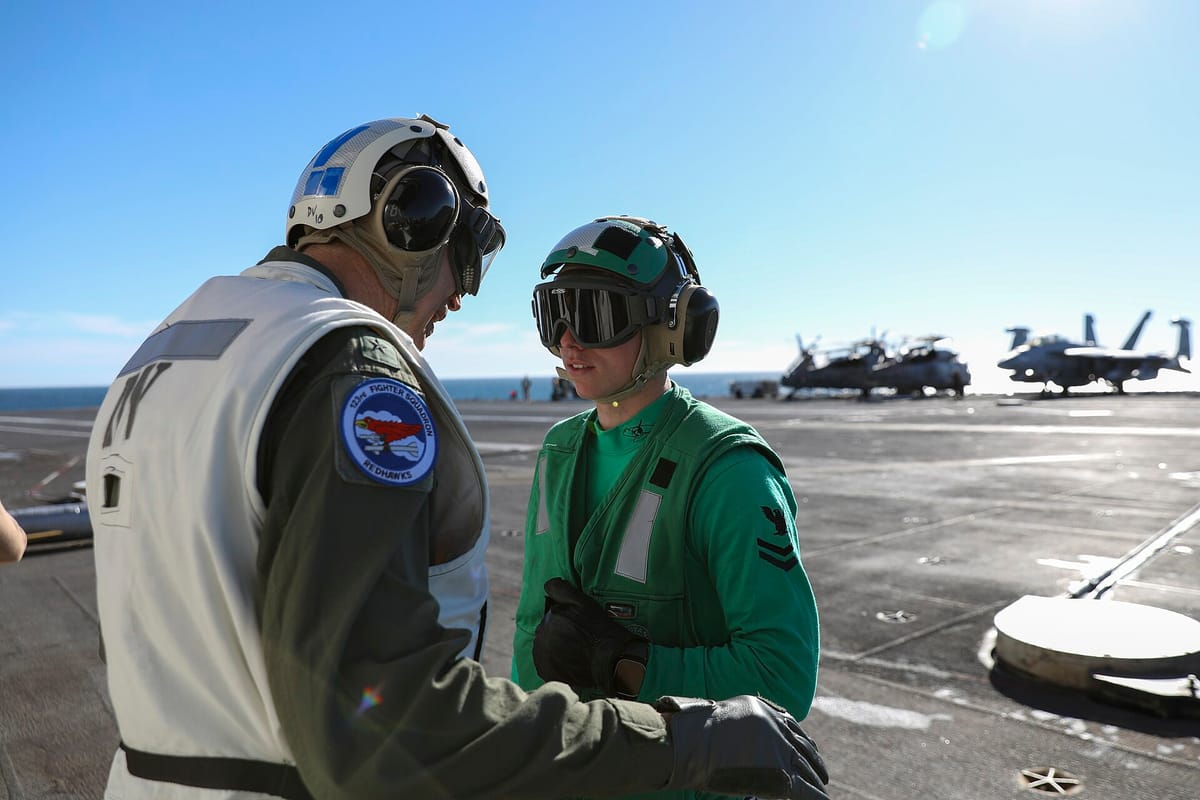
HII’s Newport News Shipbuilding division has pushed the second Gerald R. Ford-class carrier across a defining milestone. On August 15, 2026, the company announced that John F. Kennedy (CVN 79) successfully completed acceptance sea trials—an at-sea demonstration that puts the ship one measured step closer to Navy custody, without locking investors into a specific delivery or commissioning calendar.
For a sector that lives and dies by schedule risk, acceptance trials matter because they convert shipyard claims into witnessed performance. The question for HII holders is no longer whether CVN 79 can leave the pier; it is how cleanly the ship clears the remaining contractual and operational gates that sit between trials and fleet introduction. In an industrial base where a single nuclear carrier program can dominate a yard’s multi-year cash profile, public milestones of this kind are scarce—and therefore investable when they arrive with clear sequencing language.
What acceptance trials actually cleared
According to HII’s release, Newport News Shipbuilding completed acceptance sea trials after further testing and evaluation of important ship systems and components at sea. The carrier returned to the yard following that work. HII also noted that earlier in 2026, Kennedy completed builder’s sea trials—the shipyard-led precursor that typically shakes out systems before the Navy’s acceptance event, as described in the same company statement.
That ordering—builder’s trials first, acceptance trials second—is more than a technicality for equity research. Builder’s trials are the yard proving to itself that the ship can operate. Acceptance trials are the customer watching. When both are described as successful in primary disclosures, the risk that CVN 79 is stuck in an indefinite pier-side remediation loop declines, even if residual deficiencies remain undisclosed.
Derek Murphy, NNS vice president of new construction aircraft carrier programs, framed the run as a demonstration of “the quality work and commitment by our shipbuilders” and called the trials “a testament to the entire nuclear shipbuilding enterprise,” according to HII. The cast on board was as important as the checklist: Newport News shipbuilders, John F. Kennedy sailors, and Navy personnel executed testing and evaluation of ship operations together. That joint posture is the practical difference between a yard proving its own work and a customer watching systems perform under operational scrutiny.
The next gate: preliminary acceptance, then Navy T&E
HII was explicit about sequencing and, just as importantly, about what it did not claim. With acceptance trials complete, “the next step for the ship is preliminary acceptance that will enable the Navy to begin underway test and evaluation of Kennedy’s unique systems,” the company said.
That formulation should discipline investor narratives. Preliminary acceptance is a contractual and administrative threshold; Navy underway test and evaluation is an operational one. Neither is synonymous with delivery, commissioning, or first deployment. Markets that jump from “trials done” to “carrier delivered” will invent milestones HII did not publish. The unique-systems language also matters: Ford-class ships carry electromagnetic aircraft launch, advanced arresting gear, and dual-band radar architectures that have defined first-of-class risk historically. HII’s release does not claim those systems are finished articles; it claims a path for the Navy to test them underway after preliminary acceptance.
The Ford-class program has always been as much about learning curves as steel. CVN 79 is the second ship of the class, and HII’s language emphasizes continuity of highly capable nuclear-powered aircraft carrier platforms rather than a one-off engineering stunt. For valuation purposes, a clean acceptance event on the follow-on hull is evidence that first-of-class friction is being worked down—without proving that every remaining unique system will sail through Navy T&E on the first pass.
Why this matters for HII’s shipbuilding story
Aircraft carriers are multi-year cash-flow machines. Acceptance trials do not, by themselves, rewrite HII’s income statement. They do, however, reduce one category of binary schedule risk that can otherwise dominate sell-side models: the risk that an unfinished or under-demonstrated ship sits in a gray zone between construction and Navy acceptance. In a portfolio that already prices Newport News as a strategic national asset, schedule clarity is a multiple support even when near-term earnings are unchanged.
Newport News remains the sole U.S. builder of nuclear-powered aircraft carriers. That monopoly is both a moat and a concentration risk. When CVN 79 clears a public milestone, it supports the industrial narrative that underpins HII’s long-cycle backlog: that the yard can still take a Ford-class hull to sea, demonstrate systems, and hand the Navy a credible path into preliminary acceptance and subsequent testing. It also reassures allied observers and congressional overseers that the second ship is not merely a delayed clone of first-of-class struggle.
Investors should also keep the enterprise framing in view. Murphy’s reference to the entire nuclear shipbuilding enterprise and thousands of workers across the country is not just public affairs. Carrier construction is a distributed industrial product—propulsion, combat systems, and supplier tiers far beyond the Tidewater waterfront. Acceptance trials are a public stress test of that network as much as of the hull itself. For suppliers tied to CVN 79 work packages, a successful acceptance event is a leading indicator that invoiceable activity can continue through the test-and-evaluation phase rather than stalling in a disputed completion debate.
What HII did not say—and what not to invent
The August 15 announcement does not provide a delivery date, a commissioning date, or a first-deployment window. It does not quantify remaining deficiencies, if any, or attach dollar figures to post-trial work. Those omissions are themselves information. They mean any model that inserts a hard delivery month from this release alone is layering assumption on top of a carefully bounded company disclosure.
The investable takeaway is narrower and more durable. Builder’s trials happened earlier in 2026. Acceptance sea trials are now complete. Preliminary acceptance is next, after which the Navy can begin underway test and evaluation of the ship’s unique systems. That is the sequence HII put on the record—and the sequence investors should track until the next primary disclosure moves the story.
For a market that often prices defense shipbuilding on rumor and congressional atmospherics, a clean, sourced milestone from the sole carrier yard is rare clarity. CVN 79 is not yet in the fleet. It is, however, past the acceptance-trials gate that HII set out to clear, and that is enough to re-anchor the Ford-class follow-on narrative without inventing the ending.