Lockheed Is Putting $7 Billion of Its Own Money Behind the F-35. Congress Hasn't Approved the Deal.
Lockheed Martin will self-fund at least $7 billion under a 10-year F-35 production and sustainment framework with the Pentagon. The agreement still needs congressional multiyear authority and a fiscal 2027 budget that has not passed.
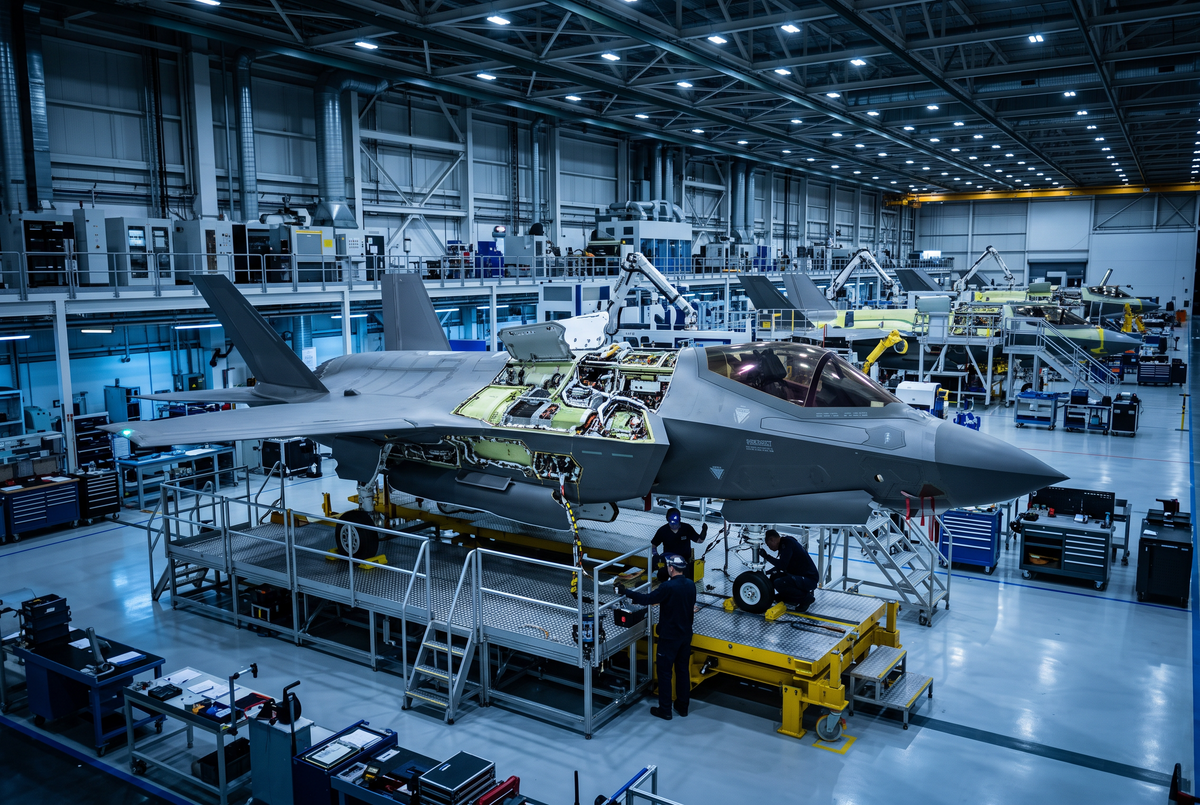
On Oct. 22, 2026, the Pentagon and Lockheed Martin finalized a 10-year framework agreement to strengthen the F-35 Lightning II Joint Strike Fighter program. The framework guarantees a minimum floor of 850 U.S. aircraft over the ten-year period. It covers production Lots 21 through 30, at a continued production rate of 156 aircraft per year, including international customer orders.
Lockheed Martin will self-fund at least $7 billion in initiatives that support the F-35 program, the company said in its own release. The framework also includes initial spare parts, 10 years of modification kits, and sustainment of the global F-35 fleet.
Those terms are not yet a contract. Execution of the agreement remains subject to congressional authorization and appropriations. If granted multiyear authority and appropriations in the coming months, the F-35 Joint Program Office and Lockheed Martin will work to finalize contract terms, pricing, and schedules through a formal contract award.
Efficiency gains stay with the contractors
The capital pledge is paired with a different profit model. Under a fixed-price-with-escalator contract, Lockheed and its suppliers will be able to retain profits from efficiency improvements they invest in, instead of having to give them back, chairman, president and CEO Jim Taiclet said on the company's Oct. 22 earnings call, as quoted in an Air & Space Forces Magazine report.
Roughly 60 percent of an F-35's content comes from suppliers, including Northrop Grumman (center fuselage) and BAE Systems (aft fuselage), the same report said. Taiclet said one of Lockheed's biggest costs comes from suppliers delivering late or at poor quality, and predicted this agreement will help correct those problems.
"With the greater certainty that comes from the U.S. government's transformative approach to F-35 production and sustainment, we can make the upfront investments needed to expand capacity, improve efficiency, and build a more resilient supply chain," Taiclet said in Lockheed's statement.
Michael Duffey, undersecretary of defense for acquisition and sustainment, described the same alignment of money and performance. "We have fundamentally changed how we stabilize the American defense industrial base to produce at speed and scale," Duffey said in the Pentagon release. "By aligning financial incentives with actual performance, we are ensuring our warfighters are equipped with the lethal capabilities they need to fight and win."
Congress has not passed the bill
Congress is currently weighing multiyear procurement authority for the F-35 and the F-15EX fighter as part of the fiscal 2027 defense policy bill, Air & Space Forces Magazine reported. Lawmakers have not yet passed a fiscal 2027 budget, leaving the agreement unfunded at the moment.
The Oct. 22 announcement is only a framework, not finalized, the same report said. Pricing, schedules, and the variant mix have not been settled.
More than 1,375 F-35s are currently fielded worldwide, and the fleet has surpassed a million flight hours, operating from 42 bases including 13 nations on home soil, Lockheed's release said. That is the fleet the 10-year sustainment piece of the framework is written to cover, alongside production Lots 21 through 30.
The stakes sit inside a construct that is still unfunded. Lockheed has committed to deploy at least $7 billion of its own capital, and the government has sketched a 10-year, 850-aircraft floor with a retained-efficiency profit model. All of it activates only if Congress grants the multiyear authority and writes the check.