Palantir and Anduril Secure $192 Million to Move Army Tactical AI into Production
The U.S. Army awarded Palantir and Anduril a combined $192 million in delivery orders for the TITAN mobile intelligence ground station, marking a pivotal transition from experimental prototypes to fielded production hardware.
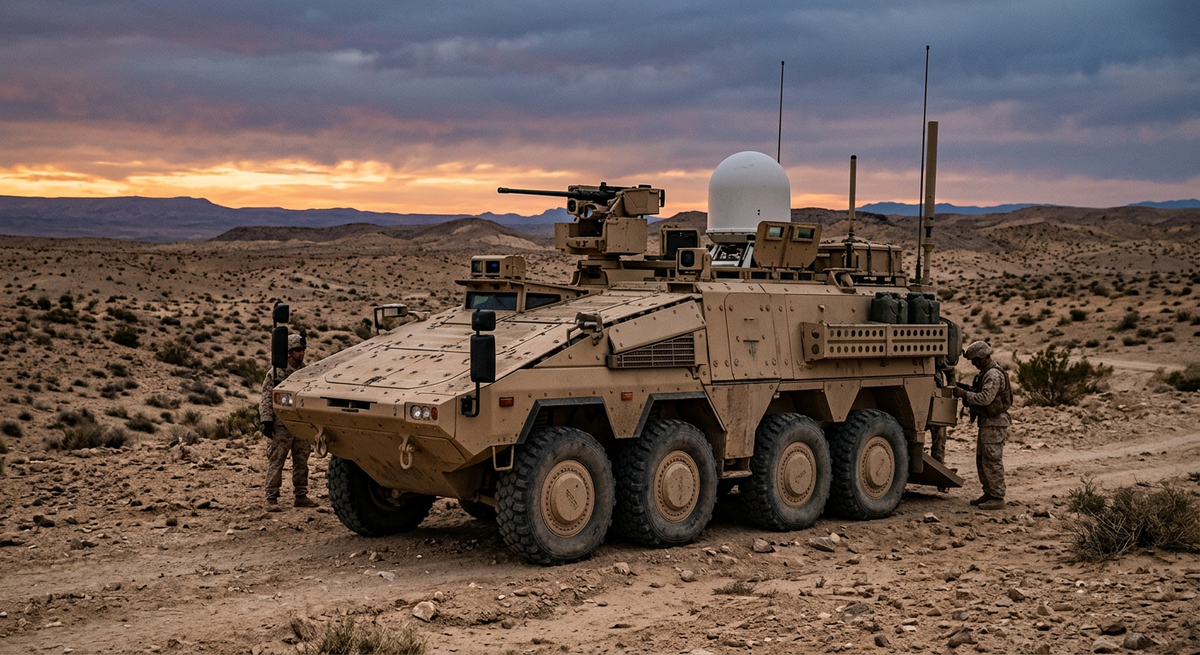
The U.S. Army Contracting Command has awarded a combined $192 million in delivery orders to transition the Tactical Intelligence Targeting Access Node, known as TITAN, from experimental prototyping into operational production. The award solidifies a major milestone in defense modernization, positioning non-traditional defense technology firms as prime contractors for core battlefield intelligence and targeting infrastructure.
Under the delivery structure, Palantir USG, a wholly owned subsidiary of Palantir Technologies (NASDAQ: PLTR), received $127 million as the prime software contractor responsible for system architecture and data integration, according to a corporate announcement. Hardware specialist Anduril Industries secured $65 million through the Army Enterprise Agreement to manufacture the physical subsystems, mission shelters, and ruggedized vehicle mounts.
The orders fund the production of eight new TITAN systems over the next 18 months, split evenly between four TITAN Advanced configurations and four TITAN Basic variants. The Army indicated that additional production lots are anticipated in fiscal year 2027 as fielding expands across operational units.
Deep Sensing and Automated Target Nominations
TITAN operates as the Army's next-generation mobile intelligence ground station, designed to ingest and correlate data streams across multiple operating domains. The platform pulls real-time feeds from space-based reconnaissance satellites, high-altitude surveillance platforms, crewed reconnaissance aircraft, aerial drones, and terrestrial sensors. Rather than routing raw data back to fixed command posts, TITAN processes and correlates these multi-source intelligence streams directly inside mobile vehicles operating alongside combat units.
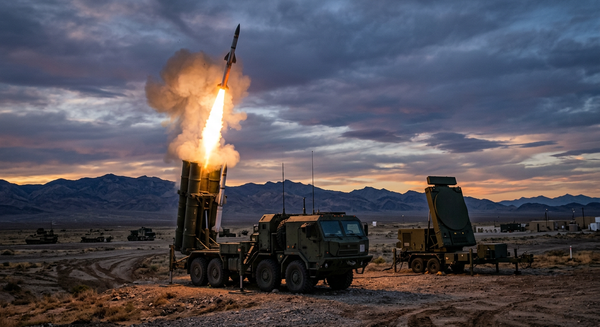
Onboard machine learning algorithms analyze dense sensor feeds to filter irrelevant noise and automatically generate high-probability target nominations. This capability drastically compresses the sensor-to-shooter timeline for long-range precision fires, including High Mobility Artillery Rocket Systems (HIMARS), the Precision Strike Missile, and emerging hypersonic weapons. Operational doctrine maintains human oversight over all kinetic actions, with targeting analysts serving as the approving authority before firing solutions are transmitted to strike batteries.
To support different tactical echelons, the system is built in two primary configurations. TITAN Advanced provides expanded computing capacity and deep-sensing fusion mounted on the Family of Medium Tactical Vehicles. TITAN Basic prioritizes mobility and rapid air transport, packaged on Joint Light Tactical Vehicles and the lighter Infantry Squad Vehicle Utility variant.
From Competitive Bake-Off to the Production Line
The transition into production follows more than four years of intensive soldier evaluations and prototype iterations. In March 2024, the Army selected Palantir for a $178.4 million Phase 3 Other Transaction Agreement to build ten initial prototypes after a competitive fly-off against defense prime RTX.
Those ten prototypes, delivered across three vehicle configurations, were subjected to rigorous field testing. During the recent Project Convergence Capstone 6 exercise in the Mojave Desert, soldiers validated TITAN's ability to fuse geospatial and signals intelligence under simulated electronic warfare conditions, linking directly into Anduril's Lattice data mesh as part of the Next Generation Command and Control architecture.
To execute the production run, Anduril will build the physical hardware, power distribution, thermal management systems, and operator workstations at its manufacturing facility in Costa Mesa, California, the company confirmed. The broader industrial team supporting Palantir includes traditional defense contractors and specialist suppliers, such as L3Harris Technologies, Sierra Nevada Corporation, Strategic Technology Consulting, and World Wide Technology.
A Milestone for Defense Tech Primes
Beyond the immediate capability delivered to field artillery and intelligence units, the TITAN production award carries broad implications for defense procurement. For years, non-traditional defense tech entrants operated primarily on research, development, and rapid prototyping contracts. Crossing into recurring, multi-million-dollar production delivery orders cements Palantir and Anduril as primary system integrators capable of displacing legacy defense primes on major Programs of Record.
With eight production units entering the fleet and follow-on procurements planned for fiscal 2027, the Army is establishing a modular, software-defined baseline for tactical fires that can be upgraded continuously as new machine learning models and sensor payloads mature.