The Air Force's Nearly-Canceled Hypersonic Missile Just Won a $694 Million Production Order
Three years after failed tests pushed the Air Force to walk away from the AGM-183A, the service is resurrecting the boost-glide weapon with a $694 million Lockheed Martin production order.
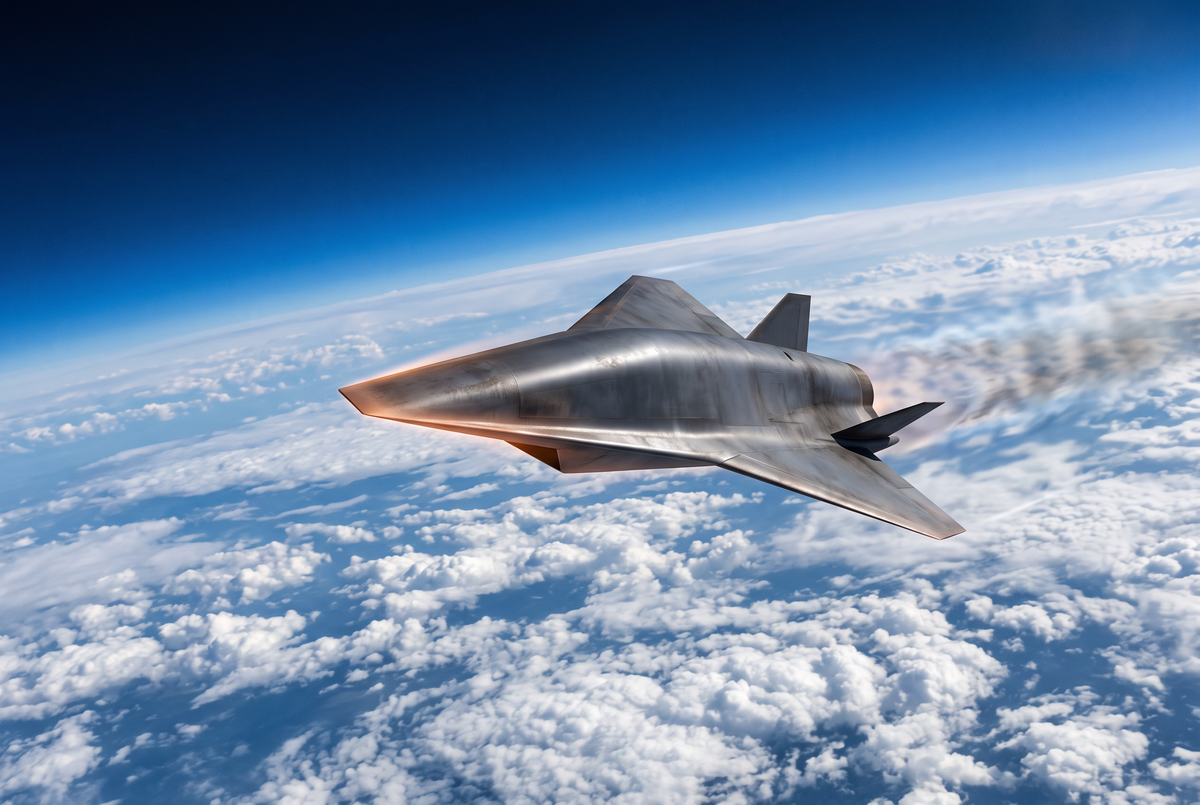
The Air Force has reversed itself on the hypersonic missile it once moved to cancel. In late September the service awarded Lockheed Martin a $694 million contract to build and field the AGM-183A Air-Launched Rapid Response Weapon, bringing a program that looked finished after a painful run of test failures in 2023 onto a production footing.
The contract, in the Air Force's words, "marks the formal transition of the boost-glide hypersonic missile program from prototyping and flight testing into production." How many missiles the service will buy, and when the first ones arrive, will not be disclosed for operational security.
A near-cancellation and a pivot
ARRW's lowest point came in March 2023, when a flight test that then-Air Force Secretary Frank Kendall called "not a success" pushed the service toward the exit. Andrew Hunter, the acquisition chief at the time, told lawmakers the Air Force did not intend to pursue follow-on procurement once prototyping concluded. That decision followed three test failures in 2021, a record that left ARRW exposed to budget pressure and to its main rival.
The service doubled down the next spring. Its fiscal 2025 budget request carried no procurement or development funding for ARRW, while steering $517 million toward the Hypersonic Attack Cruise Missile, or HACM, the air-breathing weapon the Air Force had tapped Raytheon and Northrop Grumman to develop in 2022. The two programs fly differently, and by then the Air Force had already put about $1.7 billion into ARRW, money that looked ready to be written off.
How a boost-glide weapon works
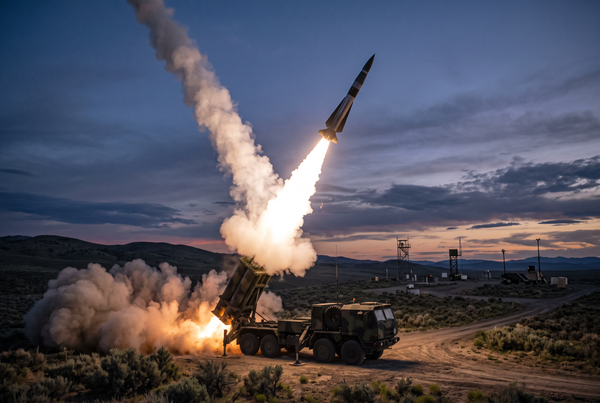
ARRW is built for speed at a distance. A solid-fuel booster drives the weapon past Mach 5 before releasing a hypersonic glide vehicle, which then maneuvers toward time-sensitive, heavily defended, high-value targets from standoff range. The point of that profile is to pierce the anti-access and area-denial defenses that can blunt slower, more predictable munitions.
Leaders cast the move in strategic terms. "This is a turning point in our advanced weapons roadmap," said Air Force Secretary Troy Meink. "By moving ARRW from test to production, we're providing our combatant commanders with a credible, high-speed strike weapon capable of penetrating the most advanced anti-access and area-denial systems." Gen. Ken Wilsbach, the chief of staff, added: "Fielding ARRW enhances our ability to hold targets at risk anywhere around the world."
Why it came back, and why ships matter
The reversal first appeared on paper. The fiscal 2026 budget request rebooted the program and sought procurement funding for real missiles, and the fiscal 2027 request sought roughly $296 million for an "Increment 2" that adds a terminal seeker and a data link. That upgrade points squarely at moving targets, including enemy warships, and it was written into the Pacific Deterrence Initiative portion of the Pentagon budget. The Air Force has also disclosed plans to put ARRW on its B-52 and B-1 bombers, giving a long-range anti-ship weapon a home on aircraft already in service.
HACM has not gone away, and it has recently moved into flight testing. But the production order shifts the center of gravity back toward the missile the Air Force once sidelined. In just over three years, ARRW has gone from the weapon the service did not plan to buy to one it is now placing on its production line, a turn best explained not by sentiment but by a Pacific theater where standoff, speed, and the ability to hit a moving ship all carry a premium.