Why the Air Force Is Rushing a $10 Million Drone to Replace the $50 Million Reaper
After losing at least 45 MQ-9 Reapers in 2026 combat operations, the Air Force is accelerating its Massed Modular Aircraft program to field low-cost attritable drones within three years.
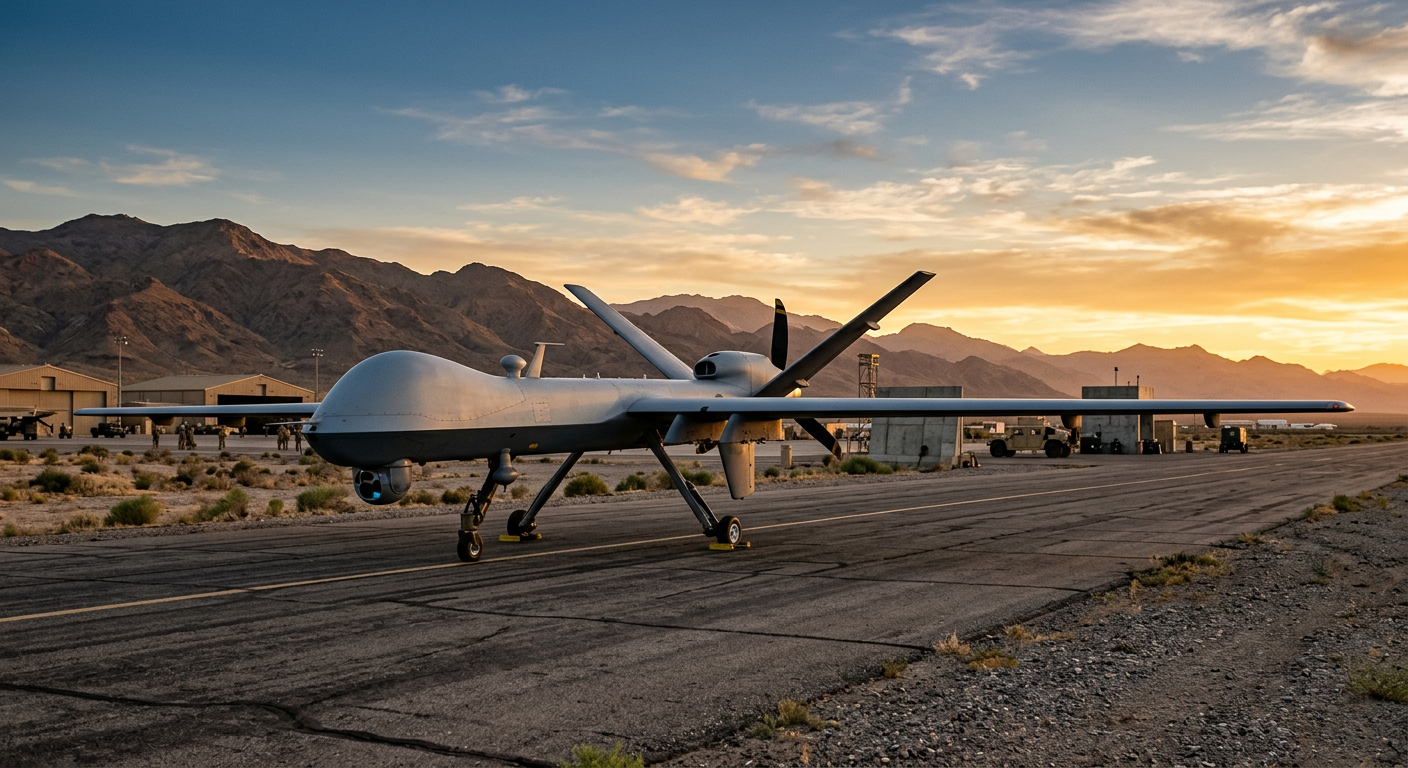
The U.S. Air Force has lost at least 45 MQ-9 Reaper drones during combat operations in 2026, representing roughly 25 percent of its pre-war operational fleet. The losses exceed $1.3 billion in aircraft replacement value, with individual missionized Reapers valued between $30 million and $50 million depending on onboard sensors and electronic payloads, according to a report on the campaign. The rapid attrition has exposed a critical vulnerability in the Pentagon's inventory of medium-altitude long-endurance aircraft.
For more than two decades, the Pentagon relied on the Reaper as an uncontested workhorse for intelligence, surveillance, reconnaissance, and strike missions. In contested airspace against layered air defenses, however, the loss of dozens of $50 million platforms has proven economically and operationally unsustainable. The Air Force now faces an urgent challenge: the legacy MQ-9A production line closed last year, leaving the service with no near-term avenue to replenish its fleet with identical airframes.
The Production Bottleneck for Exquisite Platforms
While manufacturer General Atomics continues to build the upgraded MQ-9B SkyGuardian, senior defense officials acknowledge that buying higher-end replacement airframes cannot solve the deficit. During a Pentagon briefing on September 3, 2026, Air Force chief modernization officer Lt. Gen. Christopher Niemi noted that the service cannot simply buy 100 new MQ-9Bs this year to backfill losses, pointing to production lead times and budget constraints.
The high unit cost of exquisite unmanned systems has forced commanders into a tactical compromise: either operate safely outside active threat rings and degrade collection, or fly inside contested airspace and absorb heavy financial and operational losses. To break this dynamic, the Pentagon is moving to replace exquisite surveillance drones with low-cost, attritable aircraft designed from the outset to withstand combat attrition.
A Two-Year Acceleration for Massed Modular Aircraft
In July 2026, the Defense Innovation Unit posted a Commercial Solutions Opening for the Massed Modular Aircraft program, designated Area of Interest PROJ00626, to solicit industry designs for a low-cost unmanned aerial system. The initial roadmap called for full prototype flight testing within 21 months and an Initial Operating Capability of 20 mission-ready aircraft by fiscal 2031.
That timeline has now been compressed. Air Force Secretary Troy Meink directed an acceleration of the program, shifting the schedule to field operational aircraft two years earlier than originally planned, per a defense acquisition report. Under the revised directive briefed by Lt. Gen. Niemi and DIU military deputy Maj. Gen. Joseph Kunkel, the Pentagon intends to test a flying prototype within 12 months and field operational aircraft at scale within three years.
Ten-Million-Dollar Unit Economics and Autonomous Mass
The Air Force plans to procure at least 180 Massed Modular Aircraft, establishing a target cost of roughly $10 million per un-missionized air vehicle. That figure represents half the $20 million unit target established for the service's Collaborative Combat Aircraft fighter escorts, and less than a third of the cost of a fully equipped legacy Reaper.
To hit the $10 million cost ceiling while retaining theater utility, the program trades pure speed and stealth for range and payload capacity. The aircraft will feature a long-aspect wing with turboprop propulsion, capable of cruising at over 200 knots and operating from runways shorter than 6,000 feet. The baseline performance requirements include an unrefueled combat radius of at least 2,300 nautical miles with payload, a one-way self-deployment range of at least 8,000 nautical miles, and a minimum payload capacity of 2,800 pounds to accommodate full-motion video turrets, radar sensors, or precision munitions.
The program relies on a Modular Open Systems Approach built around Government Reference Architectures, allowing the military to integrate new sensors and software without lengthy vendor-locked block upgrades. Software autonomy will also enable a one-to-many operator ratio, allowing a single pilot to supervise multiple drones via a workstation interface rather than requiring dedicated crews for each aircraft.
Breaking Vendor Lock-In Across the Industrial Base
The shift to Massed Modular Aircraft also marks a significant change for the defense industrial base. General Atomics has held a dominant position in the medium-altitude long-endurance drone market for three decades. The company is competing for the program with a new design dubbed Wildfire, which it claims can meet the accelerated production timeline and cost targets.
However, Air Force and DIU officials have stated they intend to keep multiple vendor designs in production. This strategy mirrors the Collaborative Combat Aircraft Increment 1 awards, where nontraditional defense contractor Anduril Industries was selected alongside General Atomics, bypassing legacy primes. By pairing multi-vendor competition with commercial manufacturing techniques, the Pentagon aims to ensure industrial surge capacity and prevent cost escalation as it rebuilds its unmanned fleet for high-attrition warfare.