Boeing Locks Up Both Sixth-Generation Fighter Franchises
The Navy's F/A-XX award hands Boeing both of the Pentagon's sixth-generation fighter lines, shutting out Lockheed Martin and Northrop Grumman while tying St. Louis to two combat aircraft programs at once.
On September 29, 2026, the U.S. Navy announced that Boeing (NYSE: BA) will develop the F/A-XX, the service's sixth-generation carrier-based strike fighter under Next Generation Air Dominance. The award, valued at more than $20 billion for full-scale development, procures multiple test aircraft for ground, airworthiness, systems, and weapons integration work. It completes a two-year industrial turnaround that once looked unlikely in St. Louis when Super Hornet production was winding down.
Boeing already holds the Air Force's F-47 next-generation fighter contract, awarded in March 2025. With F/A-XX, it is now the sole prime on both of the Pentagon's sixth-generation combat aircraft lines. Lockheed Martin was ejected from the Navy contest in March 2025 and remains focused on fifth-generation F-35 production. Northrop Grumman, builder of the Air Force's B-21 Raider stealth bomber, was the losing finalist. American sixth-generation fighters now sit inside one company's digital factories rather than across the historic tactical-aircraft oligopoly.
Shutting Out the Competition
The Navy selection is as much about who lost as who won. Lockheed Martin's exit left a two-horse race. Northrop Grumman said it "offered a highly survivable, digitally advanced sixth-generation fighter to the U.S. Navy" and that it looks forward to additional information about the decision. That marks the polite end of a campaign that failed to crack Boeing's hold on carrier aviation, a franchise the company has anchored since the Super Hornet and Growler defined the air wing.
Michael P. Duffey, Under Secretary of Defense for Acquisition and Sustainment, called the platform "a critical pillar in our commitment to maintaining peace through strength," adding that F/A-XX "will dominate contested airspace, extend operational reach, and deliver a decisive combat advantage for the warfighter." Hung Cao, Acting Secretary of the Navy, called the award "a new era for the U.S. Navy" and a "generational leap in air superiority." The industrial takeaway is unmistakable: one prime now owns the design authority, digital thread, and production cadence for both services' sixth-generation fighters.
That concentration carries risk. A single company's software toolchain, supply base, and factory throughput now sit under two of the most expensive combat aircraft programs in the defense portfolio. It also matches a logic the Pentagon has pursued for years: common digital manufacturing, open mission systems, and crewed fighters that can control unmanned Collaborative Combat Aircraft without reconciling competing corporate architectures.
Parallel Production in St. Louis
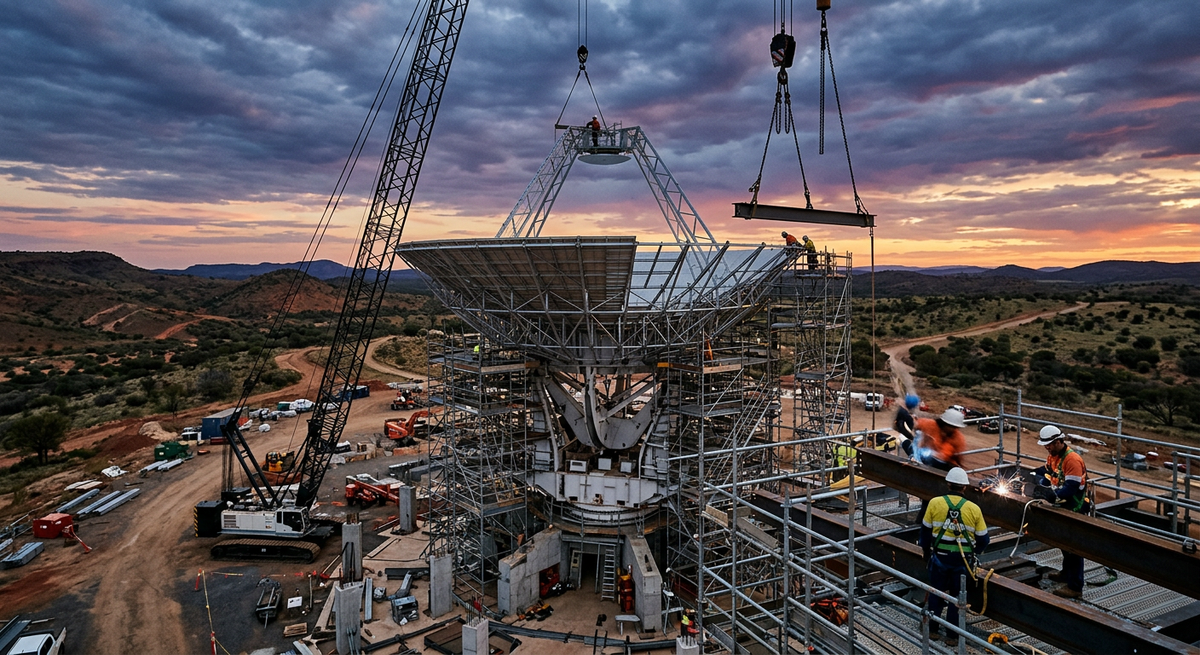
Two years ago, Boeing's tactical fighter production in St. Louis was facing a sunset as the F/A-18E/F Super Hornet line approached its final deliveries. The company spent the interval constructing a secure, all-digital aerospace manufacturing facility in St. Louis, Missouri, treating that infrastructure as a bet that both sixth-generation programs could run in parallel rather than in sequence.
Steve Parker, President and CEO of Boeing Defense, Space & Security, said after the award: "Delivering two advanced fighters in parallel was always our plan, and we invested accordingly. We are ready and able to build multiple concurrent future combat aircraft franchise programs." F-47 and F/A-XX will not share an airframe. They will share a company, a city, and a digital manufacturing stack Boeing has already built out. If the facility executes, St. Louis becomes the sole American site building sixth-generation fighters for both the Air Force and the Navy.
The development contract is not a full-rate production buy. It procures test aircraft and the engineering required for ground and flight test, systems integration, and weapons trials. What the Navy bought on September 29 is the design, the test fleet, and the decision that Boeing, not Northrop Grumman, will lead that next era.
The Carrier Air Wing's Next Era
F/A-XX is designed to augment, and eventually replace, the Navy's F/A-18E/F Super Hornet and EA-18G Growler fleets in the 2030s. It will operate alongside carrier-based F-35C Joint Strike Fighters and control unmanned Collaborative Combat Aircraft. The attributes the Navy is buying, according to defense trade coverage and Boeing's release, are an open mission systems architecture, extended operational combat radius, advanced broadband stealth, and teaming with autonomous drones.
That mix is the carrier air wing's answer to anti-access weapons and extended radar nets in the Western Pacific. Super Hornets still fly from every deployed carrier, but their combat radius was designed for a different operational era. F-35C brings fifth-generation stealth to the carrier deck, yet the Navy has insisted on a dedicated, longer-reach strike fighter that can expand the air wing's perimeter and command robotic wingmen.
The fighter franchise that was once slated to wind down in Missouri is now two overlapping sixth-generation programs, a development ceiling above $20 billion on the Navy side alone, and a plant configured for concurrent production. Lockheed Martin retains the F-35. Northrop Grumman builds the B-21. Boeing now owns both sixth-generation fighters, defining the map of American combat aviation for the 2030s.