Lockheed Redesigned the Patriot Interceptor to Survive the Hypersonic Era
Lockheed Martin debuted PAC-3 Edge, an in-house seeker and multi-pulse motor upgrade designed to counter hypersonic threats while reusing the Patriot production base.
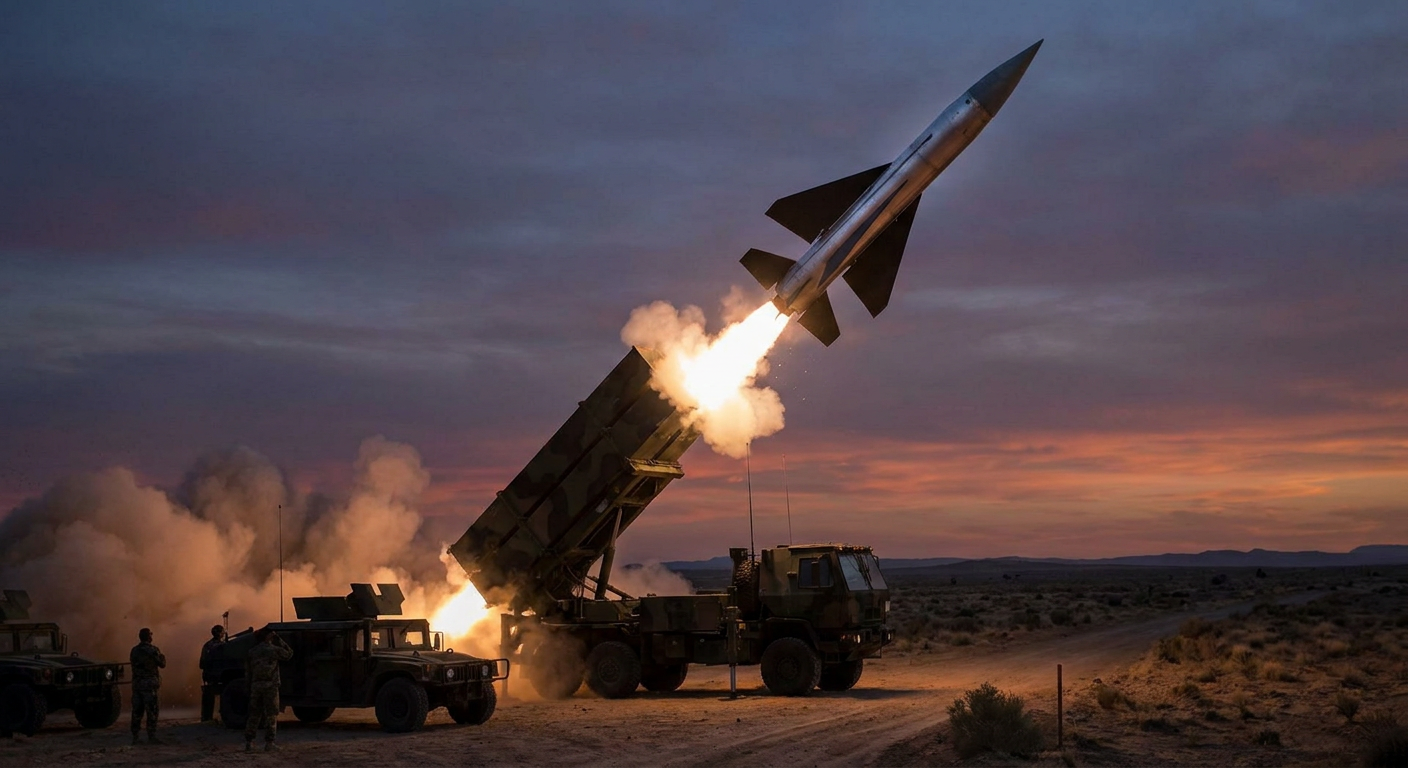
On October 9, 2026, Lockheed Martin debuted PAC-3 Edge, a redesigned Patriot interceptor aimed at the U.S. Army's Future Interceptor program and timed ahead of the Association of the U.S. Army annual meeting. The company is offering the missile as a way to keep the Patriot family relevant against maneuvering hypersonic threats that demand more range, more altitude, a more sensitive seeker, and more energy late in flight.
PAC-3 Edge is Lockheed's candidate in a competitive lower-tier air and missile defense effort that evolved from the previously paused Lower-Tier Future Interceptor program. The Army selected Lockheed as one of two competitors advancing to the next development phase. The second vendor remains unnamed, according to Breaking Defense reporting.
An in-house seeker after years of buying Boeing's
Today's PAC-3 MSE flies with seekers supplied by Boeing. Edge reverses that split. Lockheed is developing the new seeker at its Strigo Product Center and has already invested between $50 million and $100 million of internal research and development in the missile. It has put $250 million into the Strigo facility and plans to invest up to $800 million total in the seeker technology for use across programs, Breaking Defense reported.
That spend is not only about one interceptor. A common seeker architecture would let Lockheed reuse the same sensor investment on other missiles, rather than buying a supplier's seeker on every PAC-3 MSE that leaves the factory.
Thrust when the target still has energy
Lockheed is teaming with Northrop Grumman on a three-pulse solid rocket motor to provide precision thrust throughout flight, extending range and engagement altitude against maneuvering hypersonic threats. Upgraded control systems are intended to give the interceptor greater maneuverability at high altitudes.
Tim Cahill, president of Lockheed Martin Missiles and Fire Control, said PAC-3 Edge is designed for the most stressing next-generation threats adversaries will field, offering longer range, higher altitude, greater seeker sensitivity, and enhanced maneuverability. He told Reuters that at full production, PAC-3 Edge is targeted to match the per-unit cost of the existing PAC-3 MSE and could reach comparable annual production volumes of about 2,000 units a year.
Same launchers, later fielding
Lockheed designed Edge to plug directly into the Army's Integrated Battle Command System, standard M903 Patriot launchers, containerized launchers, and HIMARS Flex, the company said. That choice keeps the new interceptor inside the architecture already buying PAC-3 MSE rounds.
Flight testing is scheduled to begin in 2027, with target fielding and rapid deployment by 2031.
The Camden line is already being paid to hit 2,000 a year
PAC-3 Edge will be built on Lockheed's existing PAC-3 production line in Camden, Arkansas. In July 2026, the U.S. government awarded Lockheed an undefinitized multiyear contract modification for up to $53.86 billion, bringing total multiyear PAC-3 MSE contract value up to $58.62 billion. The award supports an expansion from about 600 to 2,000 interceptors a year by 2030 and adds about 650 jobs in Camden, taking the workforce from 1,200 to about 1,850. Lockheed is outfitting the plant with automation, robotics, and AI that will be ready for Edge production.
The July contract covers PAC-3 MSE, not Edge. The plant, the headcount, and the automation being stood up for the missile the Army already buys are the same industrial base Lockheed intends to use once Edge enters production after those 2027 flight tests.
The PAC-3 family now spans the legacy PAC-3 CRI, the current PAC-3 MSE, the lower-cost PAC-3 ACE announced earlier in 2026 for foreign partners, and PAC-3 Edge at the high-end hypersonic tier. Lockheed is trying to hold all four on one production system and one launcher ecosystem, with Edge priced, if Cahill's target holds, like the MSE that Camden is already scaling toward 2,000 missiles a year.