Firefly Joins NASA's $10 Billion Lunar Delivery Program With Task Orders to Win
Firefly Aerospace is onboarded to NASA's $10 billion CLPS 2 lunar delivery contract, a 10-year IDIQ. The seat itself is not revenue; task orders are, and Firefly's proven Blue Ghost record makes it a serious contender for a decade of missions.
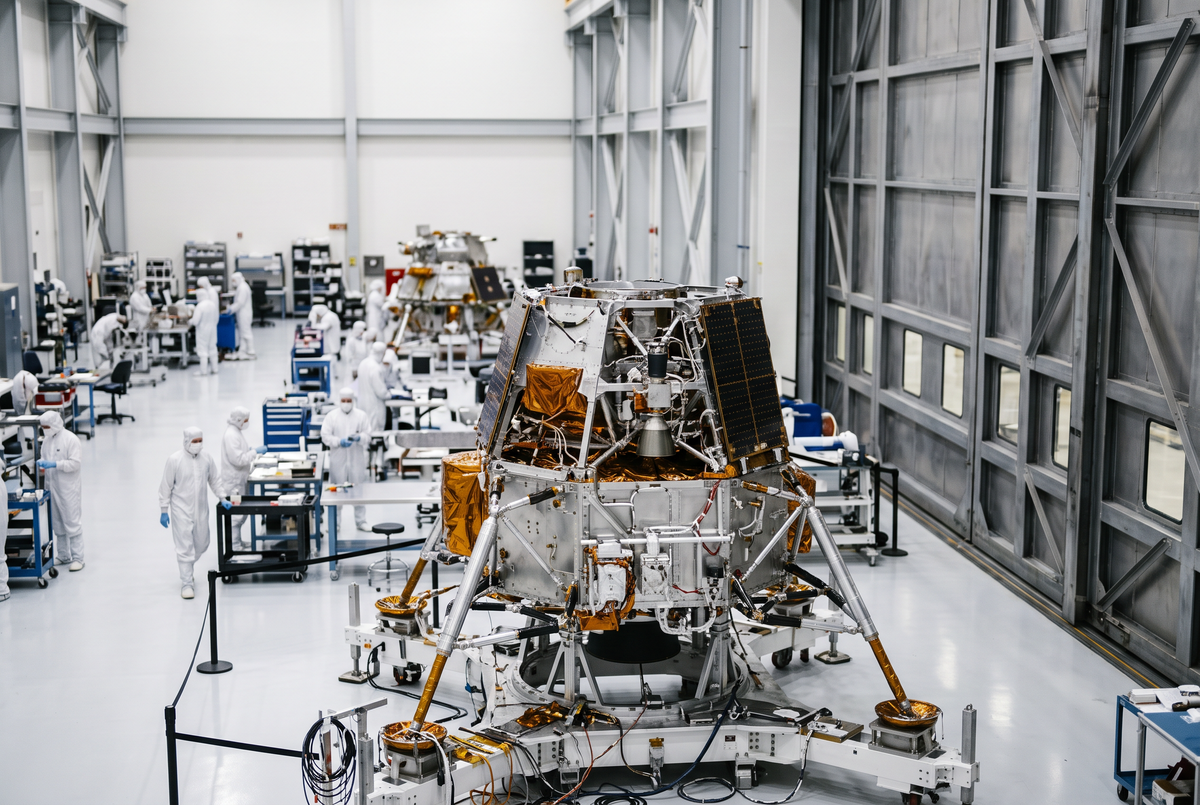
Firefly Aerospace (Nasdaq: FLY) has been onboarded as a vendor on NASA's $10 billion CLPS 2 contract, the Commercial Lunar Payload Services follow-on that carries a 10-year ordering period for lunar deliveries. The onboarding took effect Nov 7, 2026, and it positions Firefly to compete for task orders supporting NASA's Moon Base ambitions and the broader Artemis program. Vendors on a contract like this do not receive revenue by default. They receive the right to compete, again and again, for individual missions.
An IDIQ contract is an invitation, not a check
Under an indefinite delivery, indefinite quantity structure, NASA defines the scope and the ceiling, then awards discrete task orders as missions are scoped and funded. The $10 billion figure is the ceiling across all participating vendors over the decade, not a committed amount for any single one of them. Firefly's economic outcome depends on how many task orders it converts and how those missions price out. That is the central tension in this story. The company has earned a durable seat at the table, and now it has to keep winning chairs at individual sittings.
For an investor thesis built on recurring lunar missions, the structure is actually favorable. CLPS 1 awards arrived as one-off wins; CLPS 2 formalizes a decade-long market in which a proven lander can compound rather than restart.
The resume that earned the seat
Firefly's case for task orders is unusually concrete. Its Blue Ghost lander touched down on the Moon in March 2025 and completed every mission objective, making Blue Ghost Mission 1 the first successful commercial lunar landing. Firefly followed that up with four additional missions won under CLPS 1 plus a contract to deliver NASA's MoonFall mission. Very few companies in the commercial space sector can point to a hardware-proven lunar capability and a pipeline of follow-on work inside a single year.
CEO Jason Kim framed the momentum directly: "Blue Ghost Mission 1 proved Firefly can deliver on the Moon, and now CLPS 2 gives us the opportunity to do it again and again at greater scale."
The scaling test
Repeatable delivery is the hard part. Firefly is ramping production of Blue Ghost landers and Elytra orbiters in a newly expanded cleanroom that can accommodate up to 12 spacecraft. It is also scaling into a larger lander architecture for heavy-payload delivery, terrain vehicles, infrastructure, and power systems designed for a permanent lunar presence. That portfolio lines up with what CLPS 2 explicitly emphasizes: lander reliability, larger cargo landers, and delivery of critical infrastructure to support a Moon Base.
Hardware is only half of the scaling problem. After acquiring SciTec and Space-ng, Firefly is applying AI software to autonomous guidance, descent operations, and on-orbit data processing. Automation compresses mission cost and turnaround time, which is exactly what a vendor needs to win task orders on price while executing them reliably. A company that can land autonomously and turn missions around quickly can bid more aggressively across ten years of orders.
What to watch next
Firefly's credentials extend beyond the lunar surface. The company is the first commercial firm to launch a satellite to orbit with approximately 24-hour notice, and the first to achieve a successful Moon landing. Both claims feed directly into the reliability record CLPS 2 rewards.
The next signal for investors is the first CLPS 2 task order award: which vendor wins it, and how Firefly performs against rival landers bidding for the same mission. A 10-year ordering period means the door stays open for a decade, and the vendors that convert seats into recurring missions will be the ones that industrialize their hardware. Firefly has just committed itself to proving it can, with a cleanroom built for a dozen spacecraft and a track record that started with a single perfect landing.