Shield AI Is Buying the Radar Company the Pentagon Picked to Stop Drones
Shield AI is spending $5.3 billion to buy counter-drone radar maker Echodyne, weeks after the Pentagon picked that radar for its JIATF-401 program. It is backed by a $2.5 billion raise at a $28.8 billion valuation.
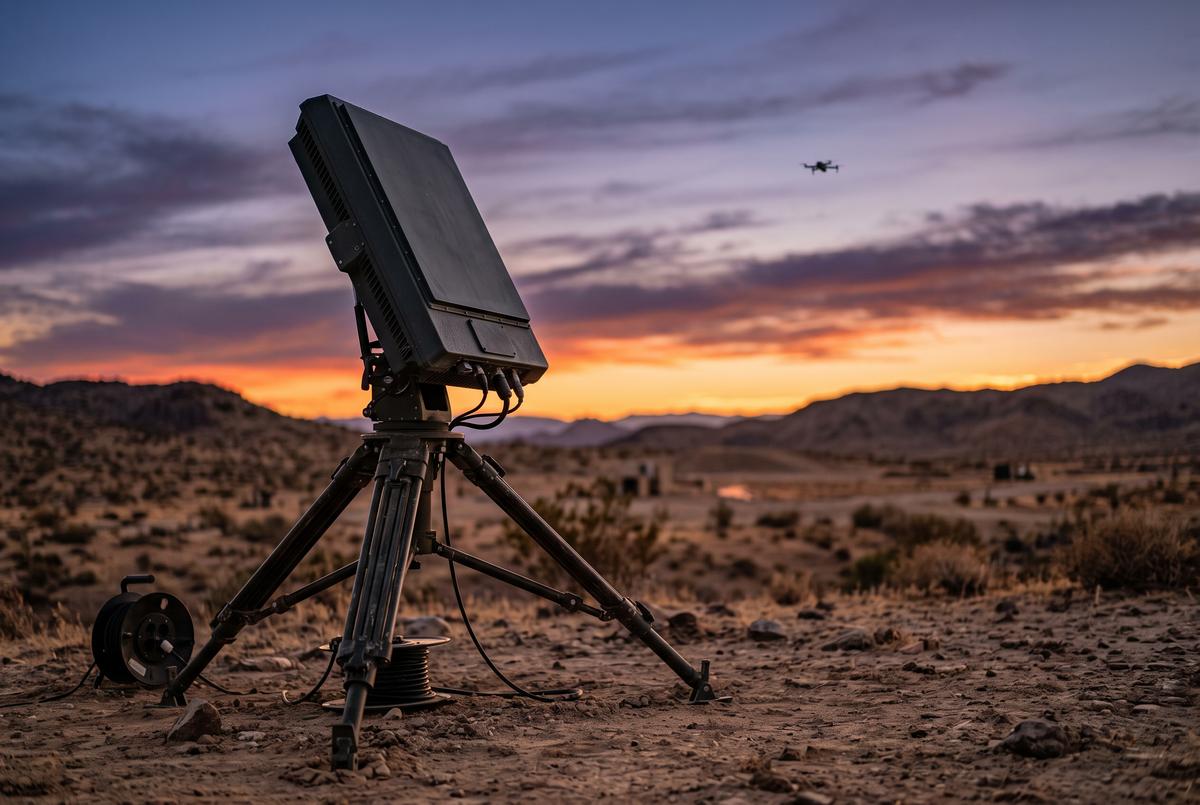
Shield AI has moved to bolt a radar layer onto the autonomy and aircraft business it has been assembling for years. On Nov. 5, 2026, the private defense-tech company entered a definitive agreement to acquire Echodyne Corp. in a transaction valued at $5.3 billion. Echodyne's compact solid-state radars already sit inside hundreds of counter-drone and security systems used by defense, government, and commercial customers in more than 40 countries. The deal lands weeks after the Pentagon picked that same radar to anchor a counter-drone push.
In September, Joint Interagency Task Force 401 awarded Echodyne a $250 million ceiling contract, an IDIQ under the Domestic Shield program, to supply counter-drone radar to U.S. and allied forces. Shield is buying the company that makes those sensors at the moment the Pentagon is funding the category. For Shield, the purchase is a way to own the sense half of a kill chain that its software and drones already try to close.
How the deal is built
Of the $5.3 billion, $4.8 billion will be paid and issued at closing. Up to $500 million more is contingent on Echodyne meeting performance targets. Closing is expected in early 2027, subject to regulatory approvals and other conditions.
Shield is raising $2.5 billion alongside the purchase: $1 billion in Series H funding at a $28.8 billion post-money valuation, a $1 billion structured equity investment from Blackstone funds, and $500 million in debt financing led by JPMorgan Chase Bank as Sole Arranger. Both companies expect triple-digit revenue growth this fiscal year. Those figures sit in the announcement as statements of expected growth, not as audited results.
Shield CEO Gary Steele describes three business units: autonomy software, autonomous systems, and mission systems. Echodyne CEO Eben Frankenberg will report to Steele and remain responsible for Echodyne's products, manufacturing, and partner and customer engagement. A company spokesperson told Breaking Defense there are no planned workforce reductions and that Echodyne employees will not be required to relocate.
The counter-drone franchise Shield is buying
Echodyne's radars use a compact solid-state design the company calls MESA, for Metamaterials Electronically Scanned Array. In the field they cue interceptors toward incoming drones, and they are integrated onto remote weapon stations, high-energy lasers, and high-power microwave systems. Civilian operators use them to protect stadiums and airports. That mix, military interceptors on one side and stadiums and airports on the other, is the commercial footprint Shield would inherit.
The hardware is already being scaled in Washington state. Echodyne is based in Kirkland and recently opened an 86,350-square-foot manufacturing facility, a $40 million investment, that can produce about 30,000 radars per year. In September, Shield named Washington as the production home for its X-BAT aircraft. Putting radar production and a planned aircraft line in the same state does not, by itself, fuse the two programs. It does put the factory map in one place as the companies wait on closing.
The JIATF-401 award is a ceiling, not a guarantee of $250 million in orders. It does show where the Pentagon's Domestic Shield effort is putting radar money, and it is the public contract that makes Echodyne more than a component vendor in a crowded counter-drone market.
A longer buying campaign, not a one-off
The Echodyne purchase fits a pattern. Shield's V-BAT drone, and the later push for X-BAT, came from its 2021 acquisition of Martin UAV. Earlier this year Shield closed the purchase of Aechelon Technologies, a simulation software firm. Its product lines also include Hivemind autonomy software and the X-BAT AI-piloted drone. Radar is the missing sensor piece in that stack: software that flies, airframes that carry it, and now a radar that can find the small aircraft those systems are meant to hunt or escort.
The Echodyne deal is separate from Shield's recent decision to work with RTX on a radar for X-BAT, a spokesperson said. That distinction matters. Shield can keep an X-BAT radar partnership with RTX while buying Echodyne for the counter-drone and security systems franchise, rather than collapsing every radar need into one product. Mission systems, in Steele's three-unit map, is where Echodyne would sit if the deal closes as drawn.
What Shield would then own is a radar company already wired into interceptors, lasers, microwave weapons, stadiums, and airports, plus a Pentagon IDIQ aimed at the same threat. What it would still have to prove, after early 2027, is that autonomy software, autonomous aircraft, and another company's radar line can be run as one mission-systems business without breaking the partner and customer relationships Frankenberg is being asked to keep.