Golden Dome Is on the Block. The B-21 and Sentinel Are Not.
Defense stocks sold off after Democrats seized Congress, turning the roughly $1.5 trillion FY2027 budget into an open question. The market is now splitting branded programs like Golden Dome from nuclear work like the B-21 and Sentinel.

Democrats won a resounding midterm victory this week and are set to control both the House and the Senate. In the same stroke, the administration's roughly $1.5 trillion military budget request for fiscal 2027, a figure well above the currently approved $901 billion level, went from an assumed sector tailwind to an appropriations fight contractors can no longer treat as settled.
Defense shares fell with that shift. Lockheed Martin dropped 6.9 percent, L3Harris Technologies dropped 6.9 percent, RTX dropped 3.1 percent, and Huntington Ingalls Industries dropped 4.9 percent. General Dynamics and Northrop Grumman also declined. For the year, the S&P 500 Aerospace and Defense sub-index is down nearly 1 percent and the Dow Jones US Aerospace and Defense sub-index is down 3.4 percent.
Jefferies analysts expect the 2027 budget to land closer to the House's roughly $1.15 trillion proposal than to the $1.5 trillion request. The gap is wide enough to force a ranking of programs, and the ranking now circulating on the Street splits work that carries a political brand from work that sits inside the nuclear enterprise.
Branded lines under pressure
TD Cowen analyst Roman Schweizer said Trump-branded programs are dead, naming Golden Dome, the homeland missile defense shield, and the Golden Fleet, a new Trump-class battleship and modernization program. Those two efforts carried most of the political risk that hit the tape on November 4.
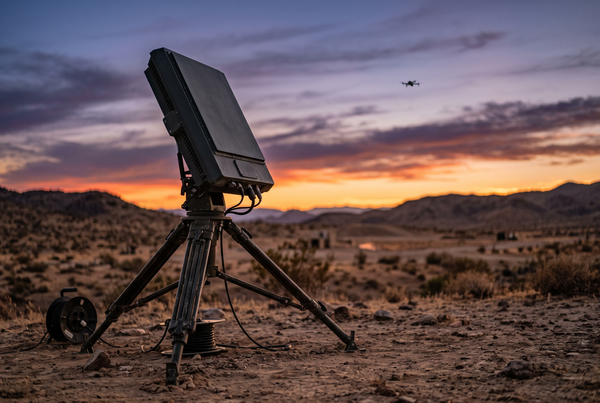
Golden Dome is an air and ballistic missile defense capability modeled on Israel's Iron Dome. It was initiated by executive order in January 2025, and much of its 2026 funding was drawn from $25 billion carved out in the One Big Beautiful Bill Act, a reconciliation bill. A GlobalData analyst expects the shield to be trimmed down rather than cancelled outright. A trim still changes the program's trajectory, even when it falls short of a full cancellation.
The Trump-class battleship is the purported centerpiece of a new Golden Fleet meant to revive US Navy surface capability. CSIS senior adviser Mark Cancian said its long-term prospects were never very good, and a GlobalData analyst called the ship effectively dead. That verdict sits on the same side of Schweizer's line as Golden Dome: high-visibility, politically labeled, and easier to slow or stop than a nuclear recapitalization account.
The F-47 occupies a narrower middle. It is the crewed fighter element of the Air Force's NGAD sixth-generation program, with Boeing named prime in 2025, and it is expected to begin replacing the F-22 Raptor from around 2030. Analysts expect the jet to continue in some form, possibly rebranded as lawmakers drop the F-47 label. The airframe looks survivable; the name is the part of the program that now appears optional.
The nuclear core that survives
Schweizer said the programs least at risk are nuclear modernization, including the B-21 bomber built by Northrop and the Sentinel intercontinental ballistic missile. That is the other side of the same screen. Northrop still traded down with the group on November 4, because a smaller topline hits the whole sector. The distinction is about which backlogs are treated as structural if Congress writes a number nearer $1.15 trillion than $1.5 trillion.
The legislative path is unfinished. Neither FY2027 appropriations bill is enacted, and the request relied on a large reconciliation component whose fate now looks uncertain. Golden Dome already drew part of its 2026 money through reconciliation, so a second year of that architecture is harder to assume now that both chambers have changed hands and the full-year bills remain unwritten.
The selloff followed a stretch in which RTX and Lockheed reported record backlogs and upbeat October quarters as governments moved to replenish stockpiles, only for the shares to give back much of those gains as investors questioned whether the spending increases would materialize.
The November 4 tape was an early attempt to price that sequence. Lockheed, L3Harris, RTX, and Huntington Ingalls moved on the fear of a tighter Pentagon budget, but the analytical cut underneath the selloff was more specific. Golden Dome and the Golden Fleet are the programs now on the block. The B-21 and Sentinel are the backlog the market is treating as residual, the work expected to remain even if the $1.5 trillion request does not.