Golden Dome Has a First Address. The Price Tag Still Does Not.
The Pentagon named Fort Story, Virginia, as Golden Dome's first operational site. Gen. Michael Guetlein still will not say what sits there, how many sites follow, or which cost estimate holds.
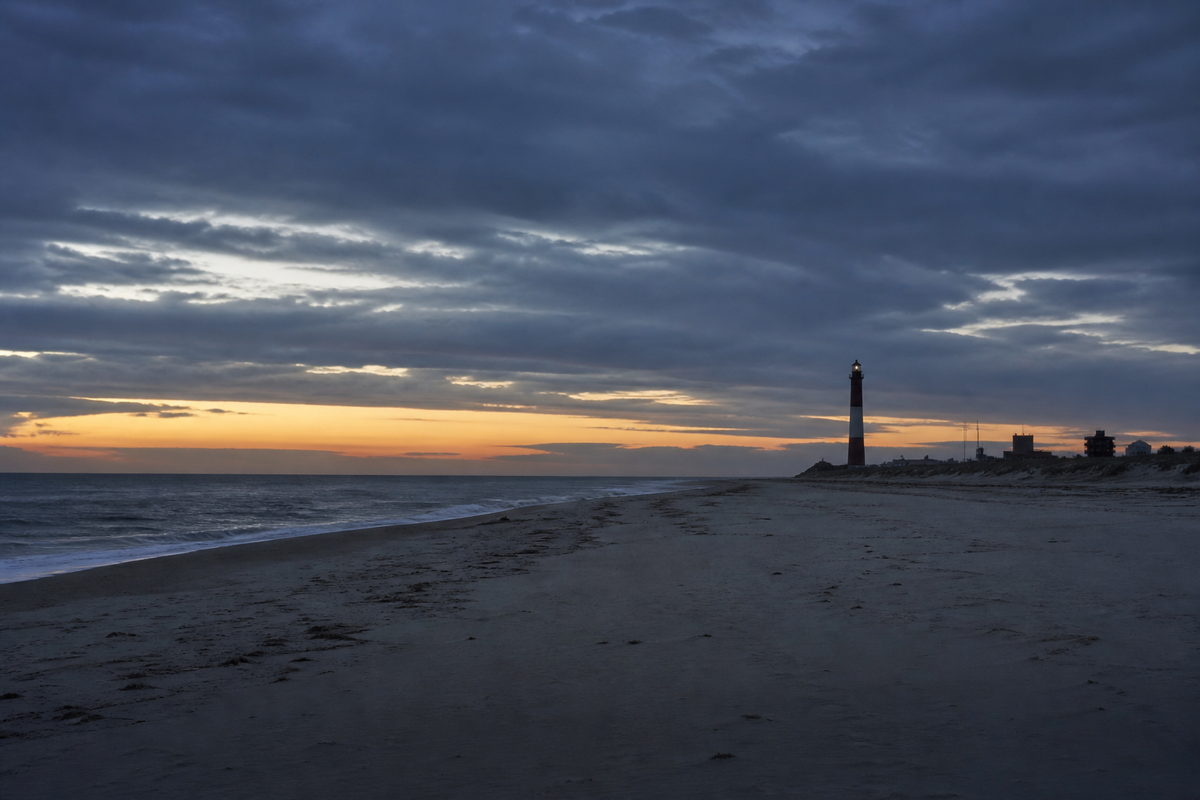
The Pentagon has given Golden Dome a first address. Fort Story, Virginia, is the program's first operational site, a pin on the East Coast that Gen. Michael Guetlein announced as the start of an active defense intended, in time, to cover New York City and Washington against cruise missiles, hypersonic weapons, and other advanced threats.
That is as far as the public map goes. Guetlein did not identify additional locations, how many sites the nationwide architecture will need, or which systems and units will sit at Fort Story. The news this week is dirt, not a battery count.
"We are digging dirt around the homeland," he said. CRS recorded the Fort Story line in an August 18 update to its Army brief. The update is useful because it is still mostly a list of blanks.
A first address, not a force list
The Army chose an unidentified battalion-sized unit from existing force structure as its initial contribution. The systems that unit will operate were not identified. CRS is explicit on both points. Fort Story now has a name. It does not have a published table of contents.
Investors looking for a Virginia shopping list will not find one in this week's remarks. The industrial names around Golden Dome are known. What is assigned to that stretch of sand is not. Until Guetlein names the kit, the first site is a location, not a loadout.
Two tests and a 2028 clock
Program officials have held two tests. One took place at White Sands. Speaking after his Space and Missile Defense Symposium remarks, Guetlein would not comment on remaining sites or how many of them there are. He also left the Fort Story systems unnamed.
He said the initiative is on schedule for 2028. President Trump has said the system should be fully operational before the end of his term. Those are the public clocks. They are not a fielding plan that names what arrives at Fort Story, or when a first site becomes a working battery.
The price tag is still two estimates
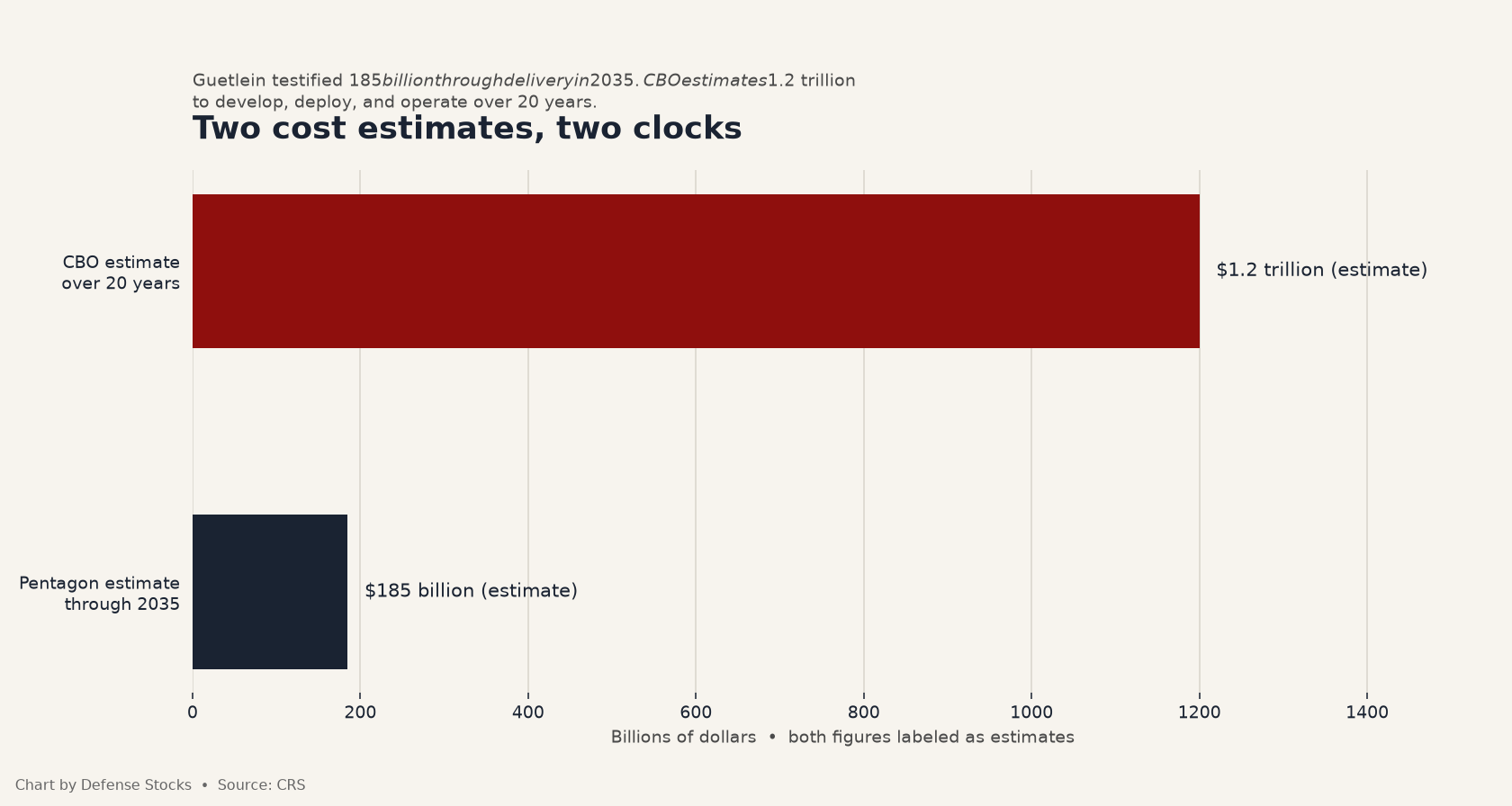
Cost remains a split screen, and it is context, not the lede. Guetlein testified that Golden Dome will cost $185 billion through delivery in 2035. The Congressional Budget Office estimates $1.2 trillion to develop, deploy, and operate the system over 20 years. Both figures are estimates. Both sit in the same CRS product. They also cover different clocks: delivery through 2035 on one side, twenty years of develop, deploy, and operate on the other. Neither is a signed cost for the Virginia site. The Pentagon now has dirt on the East Coast and still does not have a single public price.
FY27 is a fund, 98 percent mandatory
The near-term money is a fund, not a line-item map of Fort Story. For FY2027, the Department of Defense requested $17.5 billion for a Golden Dome for America Fund, including $434 million in Army operations and maintenance and research, development, test, and evaluation. Of that $17.5 billion, $17.1 billion, or 98 percent, was requested as mandatory spending.
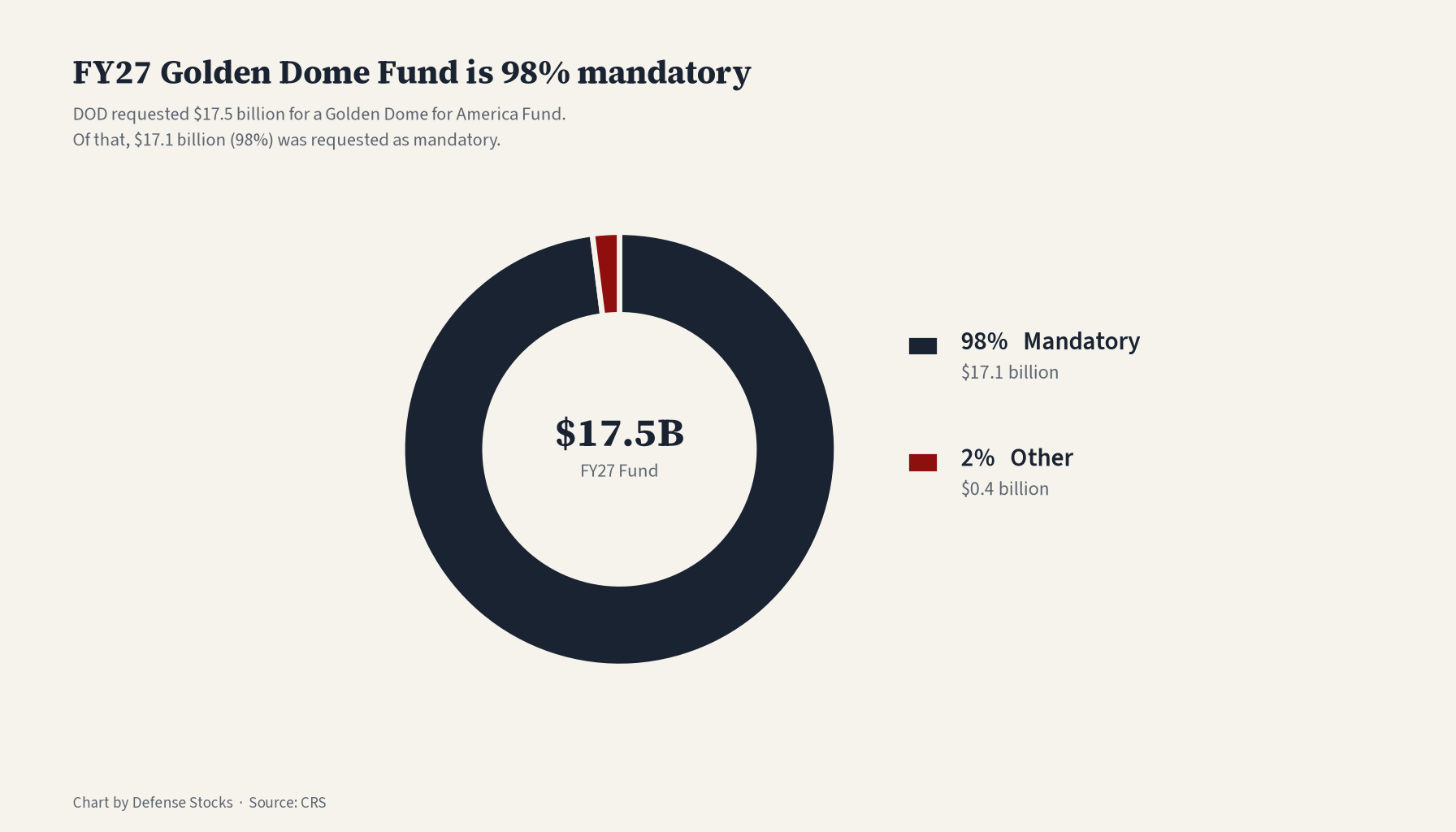
The Army also requested $11.4 billion for THAAD procurement and $12.2 billion for PAC-3 MSE. Missile procurement is nearly tripling in FY2027 to $95 billion. Separately, the 2025 One Big Beautiful Bill Act provided Golden Dome $25 billion, 90 percent of which Guetlein said is obligated. A mandatory FY27 request and an obligated 2025 tranche explain how the program can break ground before a conventional top line is settled. They do not close the gap between $185 billion and $1.2 trillion.
Familiar primes, unnamed Virginia kit
The Army systems CRS lists as Golden Dome-associated hardware are the ones investors already track. IBCS is Northrop Grumman's command-and-control layer. LTAMDS is Raytheon's next radar, designed to defeat hypersonic weapons. The Army has eight THAAD batteries and no plans to field more. It has 15 Patriot battalions, with one additional battalion planned each year from FY2029 through FY2031.
Those are current force-structure facts, not a Fort Story loadout. An AEI working paper cited by CRS prices one THAAD battery plus 192 interceptors at $2.73 billion and a four-battery Patriot battalion with IBCS and LTAMDS at $1.792 billion. Treat those as unit-cost context. Do not read them as a bill of materials for Virginia. No public source has assigned a battery count to Fort Story.
Above the ground layer, the Space Force selected 12 companies for the space-based interceptor effort, with contracts worth up to a combined $3.2 billion. Gate One is closed. That competition has a dollar cap and a completed first gate. It still does not say what is parked at Fort Story.
Golden Dome has a first address. The general in charge will not name the remaining sites, the systems on that pad, or a single agreed price. Until he does, the investable facts are the dirt in Virginia, the FY2027 fund, and the industrial names already on the architecture. A first site does not settle the ledger.