HII Mission Technologies Wins a $2.2 Billion SOUTHCOM ISR Task Order
HII’s $2.2B STINGRAI task order under GSA ASTRO is a Mission Technologies ISR win for SOUTHCOM—not a shipbuilding award—and it stretches one base year plus six options.
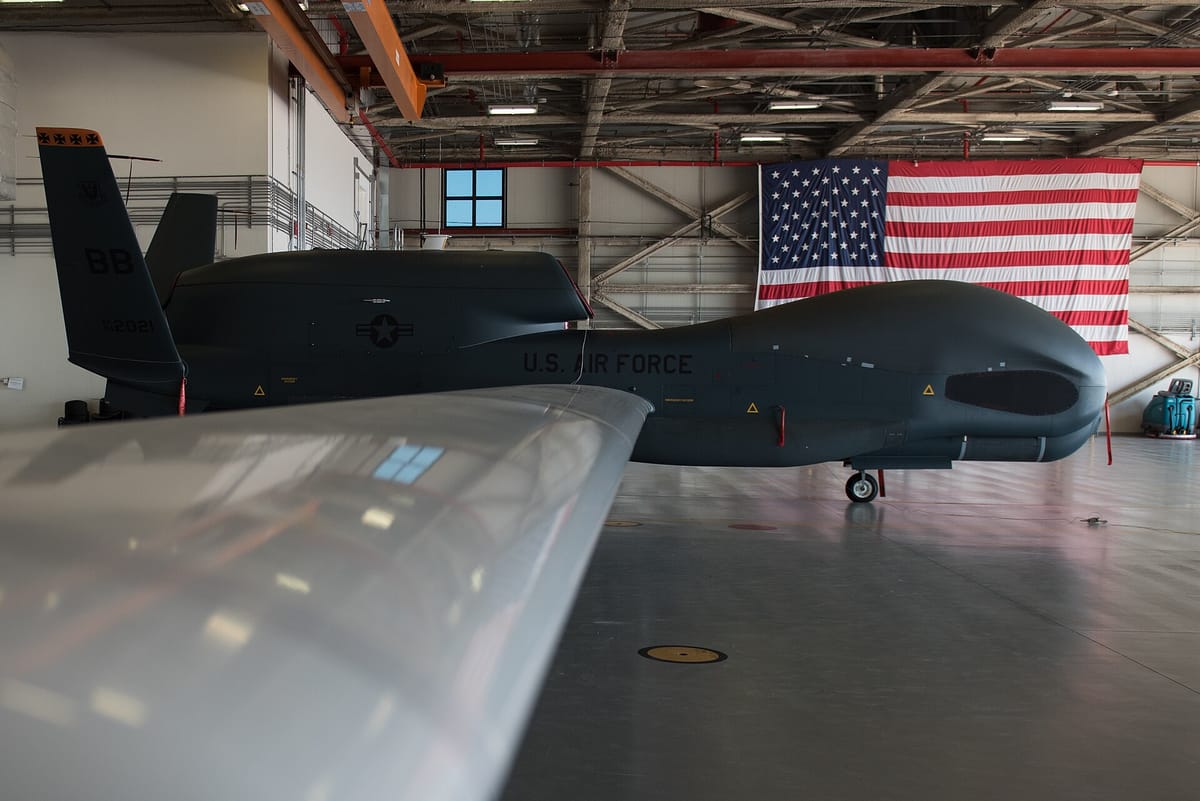
Huntington Ingalls Industries (NYSE: HII) is still America’s largest shipbuilder—but the $2.2 billion award announced August 11, 2026, is not a hull. It is a Mission Technologies intelligence, surveillance, and reconnaissance task order for U.S. Southern Command, and reading it as Newport News or Ingalls work would miss both the margin story and the strategy story.
In its August 11 release, HII said Mission Technologies has been awarded a $2.2 billion task order to deliver Surveillance, Tracking, Intelligence, Network Services, Global Reconnaissance, Analysis, and Interceptions—STINGRAI—in support of SOUTHCOM. The program is meant to enhance SOUTHCOM’s ability to detect, monitor, and disrupt illicit activity across Central America, South America, and the Caribbean, while strengthening integrated intelligence and reconnaissance capabilities tied to homeland defense.
Contract vehicle and period of performance
HII says the task order was awarded under the General Services Administration (GSA) ASTRO Indefinite Delivery, Indefinite Quantity (IDIQ) contract, issued by GSA Assisted Acquisition Services (AAS) Defense, with a period of performance of one base year and six option years. That 1+6 structure is the investable skeleton: $2.2 billion is the task-order value HII discloses, but option-year exercise—not day-one obligation of the full figure—will determine cash timing.
ASTRO is a services-centric governmentwide vehicle. Winning a large SOUTHCOM ISR task order on it underscores Mission Technologies’ ability to compete as a systems-and-services prime, not merely as a shipyard-adjacent IT shop. For portfolio construction inside HII, that matters: shipbuilding carries different working-capital, risk, and congressional oversight dynamics than multi-year ISR services under GSA.
Investors who track HII primarily through Navy shipbuilding appropriations should re-bin this award under Mission Technologies backlog and services revenue, then ask how much of the $2.2 billion is labor-heavy versus platform- or sensor-heavy. The August 11 release does not provide that split; until management does, the safe modeling approach is to treat STINGRAI as a large, option-contingent Mission Technologies task order rather than as a shipyard booking.
What STINGRAI is—and is not
HII describes STINGRAI as a comprehensive suite of intelligence-gathering capabilities, advanced technologies, and adaptable all-domain platforms for operational readiness. Andy Green, executive vice president of HII and president of Mission Technologies, said the award “goes right to the heart of what SOUTHCOM needs—clearer visibility, faster decision making, and the ability to stay ahead of rapidly changing threats.”
The release ties the mission to countering transnational criminal organizations, drug cartels, and drug trafficking organizations, and to giving commanders flexibility as regional security dynamics shift. Investors should treat that as mission context from the company, not as an independent quantification of interdiction outcomes. The hard, sourced facts for modeling are the $2.2 billion task-order value, the STINGRAI acronym as HII defines it, the SOUTHCOM customer, the GSA ASTRO vehicle, and the 1+6 period of performance.
Equally important is the negative fact: this is not shipbuilding. HII’s about blurb in the same release still leads with shipbuilding and unmanned underwater vehicles, but the news itself is filed under Mission Technologies. Conflating STINGRAI with carrier or submarine backlog would distort segment forecasts and obscure the thesis HII has been selling for years—that Mission Technologies can diversify earnings beyond the yard.
Why SOUTHCOM ISR is a stock narrative, not just a press release
Western Hemisphere surveillance and intelligence have moved up the U.S. policy agenda as counternarcotics, migration, and great-power activity in the region draw more attention. A multi-year, multi-billion task order to support SOUTHCOM’s ISR and related network services is one way that priority shows up in contractor revenue. It also sits in a competitive services market where primes and mid-tiers fight for IDIQ task orders that can recur if performance holds.
For HII specifically, Mission Technologies growth has been part of the long-term re-rating debate: can the company earn a multiple closer to diversified defense-tech peers, or does the market forever anchor HII to Navy shipbuilding cycles? A $2.2 billion SOUTHCOM ISR task order does not settle that debate, but it is primary-source evidence that Mission Technologies can win large, named combatant-command work on a major GSA vehicle.
HII says it will lead an integrated team to provide SOUTHCOM and partner nations with the STINGRAI capability set. Team composition and subcontract share are not disclosed in the release; that opacity is normal at award and becomes material only when margins or staffing show up in later guidance.
Questions to carry into the next earnings call
Analysts will want the usual IDIQ hygiene. How much of the $2.2 billion is expected in the base year versus options? What mix of labor, platforms, and subcontracted sensors sits inside STINGRAI? How does the work split between CONUS analysis and in-region operations? And how should investors think about margin relative to Mission Technologies’ recent run-rate once the task order is fully mobilized?
HII’s August 11 release does not answer those questions—and inventing answers would be a fact-check failure. What it does establish is sufficient for an investor brief: Mission Technologies won a $2.2 billion STINGRAI task order for SOUTHCOM under GSA ASTRO, structured as one base year plus six option years, aimed at Western Hemisphere surveillance and intelligence. It is a services-and-ISR win. It is not a ship.
One more framing check belongs in every HII note on this award: the company’s own release dates the announcement August 11, 2026, names Mission Technologies as the winning division, and never describes ship construction, ship repair, or Navy shipbuilding accounts. If a research note files STINGRAI under “shipyard backlog,” it has misclassified the contract vehicle and the customer. Keep SOUTHCOM ISR in the Mission Technologies column until HII says otherwise.