How a Stalled Reconciliation Bill Is Trapping the Pentagon's Multi-Year Munitions Strategy
Pentagon buyers pressed defense primes to expand munitions plants against promised multi-year contracts. With a $350 billion reconciliation add-on frozen in Congress, those factory investments are left hanging while the department prepares to reshuffle base spending or defer work into FY28.
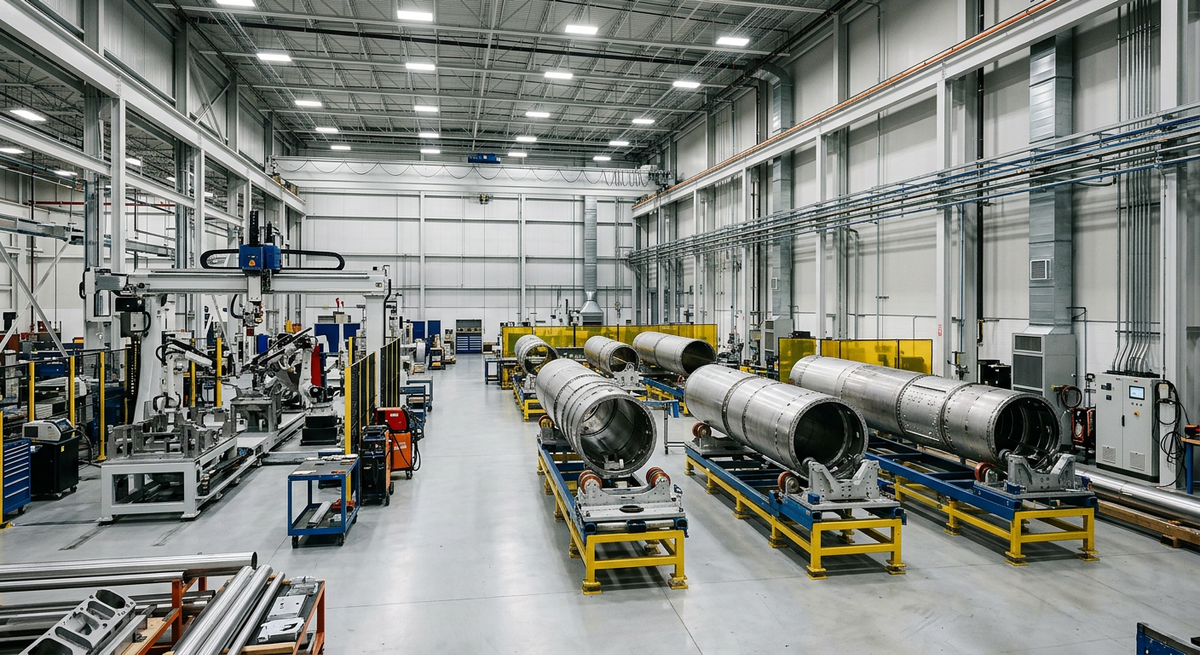
The Pentagon spent the past year rewriting how it buys munitions. Acquisition officials pressed the largest U.S. defense primes into a series of framework agreements that require those companies to fund their own capital expenditures to expand plants and tooling. The department promised multi-year production large enough to justify that risk. The sequence now looks inverted. The extra money for the surge is still in Congress, and the primes are already carrying the factories.
The department's fiscal 2027 request totals $1.5 trillion. The base discretionary piece is $1.15 trillion. Reconciliation was meant to add $350 billion, or 23 percent of the entire planned defense budget. House appropriators advanced $1.07 trillion for the base in June. The Senate has not set a topline. That two-track structure only works if both tracks move.
On Sept. 1, 2026, Congress passed a short-term continuing resolution in a 370-48 House vote, funding the government through Dec. 11, 2026. Under the CR, the Pentagon operates at baseline fiscal 2026 levels of $838.5 billion, 44 percent below the requested $1.5 trillion topline. The gap is the difference between a munitions surge and a holding pattern.
A bargain that put contractor capital first
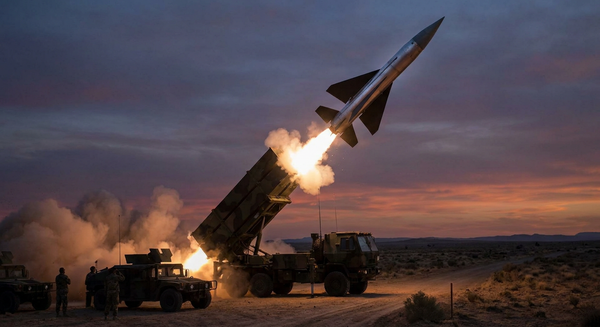
The Pentagon signed a series of framework agreements requiring contractors to front their own capital to modernize and build new manufacturing capacity. Lockheed Martin's package is the most visible: a $59 billion undefinitized contract action for PAC-3, a $35 billion undefinitized action for THAAD, and a new September 2026 agreement for the AIM-260 Joint Advanced Tactical Missile. Undefinitized actions let work start before a firm price and a fully appropriated multi-year are in place. That is useful for speed. It also means the contractor is expanding capacity against a funding path that still has to clear Congress.
Acting Comptroller Jules "Jay" Hurst III acknowledged in September 2026 that the model itself is the point. "Those [munition deals] really fundamentally change when we buy things from contractors, because for the first time we're making them put in CapEx.... If they don't meet these targets, these production targets, it's going to hurt their profitability, and they have a real incentive to meet them." Profitability follows only if the government buys at the rates those plants are being built to support.
That incentive is real, and it is incomplete. A prime that builds a PAC-3 or JATM line without a definitized multi-year is converting its own cash into floor space and tooling. If the $350 billion reconciliation request dies, some of that volume may still be bought out of the $1.15 trillion base. Much of it will not. The department can delay. A contractor cannot unspend a factory.
Programs with no base budget to fall back on
If reconciliation fails, Hurst said the department is preparing to work with congressional appropriators to reshuffle priorities into the base budget or defer investments into fiscal 2028. Final budget decisions, he said, will likely slip into the new calendar year. Folding even part of a $350 billion add-on into a $1.15 trillion base means something else comes out. Deferral into fiscal 2028 stretches the industrial timeline the frameworks were designed to compress.
Several efforts have almost no base account behind them. Gen. Michael Guetlein warned that Golden Dome for America had its initial funding placed in 2025 reconciliation, so a CR supplies no replacement topline. Fiscal 2026 F-15EX procurement was also funded in reconciliation. Under the CR, the Air Force fighter starts fiscal 2027 with $115 million, less than 5 percent of the $2.65 billion requested. The Defense Autonomous Warfare Group requested $53.6 billion over five years in reconciliation. Air Force munitions asked for $2.9 billion in that package for JASSM and JATM, plus $2.3 billion for 14 F-35s.
Capacity without a multi-year
The industrial logic was straightforward. Multi-year munitions contracts were supposed to give primes a demand signal strong enough to expand rocket motors, seekers, and final assembly. The Pentagon wanted volume on PAC-3, THAAD, JATM, and related weapons. What it has until Dec. 11 is an $838.5 billion operating level and companies that already committed capital against a $350 billion package that is not law.
Until Congress enacts the add-on or writes those programs into a full-year bill, the backup is a reshuffle of the base and a slide of work into fiscal 2028. That may keep some lines from stopping. It does not restore the multi-year certainty the framework deals were built to buy.