Israeli Defense Startup Aitan Raises $41 Million to Take Combat-Tested Drone Software Global
Israeli-founded Aitan is coming out of stealth with a $41 million round and a blunt argument: attritable drones are commodities, and the sovereign asset is the software that flies them together.
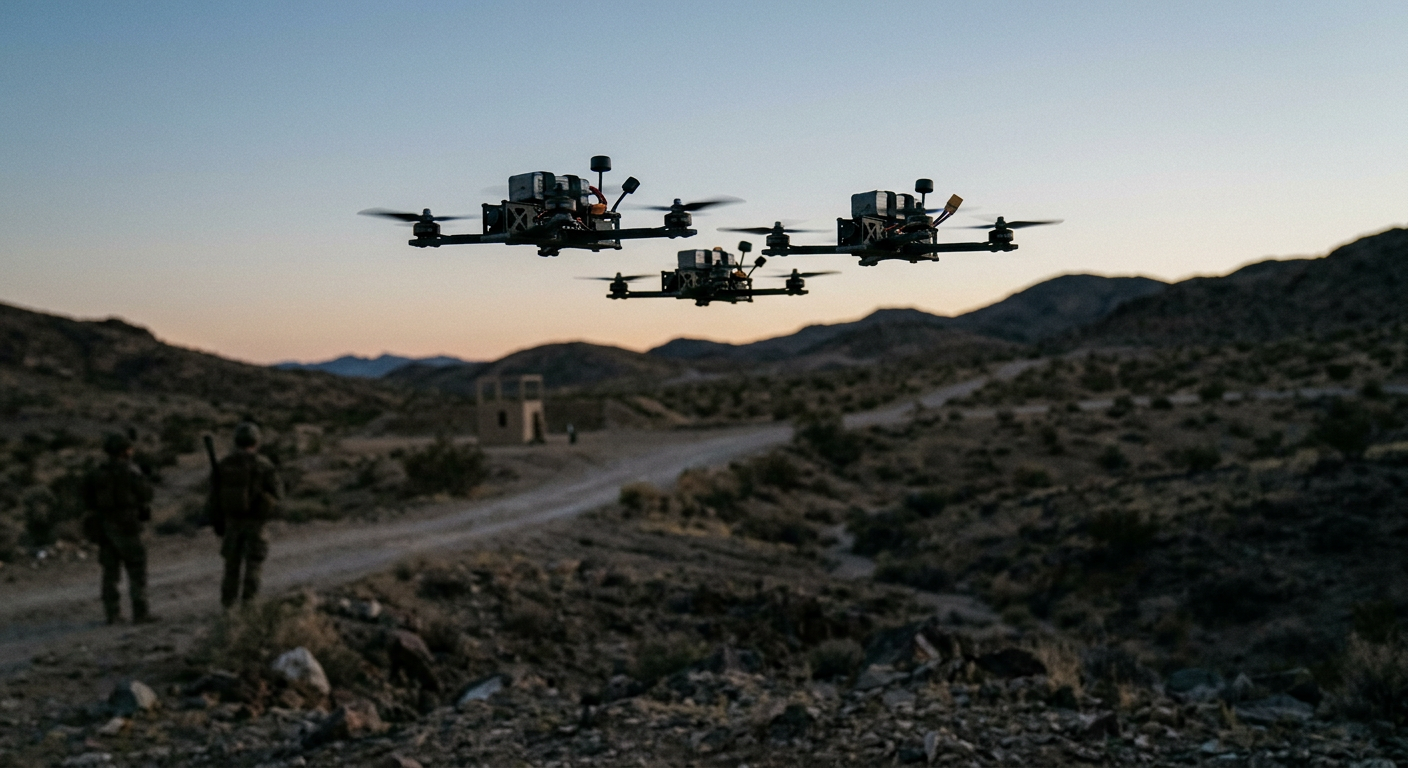
Defense ministries still buy many weapons as if they were industrial hardware, built to sit in stockpiles for decades. Drone combat in the Middle East and Ukraine has been teaching a different lesson. Airframes are cheap and expendable. The radio-frequency environment changes weekly. Batteries decay. Jammers adapt. The system that still matters after the airframe is gone is the software that coordinates whatever flies next.
That is the bet Israeli-founded Aitan is making as it comes out of stealth. The company, formerly the veteran drone-tech firm eyesAtop, announced a $41 million funding round and a category it calls Robotic Sovereignty-as-a-Service: an open command-and-control and edge-AI operating system meant to run fleets of disparate, low-cost autonomous systems as one network. Axios reported the raise; Calcalist covered the same emergence. Total equity raised to date is $54 million.
Software that has to outrun the jammer
Co-CEO Daniel Almog put the operational problem in plain terms. "Warfare has totally transformed over the past few years. In robotics, the adversary is constantly adapting. The radio-frequency environment is adapting, countermeasures changing. Even the batteries are decaying."
Fixed hardware cannot keep up with that tempo. Aitan's pitch is that militaries should treat the airframe as an attritable commodity and the C2 layer as the sovereign capability: software rewritten as electronic warfare shifts, supply chains break, and new low-cost platforms are swapped into the same fleet. The company is selling an operating system for mixed robotic inventories, not another proprietary drone. If the airframe is going to die, the network that assigned it a target, routed it around jamming, and handed the next vehicle the same mission has to survive.
A company named for a fallen officer
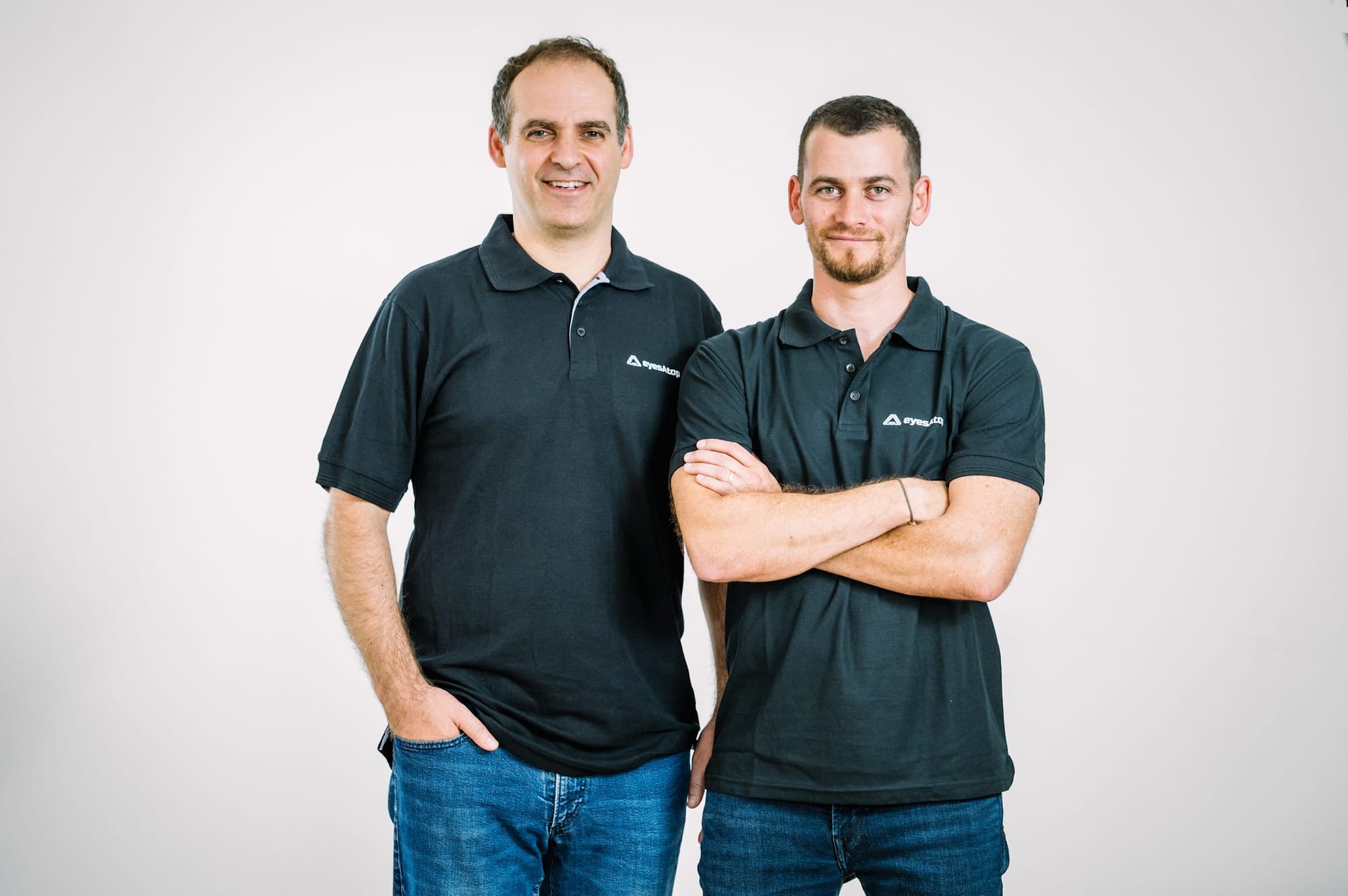
Co-founders Udi Oster and Daniel Almog are former officers in the IDF's Unit 8200. They previously co-founded Tapingo, a campus food-ordering platform acquired by Grubhub for $150 million in 2018. In 2025 they acquired eyesAtop and rebranded it.
The new name is in memory of Captain Eitan Oster, Udi's younger brother and an officer in the IDF's elite Egoz commando unit, killed in combat in southern Lebanon in September 2024. It also tracks the Hebrew word "eitan," for resilience. The founders say they were already being pulled back into defense after October 7, 2023, when their friend and former colleague Or Levy was kidnapped from the Nova music festival, where his wife Eynav was murdered.
The company now has about 50 employees in Ramat Gan, Israel, and New Jersey, heavily staffed by military reservists and defense veterans. Allied buyers want people who have flown the software under fire and then rewritten it overnight.
The IDF as proving ground
Aitan says the platform is already deployed across the IDF and the Israeli Ministry of Defense, with more than 500,000 combat operational flight hours on diverse tactical missions since 2023. It recently secured the joint contract to develop the command-and-control platform for the IDF's next-generation attack drone fleet, plus critical design contracts for robotic weapon systems.
Udi Oster, co-CEO, framed why those hours are the sales motion. "A lot of countries look for battle-tested systems," he said, pointing to a general skepticism of systems that have not actually been used in battle. If Aitan is writing the C2 for the next Israeli attack-drone fleet, allied customers are being asked to adopt a layer already wired into a force that has been iterating it in combat since 2023.
Allied fleets, not just Israeli ones
The $41 million round was co-led by Dell Technologies Capital, with managing director Yair Snir, and Deep33, with general partner Lior Prosor. Gokul Rajaram, a Coinbase and Pinterest board member, Benjamin Ling of Bling Capital, and Kevin Weil of Scribble Ventures also participated.
Snir's argument is about coordination, not another airframe. "We believe physical AI will be one of the most important technology shifts of the coming decade. But first, we need to solve the challenge of coordinating highly complex autonomous systems in challenging real-world environments." He added that "the future of defense belongs to intelligent networks of disparate systems operating together."
Prosor put the sovereignty point more directly. "Robotic warfare is becoming a sovereign capability, and we believe Aitan's team has turned unmatched real-world experience into a platform allied nations can build on. Israel is one of the only places in the world with the combat experience and flight hours to develop robotic weapon systems at scale."
That is the export case. Western and allied militaries are racing to field cheap autonomous mass without locking themselves to a single vendor's airframe or a disrupted supply chain. An open C2 and edge-AI layer, already flown in combat, is a way to keep the fleet sovereign even when the hardware underneath it is mixed, replaceable, and short-lived. Aitan is now taking that stack from the IDF to those buyers.