How Seven-Year Interceptor Commitments Are Breaking the Solid Rocket Motor Bottleneck
Lockheed Martin and L3Harris have locked in a seven-year propulsion deal to triple PAC-3 MSE interceptor output, pairing multiyear capital certainty with dual-source manufacturing to overcome a chronic missile bottleneck.
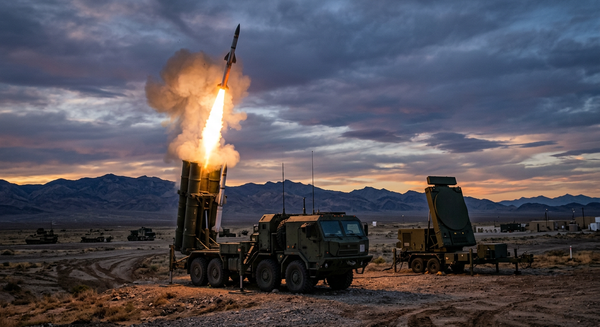
American air defense stockpiles face unprecedented depletion across multiple operational theaters. High-tempo combat engagements in Eastern Europe and the Middle East have driven Patriot interceptor inventories to historic lows, exposing a severe vulnerability in the United States defense industrial base. At the center of this shortfall lies the solid rocket motor, the critical propulsion component required to accelerate the PAC-3 Missile Segment Enhancement interceptor to hypersonic intercept speeds. For years, production ceilings on energetic propellants and motor casings capped interceptor deliveries far below military demand.
That constraint is now giving way to multiyear industrial commitments designed to place air defense manufacturing on a sustained wartime footing. On September 8, 2026, L3Harris Technologies announced an undefinitized contract award from prime contractor Lockheed Martin valued at $4.7 billion over seven years to manufacture propulsion assemblies for the PAC-3 MSE missile. The subcontract covers three specialized rocket systems: the dual-pulse solid rocket motor, the Lethality Enhancer, and the Attitude Control Motors that execute the high-frequency pulse firing required for hit-to-kill terminal guidance.
Transforming Procurement Into Seven-Year Commitments
The scale of the subcontract reflects an overarching overhaul in how the Department of War procures munitions. In July 2026, defense officials granted Lockheed Martin a multiyear contract modification of up to $53.86 billion, bringing total multiyear program funding to $58.62 billion when combined with earlier spring obligations. The overarching objective is tripling annual PAC-3 MSE production to 2,000 missiles by 2030.
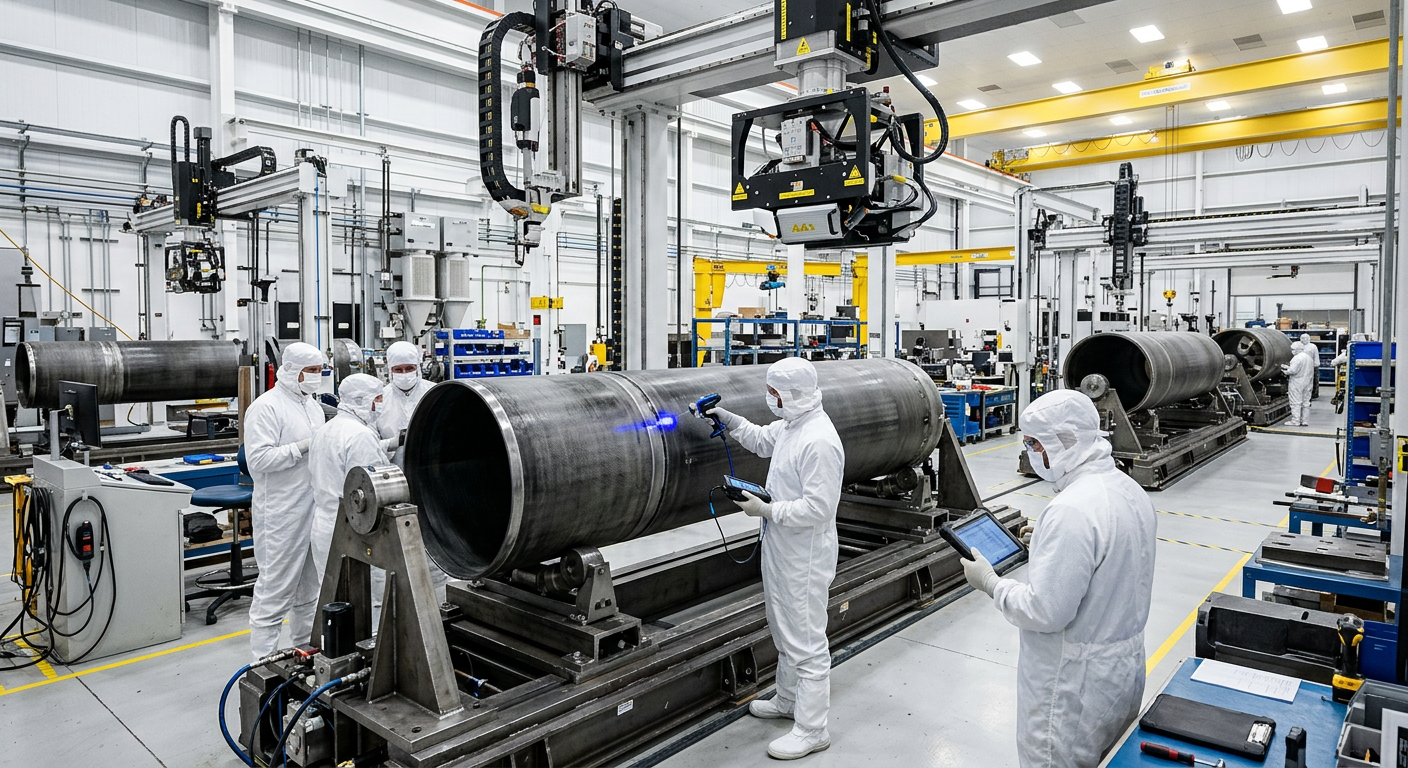
Under Secretary of War for Acquisition and Sustainment Michael P. Duffey noted that long-term framework agreements give suppliers the clear demand signals required to justify large private capital expenditures. Annual lot purchases previously left propulsion contractors vulnerable to fiscal year budget fluctuations, discouraging the heavy upfront investment needed for hazardous energetic manufacturing facilities. Seven-year commitments eliminate that uncertainty, enabling vendors to construct dedicated propellant mixing bays, cure ovens, and high-energy automated radiography inspection suites.
For L3Harris, the agreement marks a major milestone for its missile systems business. L3Harris acquired Aerojet Rocketdyne in July 2023 for $4.7 billion. This single propulsion subcontract matches that entire purchase price, validating the company strategic expansion into critical munitions components. Ken Bedingfield, President of Missile Solutions at L3Harris, confirmed the contract enables suppliers to operate on a coordinated wartime footing.
Expanding Manufacturing Capacity in Camden
Executing on the production ramp requires a rapid physical expansion across the domestic supply chain. In June 2026, L3Harris broke ground on two large-scale PAC-3 MSE production facilities at its propulsion center in Camden, Arkansas. Both facilities remain on track to achieve operational status during 2027, adding modern manufacturing bays and automated digital X-ray inspection equipment to inspect solid rocket grains without production delays.
The Camden expansion forms part of a company-wide capital program where L3Harris is investing billions across approximately 60 facilities. The initiative adds over one million square feet of manufacturing space spanning industrial sites in Arkansas, Alabama, and Virginia. Lockheed Martin is mirroring this investment at its own Camden facility, where final all-up round missile integration takes place. The prime contractor is expanding its local workforce from 1,200 employees to approximately 1,850 workers to absorb the incoming propulsion volume.
Dual-Sourcing Strategy Restores Industrial Redundancy
While L3Harris remains the primary propulsion supplier, the Pentagon has moved decisively to eliminate single points of failure across critical weapon programs. On August 3, 2026, military acquisition authorities signed a $2 billion, seven-year framework agreement with Northrop Grumman to establish a second-source solid rocket motor production line at Allegany Ballistics Laboratory in West Virginia.
Establishing parallel manufacturing lines breaks a decades-long consolidation trend that left American missile programs dependent on fragile single-vendor pipelines. By pairing long-term capital backing at L3Harris with qualified second-source capacity at Northrop Grumman, the Department of War is building a resilient industrial base capable of sustaining high-intensity combat operations. As new mixing bays open in Arkansas and West Virginia over the coming years, the solid rocket motor bottleneck will shift from a chronic vulnerability into a reliable foundation for allied air defense.