Joby's $500 Million Bet to Scale Defense Revenue Overnight
Joby Aviation is paying about $500 million to acquire Resonant Sciences, a Dayton defense shop that already books more than $100 million in annual revenue. The deal turns a decade of small Air Force pilots into a scaled, cleared defense franchise.

Joby Aviation has spent more than a decade quietly building ties to the Pentagon. The electric air taxi developer is now paying about $500 million to buy its way into the defense business at full scale.
On August 11, the Santa Cruz, California company announced an agreement to acquire Resonant Sciences, a Dayton, Ohio maker of radio-frequency and mission systems for U.S. national security customers. The purchase is funded with roughly $450 million in cash and $50 million in Joby common stock, and is expected to close in the first half of 2027, subject to regulatory review.
When it closes, Resonant will become Joby's dedicated defense business, keeping its name and its chief executive, co-founder J. Micah North.
What the money actually buys
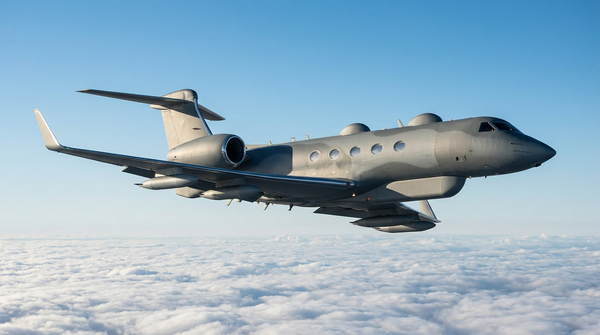
Founded in 2015 and employing roughly 250 people, Resonant is described as a global leader in low-observability technologies, with work spanning advanced sensing, electronic countermeasures, communications, and autonomous systems. More than 90 percent of its team holds security clearances, and its electronics, apertures, and radomes are qualified across more than 20 commercial and defense airframes, and it sells directly to the U.S. government and leading prime contractors supporting classified national security initiatives and active programs of record.
The numbers are the sharper signal. Resonant's trailing-twelve-month revenue passed $100 million, up about 40 percent year over year, alongside high-teens adjusted EBITDA margins in recent periods. In the first half of 2026 it secured more than three times the bookings it recorded a year earlier, and its backlog more than doubled year over year, growth Resonant attributes to long-cycle programs with the U.S. government, prime contractors, and next-generation defense technology programs.
From small Air Force pilots to a half-billion-dollar jump
The acquisition is a step change for a company better known for its commercial vertical-takeoff-and-landing aircraft. For years Joby's defense work grew through small, deliberate programs, led by the Air Force's AFWERX Agility Prime deal, whose April 2023 extension brought total potential value to $131 million across up to nine aircraft. Joby delivered its first aircraft to Edwards Air Force Base in September 2023.
Those pilots proved an electric aircraft could fly military logistics missions. The Resonant deal is different in kind: it buys an installed base of classified programs, cleared engineers, and production capacity all at once, rather than adding one flight test at a time.
Autonomy meets low-observable hardware
The strategic logic is direct. Joby brings a dual-use autonomy stack, alongside turbine-electric and hydrogen-electric aircraft; Resonant brings RF sensing, signal processing, and low-observability design. An early post-close focus is combining Joby's autonomy with Resonant's RF and signal-processing work to accelerate software-defined autonomous systems for defense customers, part of what the companies describe as a broader shift in defense priorities toward autonomous, lower-cost aircraft.
The footprint tracks the intent. Resonant runs about 105,000 square feet across seven Dayton-area buildings, with another 125,000 square feet under construction; combined with Joby's 768,000 square feet in Ohio, the two will control roughly 1 million square feet in the Dayton region.
The commercial air taxi program stays separate from all of this, and the transaction still has to clear regulatory review before its expected first-half 2027 close. But the direction is clear: a company built on electric passenger flight is now betting half a billion dollars that its next growth engine is the defense market.