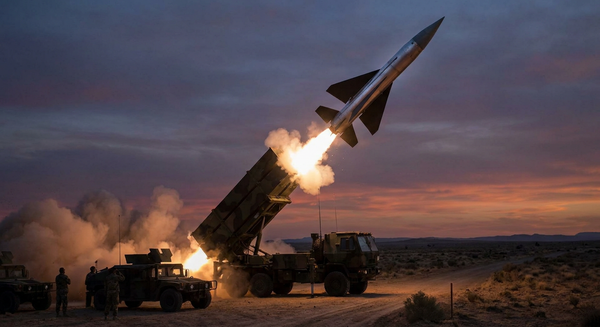
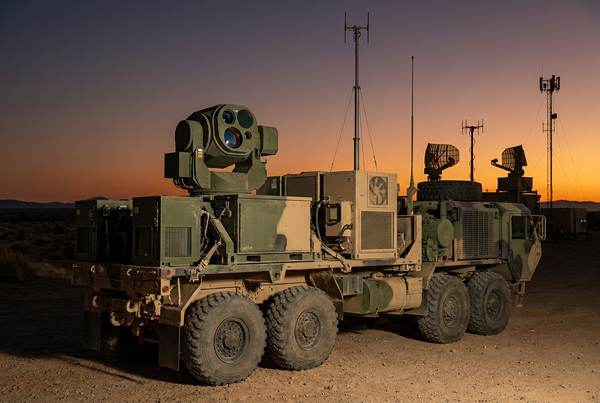
L3Harris Will Nearly Triple PAC-3 Motors and Quadruple THAAD Propulsion
L3Harris’s seven-year PAC-3 and THAAD propulsion frameworks disclose no dollar values—only rate targets. For LHX investors, the signal is capacity, not backlog.
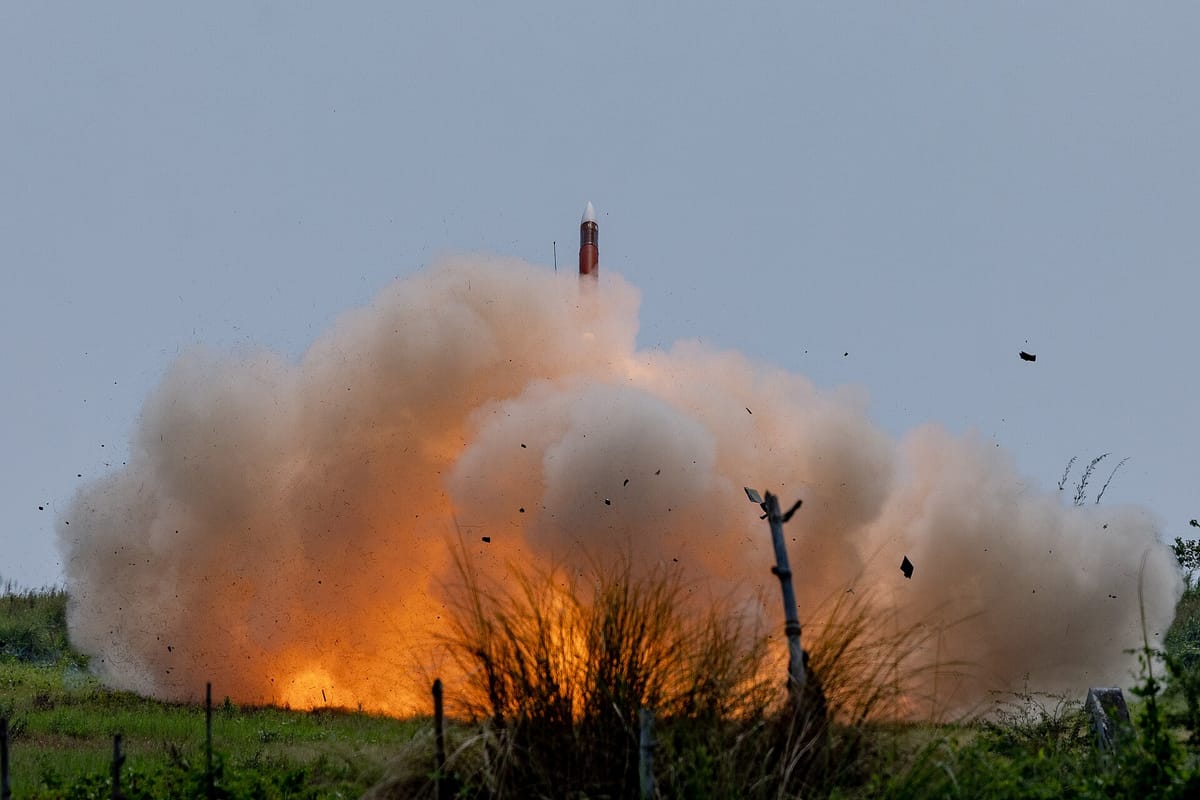
L3Harris Technologies (NYSE: LHX) is at the center of the Department of War’s attempt to break the solid-rocket-motor bottleneck—and the company is telling investors something unusual for a defense headline: the frameworks are landmark, the rate targets are aggressive, and the dollar values are not disclosed.
On July 27, 2026, the Department of War, “in cooperation with L3Harris and Lockheed Martin,” announced two landmark seven-year framework agreements to expand production capacity for key components of the PAC-3 Missile Segment Enhancement (MSE) interceptor and the THAAD weapon system, according to the Department’s release. Under Secretary of War for Acquisition and Sustainment Michael P. Duffey called the agreements “a decisive win for the Warfighter,” stressing “clear demand signals to the entire supply chain.”
L3Harris’s own PAC-3 release says the company will “nearly triple production for a range of propulsion products supporting the PAC-3 MSE interceptor,” calling it the company’s largest PAC-3 propulsion agreement to date, with the contract “expected to be definitized later this year” (L3Harris PAC-3 release). A companion release says a separate framework with the Department of War and Lockheed Martin will “quadruple propulsion production” for THAAD over seven years—again “the largest THAAD propulsion award L3Harris has received to date,” also expected to be definitized later this year (L3Harris THAAD release).
What is in the PAC-3 and THAAD kits
On PAC-3 MSE, both War.gov and L3Harris describe an acceleration of the advanced two-pulse solid rocket motor, Attitude Control Motors (ACMs), and the Lethality Enhancer—an explosive device that L3Harris says increases the ground-based PAC-3’s kill radius against threats including cruise missiles. War.gov adds that the motors deliver the speed, extended range, and maneuverability PAC-3 MSE needs against tactical ballistic missiles, cruise missiles, and aircraft.
On THAAD, the framework covers the solid rocket boost motor that launches the interceptor and the Liquid Divert and Attitude Control System (LDACS), which provides in-flight maneuverability for engagements inside and outside the atmosphere. L3Harris says it manufactures THAAD SRBMs in Huntsville, Alabama, and Camden, Arkansas, with LDACS built at its Los Angeles site, and that it is delivering on or ahead of contract for those products. The PAC-3 motor manufacturing facility in Camden, the company adds, includes dedicated processing bays and automated digital X-ray equipment that has lowered inspection and cycle times.
Breaking Defense underscored the investor-relevant gap: the Department and L3Harris “did not lay out specific numbers for the growth of each solid rocket motor” beyond the company’s nearly-triple / quadruple framing, and “both contracts—and likely high-dollar price tags—are expected to be definitized later this year.” That is the correct posture for modeling: rate ambition is public; price is not.
Why undisclosed value still moves the equity story
For LHX, propulsion is not a side business. The company has spent years integrating Aerojet Rocketdyne and advertising heavy investment in solid rocket motor capacity. In both July 27 releases, L3Harris says it is “investing billions, constructing ~60 facilities and adding or upgrading nearly 1 million square feet of manufacturing and office space” across solid rocket motor sites in Alabama, Virginia, and Arkansas. Ken Bedingfield, president of Missile Solutions, said the PAC-3 agreement lets the company “produce PAC-3 propulsion at rates never before seen,” while preparing facilities and suppliers for the ramp.
War.gov places the L3Harris frameworks in a sequence: they follow earlier PAC-3 MSE framework agreements with prime Lockheed Martin, seeker manufacturer Boeing, and multi-component supplier Honeywell. In other words, the Department is stacking supplier frameworks under the same Acquisition Transformation Strategy that produced Lockheed’s large PAC-3 and THAAD multiyears. L3Harris is the propulsion node in that stack—still the incumbent motor house even as Northrop is later named a second PAC-3 SRM source.
Breaking Defense also reported department industrial-base commentary that L3Harris had made “phenomenal” progress on solid rocket motor rates since buying Aerojet Rocketdyne in 2023, and that additional industrial-base funding for rocket motors was still being planned. Those comments are useful context for why the Department chose L3Harris for the first propulsion-centered frameworks; they are not a substitute for a published contract value.
What investors should not invent
It is tempting to impute a contract value from peer frameworks or from Lockheed’s PAC-3 ceiling. Resist it. Neither War.gov nor L3Harris published a dollar figure for these two seven-year agreements. Treating “nearly triple” and “quadruple” as if they were already-funded backlog would overstate near-term revenue visibility. The honest read is that the Department has locked L3Harris into a multi-year capacity path for the two highest-profile interceptor families, with definitization—and therefore priced backlog—expected later in 2026.
Forward-looking risk language in L3Harris’s releases is unusually on-point for equity holders: the company warns that statements about order values and system capabilities involve risks, including “continued funding up to the full contract value,” and points readers to its Form 10-K. That is not boilerplate noise in this context; it is the same funding contingency that sits under every framework in this munitions wave.
The investable takeaway
L3Harris has public, primary-source rate commitments—nearly triple PAC-3 MSE propulsion products, quadruple THAAD propulsion—under seven-year frameworks announced July 27, 2026, with definitization later in the year and no disclosed contract dollars. For investors, that is a capacity and industrial-base story first, a backlog story second. Watch the definitization event, the CapEx path through Camden, Huntsville, and Los Angeles, and how a second PAC-3 motor source elsewhere in the base changes competitive dynamics once both suppliers are tooling for the same surge. Until dollars are published, the correct model input is rate risk and CapEx—not an invented multi-billion backlog line.