Lockheed Is Building Five Stealth Drones to Force Its Way Back Into Fighter Teaming
Skunk Works is building a fleet of five Vectis autonomous stealth drone prototypes with internal capital, testing an 80 percent touch labor reduction to challenge Anduril and General Atomics.
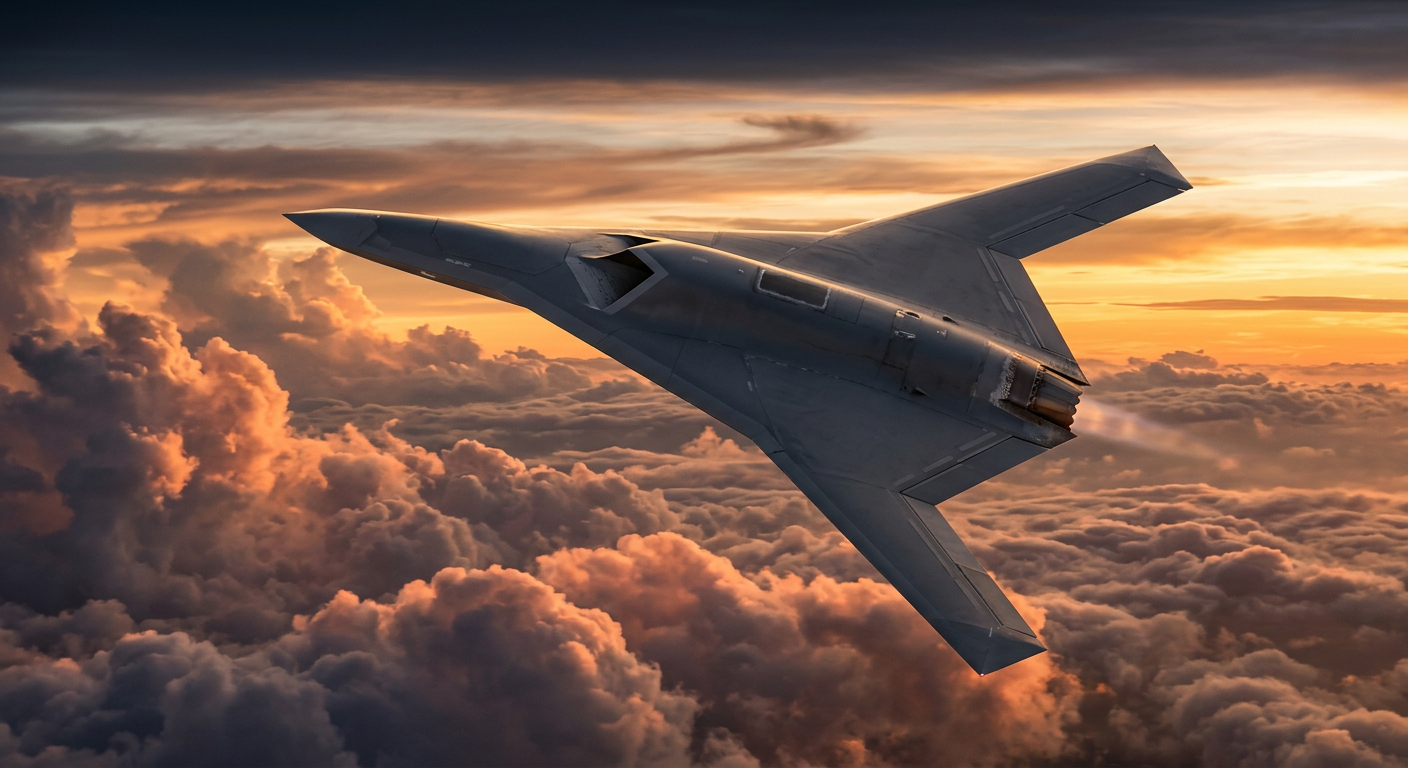
Lockheed Martin’s Skunk Works used the Air & Space Forces Association’s Air, Space & Cyber Conference in National Harbor, Maryland, on Sept. 14, 2026, to put a stealth drone program on a production clock. The company unveiled a full-scale model of Vectis and said it is building four more prototypes, expanding the fleet to five aircraft, according to a company statement. The first prototype remains on track to fly by the end of 2027, marking a direct push to reenter fighter teaming after the Air Force’s Collaborative Combat Aircraft Increment 1 awards went elsewhere.
Ron Fehlen, vice president and general manager of Skunk Works, is funding that bid entirely with internal capital, without a Pentagon contract. The Air Force plans to acquire at least 1,000 uncrewed wingmen under CCA and set an aggressive $20 million per-airframe cost target in Increment 1. Lockheed is treating that figure as a hard constraint. Vectis is a Group 5 autonomous aircraft, weighing over 1,320 pounds and operating above 18,000 feet, with a stealth airframe meant to fly as a directed wingman for crewed fighters. The five-aircraft fleet is intended to prove a factory model that traditional fighter lines have never had to hit.
The 80 Percent Touch-Labor Pivot
Skunk Works went from a napkin drawing to wind tunnel testing in under two months, completed the first digital build in six months, and released the first fabricated part in eight months. The production method behind that pace is “minimal tooling determinate assembly,” a technique Fehlen likened to ready-to-assemble flat-pack furniture. Precision-drilled, self-locating parts snap together without heavy fixed tooling. Skunk Works reports the approach reduces touch labor hours by up to 80 percent while boosting first-pass manufacturing yield, a claim that expanded the rationale for building four more airframes before first flight.
That labor math is the core competitive argument. A stealth geometry that requires a traditional fighter’s jig-and-fixture factory will miss a $20 million unit cost even if the radar cross-section is right. CCA is meant to field mass, not a handful of exquisite prototypes. Lockheed is betting that a five-ship company-funded fleet can prove both the aircraft and the assembly line before Increment 2 downselects flying designs. Fehlen’s pitch is that Skunk Works can make a low-observable airframe behave like a kit of self-locating parts rather than a handcrafted experimental article.
A Commercial Core for a $20 Million Target
Vectis is 34 feet long, comparable to an MQ-9 Reaper, with a 38-foot wingspan comparable to an F-35. The airframe is a tailless lambda wing with a submerged dorsal engine inlet designed to cut drag, lower radar cross-section, and keep foreign object debris out of the engine on rough airstrips under Agile Combat Employment. Power comes from a commercial Williams International FJ44-4 turbofan generating over 3,600 pounds of thrust, chosen for proven reliability, supply chain maturity, and low acquisition cost rather than a custom military design.
Autonomy runs on Lockheed’s MDCX command-and-control platform, the software stack deployed on the Navy’s MQ-25 Stingray tanker drone. The algorithms incorporate lessons from the X-62A VISTA test aircraft, which completed 27 AI-controlled intercepts of live T-38 Talons across eight sorties. Crewed F-35 and F-22 pilots would direct Vectis wingmen using touchscreen tablet interfaces. As analysts noted after the conference, first flight by the end of 2027 remains the firm milestone as the prototype count grows.
Positioning for Increment 2 and Allied Fleets
In Increment 1, the Air Force bypassed Lockheed and awarded airframe development to General Atomics for the YFQ-42A and to Anduril Industries for the YFQ-44A Fury. Lockheed is now targeting CCA Increment 2, where concept refinement with up to nine vendors runs through mid-2027 and the service plans to downselect up to six flying prototypes. Defense coverage emphasized that the extra four airframes buy test density for autonomy, weapons, and dispersed operations before that downselect.
Lockheed is also pitching beyond the Air Force to the U.S. Navy, Marine Corps, and international F-35 operators seeking sovereign drone wingmen. A common autonomy stack with MQ-25, a commercial turbofan, and a stealth airframe sized like a Reaper give Lockheed an export-ready offering for allied F-35 fleets. Defense reporting framed the four extra aircraft as a concrete production plan rather than a display model refresh.
Five company-funded prototypes will not erase Increment 1, where General Atomics and Anduril hold a head start on flying hardware. What the Vectis fleet does is put a traditional prime back on the CCA cost curve before mid-2027. If the 80 percent touch-labor claim holds on real parts, Lockheed will have an industrial argument Increment 2 evaluators cannot ignore. If the snap-together factory fails to deliver first-pass yield at volume, Vectis remains a well-shaped Skunk Works demonstrator chasing a $20 million airplane it cannot afford to build.