The Navy's New Shipyard Will Not Build Submarines
Anduril and the Navy are standing up a Maryland module yard to unclog Virginia-class assembly. Taxpayers take a 40 percent stake as gating hardware moves off the nuclear primes.
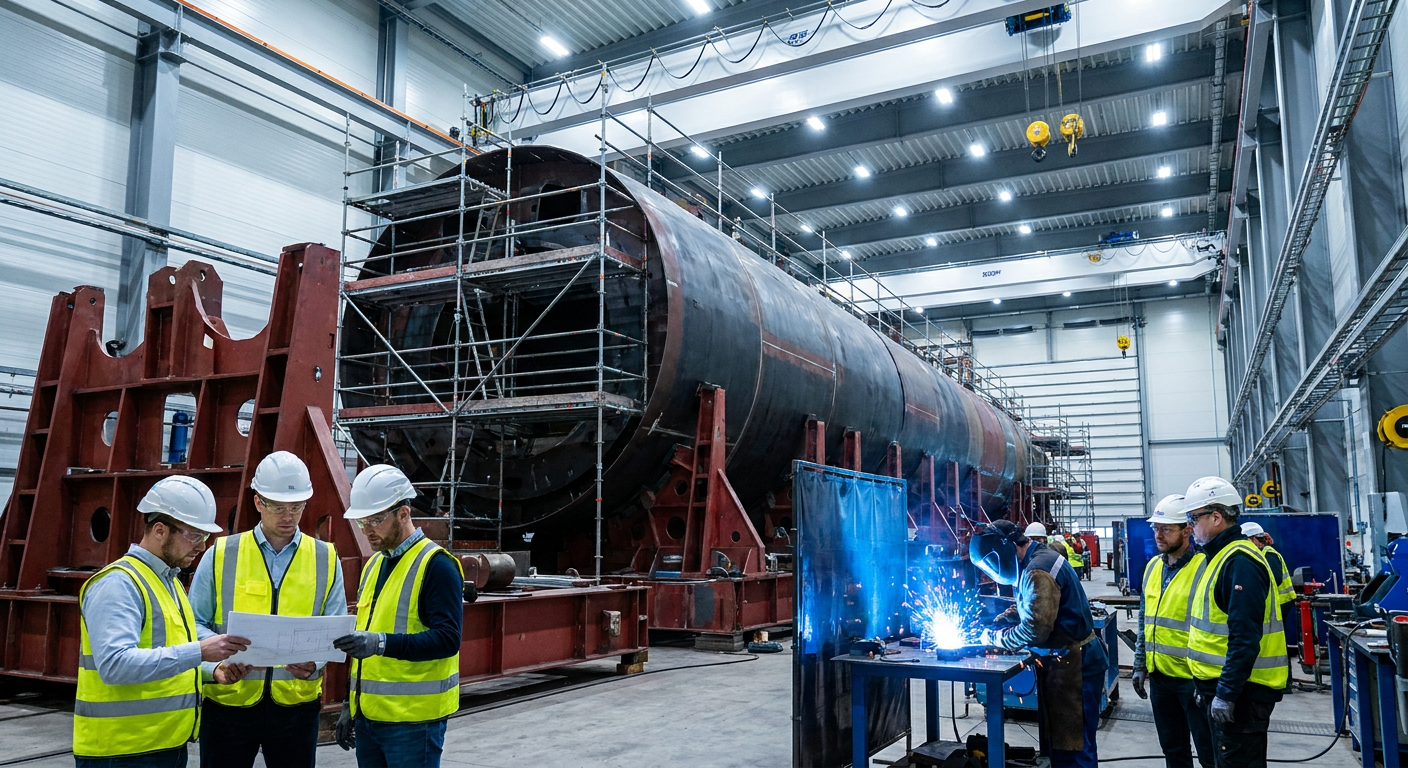
The U.S. Navy is trying to solve a submarine problem that does not start at the reactor. It starts with the bulky, late hardware that holds final assembly hostage. Anduril Industries and the service have unveiled a $6.6 billion public-private push to build Arsenal-2, a 2-million-square-foot software-defined shipyard at Tradepoint Atlantic in Sparrows Point, Maryland. The yard will not roll complete attack boats into the Patapsco. It will feed General Dynamics Electric Boat and Huntington Ingalls Industries Newport News Shipbuilding the modules those primes cannot currently produce at the pace Congress has already funded.
The structure of the deal is as notable as the floor space. Anduril is committing $3.7 billion in private capital, according to a Maryland release. The Navy awarded a contract worth up to $2.9 billion, paid against demonstrated production milestones rather than a blank construction check. American taxpayers will hold a 40 percent equity stake in the shipyard operating subsidiary created to run the plant, Defense One reported. Washington is not merely a customer. It is a co-owner of the production node it needs.
A yard that builds the gates, not the boats
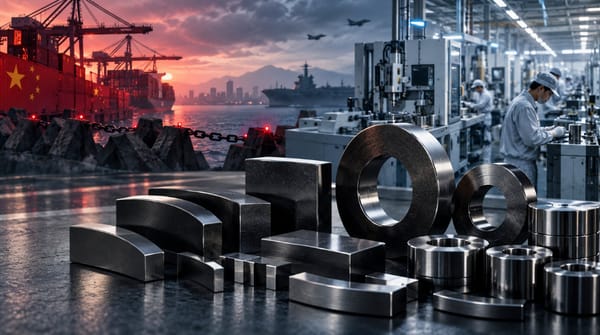
Arsenal-2 is designed to manufacture large-scale components, modules, and assemblies for Virginia-class attack submarines. Initial production concentrates on gating components that currently delay final assembly at the prime yards, specifically torpedo tubes and impulse tanks. The plan then scales to complex rafted modules and, later, hull sections. Finished work will move by sea, rail, and road to Groton, Connecticut, and Newport News, Virginia. Kari Wilkinson, president of HII Newport News Shipbuilding, formally welcomed Anduril as a subcomponent partner whose job is to accelerate fleet deliveries, not to stand up a third nuclear boatbuilder.
That sequencing is the industrial logic. The two nuclear primes remain the only yards that can outfit reactors and integrate a finished SSN. What they cannot spare is bay time on bulky assemblies that arrive late and then sit on the critical path. Vice Adm. Robert Gaucher, the Pentagon reporting portfolio manager for submarines, has said the required work already exceeds prime-yard capacity and that shifting modules offsite is essential if the fleet is to catch the construction rate already written into statute.
Throughput the industrial base does not have
Virginia-class output has averaged 1.1 to 1.4 submarines a year, below the congressionally funded two-per-year rate and well short of the 2.33 boats a year needed to cover U.S. force-structure goals and AUKUS Pillar 1, according to a Congressional Research Service report. That pillar contemplates transferring 3 to 5 Virginia-class submarines to Australia beginning in the 2030s. Every late American hull is a delayed Australian hull.
The Navy 2026 shipbuilding plan treats distributed construction as the answer. Modular subassemblies would rise from about 10 percent of construction work today to 50 percent, so Groton and Newport News can concentrate on nuclear outfitting and final integration. Arsenal-2 is the first large attempt to make that shift real on a former steel mill rather than inside the existing nuclear fence line.
Steel, software, and a California bridge
The 187-acre Sparrows Point site sits on ground once occupied by Bethlehem Steel and Fairfield Shipyard, which built Liberty ships in World War II. The new plant is planned with high-bay assembly halls, reconfigurable production lines, a 1,200-foot graving dock, and deep-water port access. Maryland officials say the project will create more than 3,100 direct jobs and support about 11,000 indirect jobs. Navy and company materials credit the yard with adding 9 million labor hours a year to the submarine industrial base, a 15 percent capacity increase for the Virginia-class program.
Anduril ArsenalOS is supposed to digitize precision welding records, material tracking, and work instructions so the yard can recruit and cross-train workers from commercial automotive and aerospace plants. The digital backbone has to make a new labor pool usable on SUBSAFE work, or the floor space is just another empty bay.
Arsenal-2 is slated to break ground in early 2027 and begin operations in 2030. Anduril is already producing torpedo-tube prototypes at a 160,000-square-foot, SUBSAFE-certified shop in Orange County, California, a two-year head start on qualification before the Baltimore halls open.
The test is whether a private firm, a public equity stake, and a milestone contract can pull gating hardware off the critical path. If the tubes, tanks, and rafted modules arrive on time, Groton and Newport News spend scarce hours on work only they can do. If they do not, the Navy will still be building attack boats at a rate that cannot fill its own force or keep the AUKUS transfer on the calendar it has already promised.