Northrop’s $3 Billion Framework Makes It PAC-3’s Second Rocket-Motor Source
Northrop’s ~$2B PAC-3 SRM and ~$1B THAAD structure frameworks cast the company as a second solid-rocket-motor source—exactly the redundancy the Pentagon wants.
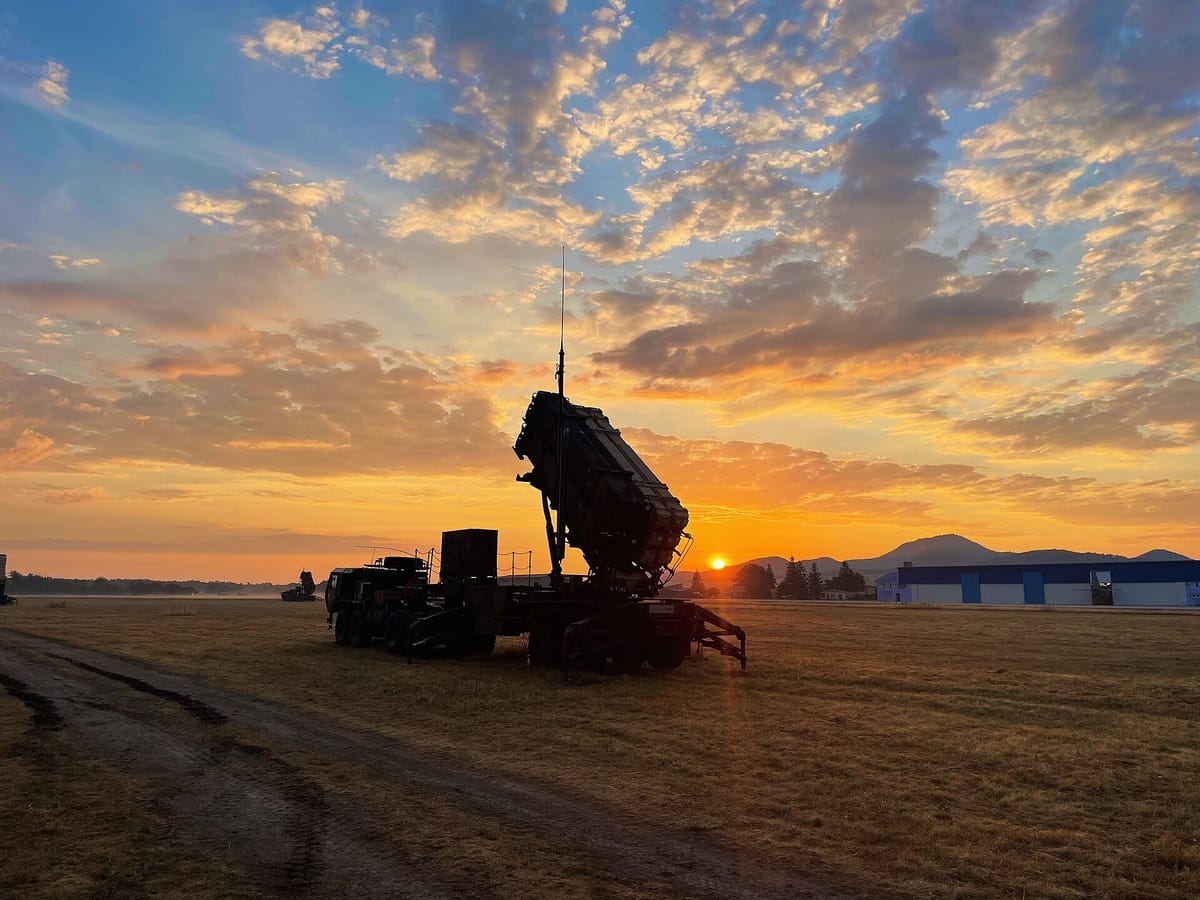
Northrop Grumman (NYSE: NOC) just moved from PAC-3 supplier-in-waiting to named second source for the interceptor’s solid rocket motors—and it did so with a dollar figure large enough to matter on a prime’s backlog bridge. On August 3, 2026, the company said it had signed two multi-year framework agreements totaling over $3 billion with the U.S. Department of War and Lockheed Martin: roughly $2 billion to accelerate PAC-3 MSE solid rocket motors and ignition safety devices, and roughly $1 billion to ramp THAAD structural components, according to Northrop’s release.
The Department of War’s own August 3 release puts the policy objective in blunt language: the frameworks are meant to help Patriot Advanced Capability-3 (PAC-3) and Terminal High Altitude Area Defense (THAAD) production “triple and quadruple, respectively,” by pushing long-term demand signals deeper into the supply chain. Under Secretary of War for Acquisition and Sustainment Michael P. Duffey said framework agreements with component suppliers “are vital to accelerating the tripling of PAC-3 and quadrupling of THAAD interceptor production.”
Why a second SRM source is the story
For years, solid rocket motors have been the textbook bottleneck in U.S. munitions ramp plans—capacity concentrated, lead times long, and surge options thin. The War.gov release is explicit that the PAC-3 MSE framework “establishes a second source for Solid Rocket Motors (SRMs)” and also ramps ignition safety devices. That is not a cosmetic dual-source press line; it is the Department saying it will buy redundancy into the industrial base rather than hope the incumbent can stretch forever.
Breaking Defense, citing the same announcements, noted that L3Harris has been the sole producer of SRMs for PAC-3 and that Northrop’s Allegany Ballistics Laboratory in West Virginia will stand up PAC-3 motor production, while additional THAAD component work is tied to Northrop’s San Diego plant. Northrop’s release adds that, over the seven-year PAC-3 framework, SRM rates at ABL in Rocket Center, West Virginia, will rise significantly, building on capacity the company says it has already doubled at ABL since 2021, with plans to triple production capabilities by 2027.
Investors should separate three claims that often blur together. First, Northrop’s dollar split—about $2 billion PAC-3, about $1 billion THAAD—comes from the company, not from a War.gov price table. Second, the “triple / quadruple” language in the Department release describes system-level interceptor production goals enabled by supplier frameworks, not a guaranteed Northrop unit schedule published to the dollar. Third, these are framework agreements spanning seven years; like other awards in this wave, they are demand-signal instruments that still depend on later definitization and appropriations.
Northrop also situates the PAC-3 surge against Army demand language in its release: supporting growth in annual PAC-3 MSE missile production “from roughly 600 units today to thousands in the near term” for U.S. forces and partners. That unit-path language is Northrop’s characterization of the Army’s growth trajectory, not a War.gov quantity table attached to the $2 billion framework. Treat it as directional color on why a second motor source is being stood up now.
THAAD structures: the quieter billion
The THAAD half of the package is less glamorous than motors and more revealing about where capacity actually binds. Northrop says the roughly $1 billion framework will enable a significant increase in monthly deliveries of THAAD components over seven years. The War.gov release says the THAAD framework will “quadruple the production of THAAD interceptor structural components,” including mid-body shells, muzzle covers, and rail car assemblies. Northrop’s release notes a San Diego plant legacy since 2002 on interceptor shell cores, aft bulkheads, and heat shield assemblies—structures that have to survive high-temperature kinetic missions.
That mix matters for NOC’s narrative. Markets often price Northrop as a space, B-21, and autonomous-systems story; munitions components can look like a side dish. A multi-year, multi-billion framework that pairs PAC-3 motors with THAAD structures re-centers the company inside the highest-priority interceptor ramps of the Acquisition Transformation Strategy—the same policy architecture driving Lockheed’s PAC-3 and THAAD multiyears and L3Harris’s propulsion frameworks.
Capacity math Northrop is putting on the table
Northrop’s release inventories recent self-funded capacity moves: doubling solid rocket motor capacity at Utah facilities since 2021, nearly tripling capacity at Allegany Ballistics Lab, and increasing capacity by 25% at Elkton, Maryland. It also says the company has invested over $2 billion in munitions-related technologies and facilities since 2019, including over $1 billion for solid rocket motor production, and cites delivery of more than 1.3 million solid rocket motors over more than 70 years of propulsion work. Those are company figures, useful as context for why the Department could name Northrop a second PAC-3 SRM source now rather than years from now.
Corporate vice president Ben Davies, quoted by Northrop, framed the shift as pivoting “from steady production to a production surge in record time.” For the stock, the modeling questions are more prosaic: when do framework dollars become firm orders; what margin profile do SRMs and THAAD structures carry versus Northrop’s mix; and how much additional CapEx sits beyond the investments already disclosed?
How to read the $3 billion without overreading it
Framework total “over $3 billion” is a ceiling-style commercial signal, not a one-day revenue event. It does, however, answer a question investors have asked since the Department began signing munitions frameworks: who, besides the prime and the incumbent motor house, gets paid to de-risk the PAC-3 and THAAD ramps? On August 3, the answer included Northrop Grumman—as PAC-3’s second rocket-motor source and as a scaled THAAD structures supplier—under agreements the Department says are designed to help triple PAC-3 and quadruple THAAD production.
That is the investable fact pattern. The cash conversion schedule, the definitized unit prices, and the competitive share split with L3Harris on PAC-3 motors are still ahead. Until those show up in orders and guidance, treat the August 3 announcements as industrial-base insurance the Department is willing to pay for—and as a new, multi-year munitions vector inside Northrop’s portfolio that did not exist in this form a week earlier.