RTX’s Pratt Lands a $1.3 Billion F135 Spares Order for the Global F-35 Fleet
A $1.295 billion UCA modification for F135 spare parts—not new engine lots—underscores how F-35 readiness, not just production, feeds RTX’s military engines franchise.
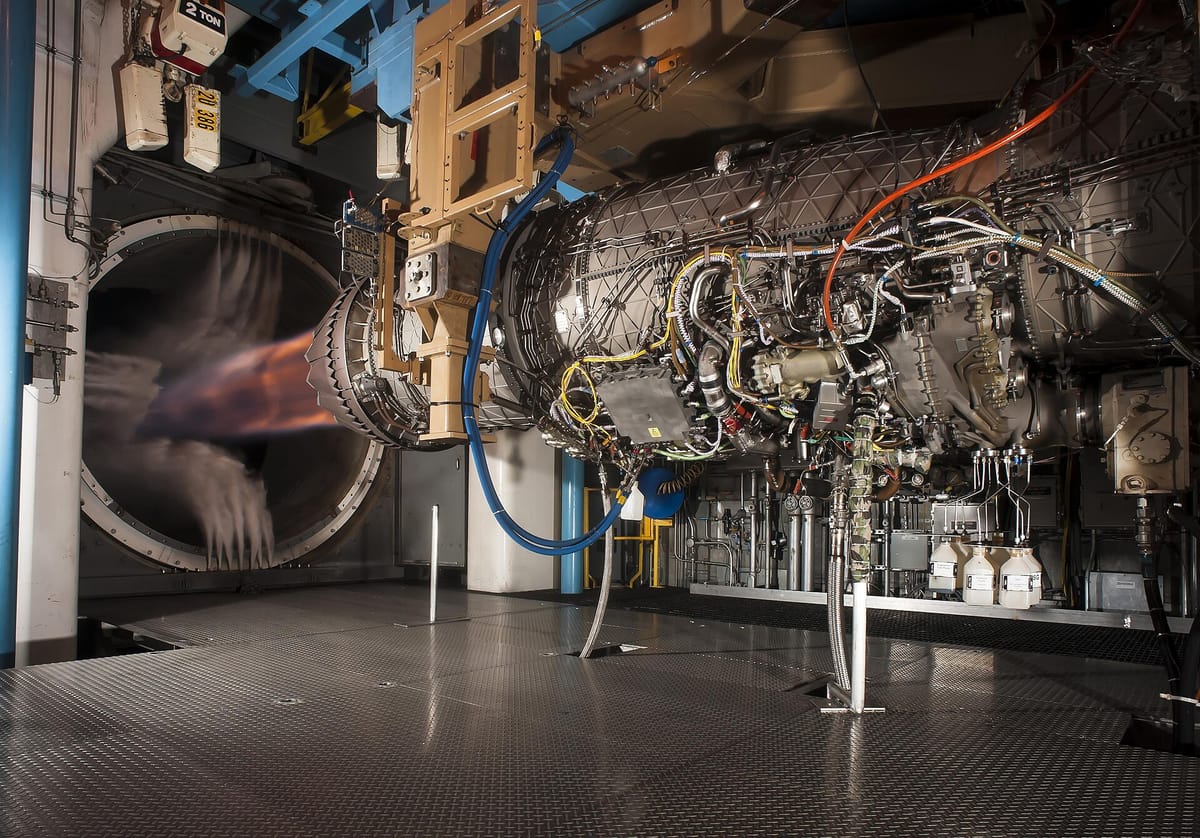
Not every nine-figure F-35 headline is a new engine buy. RTX’s (NYSE: RTX) Pratt & Whitney just booked a nearly $1.3 billion undefinitized contract for F135 spare parts—a sustainment action that says as much about fleet readiness economics as about the fighter’s production rate.
The Department of War’s July 30 contracts notice records the precise figure: RTX Corp., Pratt and Whitney Military Engines, East Hartford, Connecticut, was awarded a $1,295,745,898 undefinitized contract action modification (P00024) to previously awarded firm-fixed-price IDIQ contract N0001920D0013. The modification adds scope to procure initial spares for the F135 propulsion system—including depot and common spares for the F-35 global spares pool and country-unique spares—for the Air Force, Marine Corps, Navy, non-DoD participants, F-35 Cooperative Program Partners, and Foreign Military Sales customers. Work is expected to complete in December 2030. No funds were obligated at award; funds will be obligated on individual orders as issued. Naval Air Systems Command, Patuxent River, Maryland, is the contracting activity. The underlying contract was not competed.
Pratt & Whitney’s July 31 release (also carried on RTX’s newsroom) describes the award as a nearly $1.3 billion undefinitized contract for F135 engine spare parts funding fiscal year 2026 initial spare parts requirements, deployable spare packages, depot lay-ins, and associated support equipment for U.S. and international F-35 customers.
Spares, not new production lots
That distinction is the whole investor point. F135 production engines are a separate industrial story—lot buys, delivery rates, and the forthcoming Engine Core Upgrade path. This P00024 action is about keeping the installed base flying: initial spares, depot lay-ins, deployable packages, and support equipment. Modeling it as incremental engine production would misstate both revenue mix and margin character inside Pratt’s military engines book.
The company’s release supplies the scale of that installed base: Pratt & Whitney has delivered more than 1,500 F135 production engines to a worldwide customer base spanning 20 allied nations. The F135 sustainment enterprise, it says, supports 42 bases and 13 ships worldwide through multiple depot facilities. Chris Johnson, vice president of Pratt & Whitney’s F135 Program, said the contract will “strengthen our global sustainment network” so operators can continue to rely on F135 performance.
War.gov’s place-of-performance split reinforces how concentrated—and how American—the workshare remains: East Hartford 59.6%, Middletown 16.7%, Windsor 7.5%, North Berwick, Maine 5%, plus smaller shares across Red Oak, Texas; Kent, Washington; Wallingford, Connecticut; Smithfield, Rhode Island; El Cajon and San Diego, California; and other CONUS sites totaling the balance. For supply-chain analysts, that map is a reminder that F135 readiness is still largely a New England industrial problem even when the aircraft are forward-deployed.
Why sustainment dollars matter for RTX
RTX’s 2025 sales, the company notes in the same release, exceeded $88 billion. Inside that conglomerate, F135 sustainment is a recurring, fleet-linked cash flow stream that grows with aircraft delivered and with hours flown—not only with new airframe lots. As the F-35 enterprise expands across partners and FMS customers, spare-parts IDIQ modifications are how readiness budgets show up in Pratt’s order book.
The release also ties today’s sustainment network to tomorrow’s modernization: the F135 Engine Core Upgrade, described as the selected propulsion modernization solution for the F-35, “will leverage the established F135 sustainment network.” Investors should not conflate the $1.295 billion spares UCA with an ECU production award; the company is making a different claim—that the logistics architecture funded by actions like P00024 is the backbone on which ECU sustainment will later ride.
Readiness politics around the F-35 have often focused on mission-capable rates and depot backlogs. A large FY2026 initial-spares and depot-lay-in vehicle is one of the concrete contracting tools the enterprise uses to attack those problems. Whether it is “enough” is an operational question outside the four corners of the award; that the Department and Pratt chose a nearly $1.3 billion UCA modification for spares—not engines—is the fact investors can take to a model.
Undefinitized, unfunded at award—still a real order vehicle
Like several large July awards, this modification is a UCA with no funds obligated at the announcement. That is standard for IDIQ spare-parts vehicles: the modification value defines scope authority; task orders carry the cash. For modeling, watch order obligation pace through FY2026 and whether depot lay-ins and deployable packages pull forward differently than routine initial spares.
The competitive posture is also clear in War.gov: the contract being modified “was not competed.” That is typical for F135 propulsion sustainment, where Pratt is the engine OEM across all three F-35 variants. Sole-source sustainment economics are a feature of the franchise—and a reminder that readiness risk (parts availability, depot throughput) sits with one prime.
The investable read
Strip the headlines to the primary documents and the story is clean: a $1,295,745,898 UCA modification (P00024) on N0001920D0013 for F135 initial and depot spares supporting the global F-35 enterprise, completion through December 2030, no funds at award, workshare centered in Connecticut. Pratt says the network already backs more than 1,500 delivered engines across 20 nations, 42 bases, and 13 ships. This is readiness money for the world’s densest fifth-generation fighter fleet—not a camouflaged new-engine production lot—and that is exactly how RTX investors should book it.
Secondary coverage sometimes shortens the award to “$1.3 billion F135 contract” without saying spares. The primary sources do not leave that ambiguity: War.gov’s July 30 bulletin and Pratt’s July 31 release both describe spare parts, depot lay-ins, and support equipment for FY2026 requirements. If an investor model already assumes rising F135 production deliveries, this modification should stack on top as sustainment—not substitute for a production lot.