Boeing's $131 Billion F-15 Lifeline Faces a Seven-Month Delivery Slip
The Pentagon set an eye-popping $131.2 billion ceiling on Boeing's F-15 line through 2037, even as delivery delays officially breached the fighter's operational baseline and pushed full readiness to 2028.
The U.S. Air Force has awarded Boeing a sole-source contract with an ordering ceiling of $131.23 billion for the F-15 Eagle Crest program. Managed by the Air Force Life Cycle Management Center at Wright-Patterson Air Force Base in Ohio, the massive indefinite-delivery, indefinite-quantity framework establishes an umbrella mechanism to govern aircraft production, modernization, upgrades, retrofits, and depot maintenance through August 2037.
The initial award obligates just $343,740 in fiscal 2026 research, development, test, and evaluation funds, with the headline figure serving as an authorized ceiling across an initial five-year ordering window through August 2031 and an optional five-year extension through 2036. In addition to meeting U.S. Air Force and Air National Guard requirements, the contract explicitly folds in Foreign Military Sales for seven allied nations: Japan, Israel, Saudi Arabia, South Korea, Singapore, Indonesia, and Poland.
Consolidating Demand Under One Roof
The Eagle Crest contract vehicle is structured to streamline procurement and capture industrial economies of scale as the service moves to more than double its planned buy of the newest variant, the F-15EX Eagle II, to 267 aircraft. By consolidating domestic purchases alongside international modernization programs into a single contract, the Air Force aims to send a predictable demand signal to Boeing and its supply chain across St. Louis, Missouri.
The sheer scale of the $131.2 billion ceiling reflects the Pentagon's expanding reliance on fourth-generation heavy fighters to complement fifth-generation stealth jets like the F-35. With massive weapons payload capacity, the F-15EX is designed to serve as an airborne magazine for outsized standoff cruise missiles and hypersonic munitions. The award dwarfs earlier single-platform frameworks, including the Air Force's $62 billion F-16 export vehicle awarded to Lockheed Martin in 2020.
The timing of the award also coincides with growing foreign appetite. Israel has moved forward with orders for new export jets, while longstanding operators such as South Korea and Japan continue upgrading existing airframes. Creating a unified vehicle eliminates the administrative burden of negotiating piecemeal contracts for every export order or modification package over the coming decade.
Delivery Slips and an Unpriced Redesign
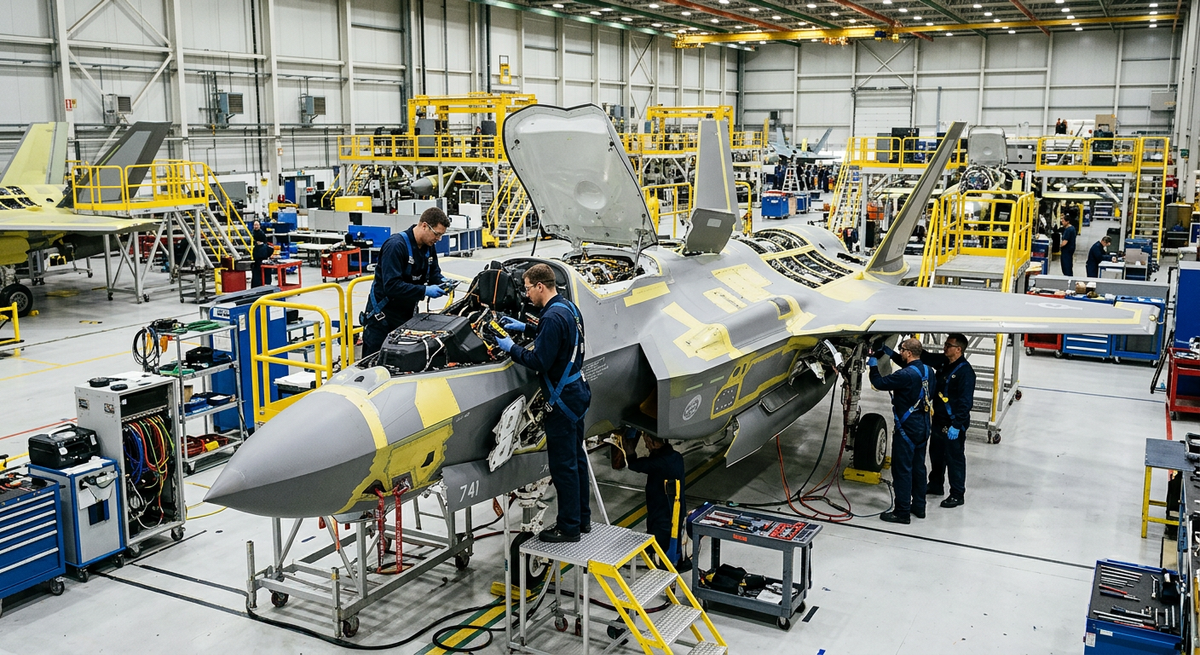
Despite the long-term commitment, Boeing's F-15EX assembly lines in St. Louis are wrestling with immediate manufacturing bottlenecks and parts shortages, aggravated by a lengthy machinist strike that disrupted factory operations. The delays have slowed planned deliveries to forward-deployed units, including fighter squadrons at Kadena Air Base in Japan transitioning from retired F-15C/D models.
According to the Pentagon's latest Selected Acquisition Report, cascading delivery setbacks have officially breached the program's baseline schedule for Full Operational Capability, pushing the formal milestone back by roughly seven months to February 2028.
The programmatic challenge extends beyond factory throughput. The acquisition report highlights that expanding the fleet to 267 aircraft introduces significant cost and schedule uncertainties, requiring a major technical refresh to address diminishing manufacturing sources. The planned refresh entails redesigning key subsystems that are nearing obsolescence, including the fighter's active electronically scanned array radar, engines, and electronic warfare suite, for which the Air Force has not yet finalized a revised cost estimate.
The $131.2 billion ceiling gives the Air Force and its international allies a decade-long runway to order fighters, parts, and upgrades without running into statutory budget ceilings. But with full operational readiness delayed into 2028 and a substantial subsystem redesign still ahead, converting that theoretical capacity into combat-ready airframes will depend on how quickly Boeing can stabilize its production lines.