The F-35's $38 Billion Cooling Dilemma Won't See a Production Fix Until 2033
A 2023 GAO report found the F-35's overtasked cooling system is adding $38 billion in engine maintenance costs. Collins Aerospace just tested a candidate fix, but the program isn't expected to pick a solution or begin production until 2033.
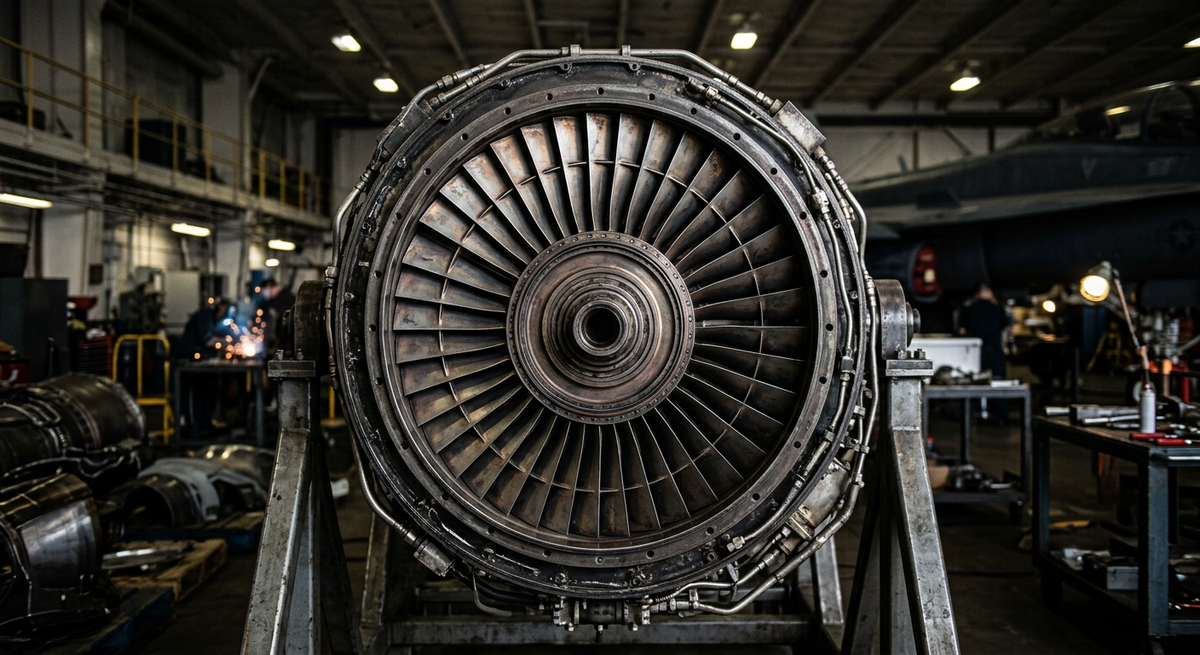
The F-35's cooling system has been running its engine harder than it was designed for since at least 2023, and the fighter's next major software and sensor upgrade is about to demand even more power than the current architecture can shed as heat. Collins Aerospace, an RTX subsidiary, thinks it has a fix: the company completed altitude testing of its Enhanced Power and Cooling System, or EPACS, this week, demonstrating 80 kilowatts of cooling capacity, more than double what the F-35 currently has.
A 2023 warning that still defines the problem
A May 2023 Government Accountability Office report found that the F-35's existing cooling system is overtasked, forcing the engine to run beyond its design parameters. In the GAO's words, "the extra heat is increasing the wear on the engine, reducing its life, and adding $38 billion in maintenance costs." That figure is three years old, not a new estimate, but it is still the baseline number the program is working against: the same report found the F-35 program had not yet fully defined how much cooling the aircraft would actually need going forward.
The reason the gap is widening rather than closing is Block 4, the F-35's ongoing hardware and software modernization: better radar, more processing power, new weapons integration, and other mission-system upgrades that all draw more electricity than the jet's original design accounted for. More electricity drawn means more heat that has to go somewhere, and the current system was never sized for it.
The fix is still years from a decision
Collins is positioning EPACS as a candidate for the F-35's Power Thermal Management Upgrade, or PTMU, the effort meant to carry the aircraft's cooling capacity beyond what Block 4 alone requires. Ira Grimmett, Collins' vice president of Environmental and Airframe Control Systems for Power and Controls, said completing altitude testing "advances EPACS maturity and reinforces confidence in the system's capability and performance." But EPACS has not been selected as the F-35's definitive answer. It is one option the program is still weighing.
In December 2024, the F-35 Joint Program Office awarded Lockheed Martin a $107 million contract to serve as Lead Systems Integrator and analyze PTMU upgrade options. That analysis is due to wrap up in December 2026, with the Pentagon then running its own independent cost estimate on the thermal-management options by March 2027. Even if that timeline holds, the GAO has said PTMU production would not begin until 2033, seven years after the analysis concludes.
A second engine effort running on its own clock
Cooling is not the only piece of the F135 engine under revision. RTX's Pratt & Whitney is separately running the Engine Core Upgrade, a program meant to improve the engine's underlying durability and power output. Pratt received a $1.31 billion contract in September 2024 covering design, rig testing, and airworthiness evaluation for that upgrade, with the first operational engine expected to fly in 2029, four years ahead of the earliest projected PTMU production start.
Whether the cooling and engine tracks end up converging into a single retrofit or moving on separate schedules is still unresolved. A more recent GAO report found the F-35 program has awarded predevelopment contracts for a combined Engine and Power thermal Management effort but has not yet chosen an acquisition pathway for it. For now, Collins has a tested piece of hardware, Pratt has an engine upgrade flying in three years, and the program office has neither picked a cooling solution nor decided how the two efforts fit together.