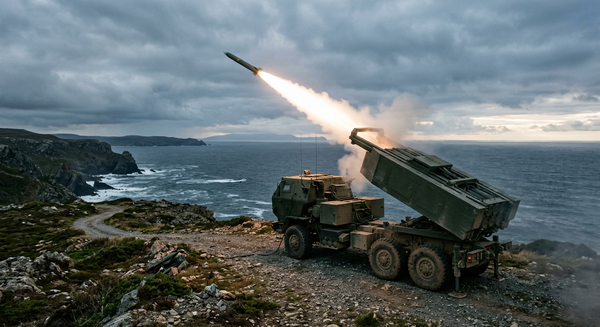
The Navy Is Putting Mass-Produced Hypersonics on Super Hornets
The Navy placed a production order of up to $200 million with Castelion for Blackbeard, a sub-$500,000 hypersonic moving from Super Hornet tests toward serial rounds and 2027 early operational capability.
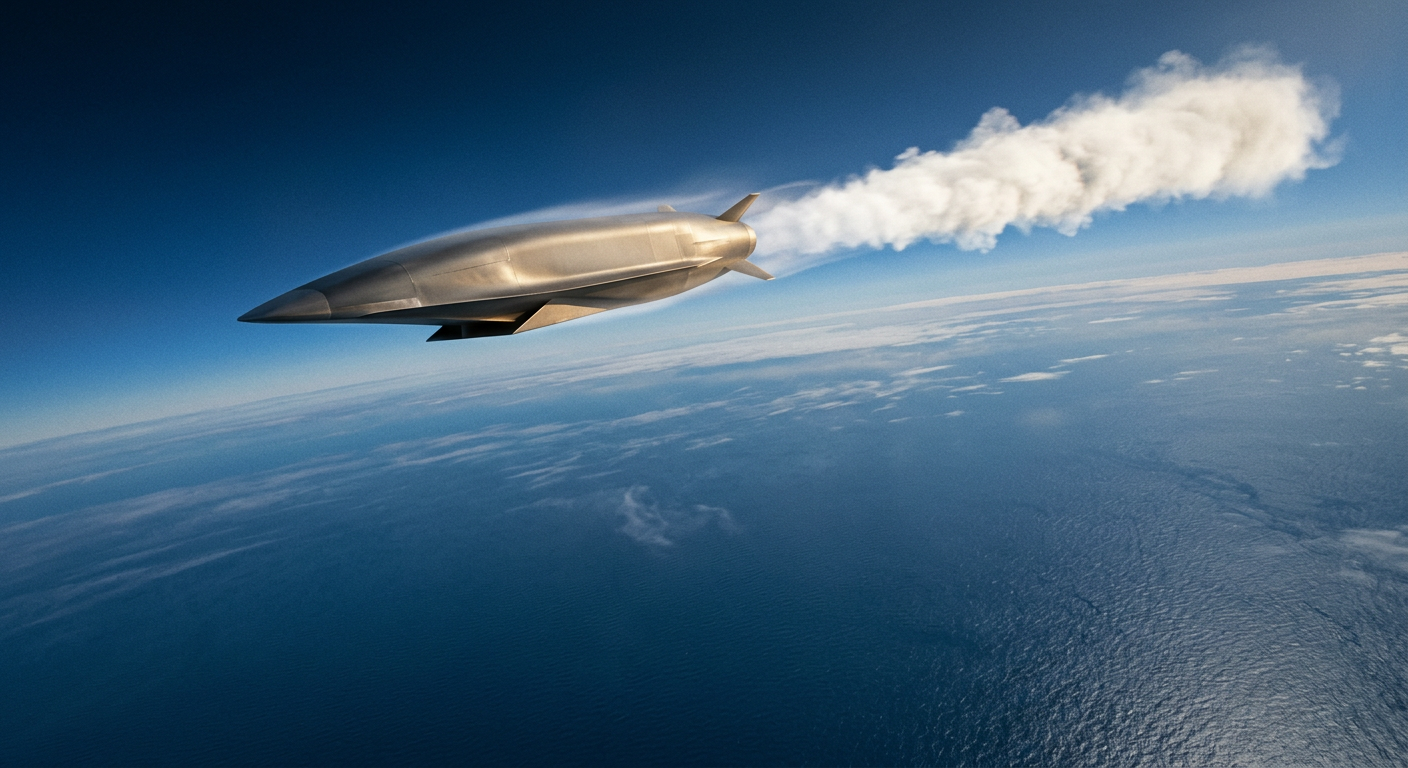
Castelion announced on September 14, 2026 a production delivery order from the U.S. Navy valued at up to $200 million for its Blackbeard Hypersonic Weapon. The SBIR Phase III award came from Portfolio Acquisition Executive Aviation through its Future Capability Development and Integration Aviation Rapid Capabilities Cell. A company founded in 2022 by former SpaceX engineers is now moving a missile designed to cost less than $500,000 into initial production rounds for naval aviation.
Carrier air wings have been boxed in by hypersonic economics that cannot fill a magazine. Traditional U.S. programs such as ARRW and Conventional Prompt Strike have historically cost tens of millions per round, limiting annual output to roughly a couple dozen boutique weapons. Blackbeard is engineered for mass production at unit costs under $500,000, with in-house solid rocket motors, avionics, and flight software, and 21 test flights in 2025.
The September buy follows a $23.4 million firm-fixed-price delivery order awarded June 16, 2026 for 50 Early Operational Capability pre-production prototypes and 50 storage containers. Hardware and software integration onto the F/A-18E/F Super Hornet is already under contract. Test articles were loaded onto the jet in mid-2026.
The 2026 paper trail onto the Super Hornet
In April 2026 the Navy awarded Castelion a $105 million contract to complete hardware and software integration of Blackbeard onto the Super Hornet airframe and to execute carrier system safety and airworthiness certification toward an early operational capability in 2027. That award built on a $49.998 million Navy buy in February 2026. In May 2026, the Department of Defense signed a framework agreement with Castelion to procure a minimum of 500 low-cost hypersonic missiles annually.
CEO Bryon Hargis put the production decision in those terms. "The Navy's decision to move into production reflects its confidence in the Blackbeard program, and the progress we've made together. That's how you get capability to the fleet fast, clear red tape, and partner with industry."
Filling a 500-missile annual floor requires a round priced for rate. Blackbeard is the missile in this stack built to cost under $500,000.
Project Ranger has to hold the rate
Castelion was founded in 2022 by former SpaceX engineers Bryon Hargis (CEO), Andrew Kreitz (CFO), and Sean Pitt (COO). Manufacturing is centered at Project Ranger, a 1,000-acre campus in Rio Rancho, New Mexico, where the company has invested more than $220 million across 21 to 22 buildings for in-house solid rocket motor manufacturing, static testing, and final missile assembly, with engineering in Torrance, California.
In August 2026, Castelion announced a $1 billion Series C round of $800 million in equity and $250 million in revolving credit, valuing the company at $13 billion. Investors include JPMorgan Chase, Andreessen Horowitz, Carlyle, Lightspeed Venture Partners, Lavrock Ventures, General Catalyst, and T. Rowe Price. The capital is aimed at motors, assembly, and production rate so the company can stack missiles in New Mexico rather than wait in a prime contractor's solid rocket queue.
An order of up to $200 million does not fill a 500-round annual framework by itself. It funds the first production lots while Project Ranger is still coming online. The remaining risk is whether 21 flights in 2025 and a desert motor plant become naval rounds that survive carrier certification.
Standoff the air wing can upload
Blackbeard test articles were test-loaded onto F/A-18E/F Super Hornets in mid-2026 and briefed at the Tailhook 2026 symposium under the Multi-mission Affordable Capacity Effector (MACE) / Project Alpha initiative. The testing is meant to give carrier air wings high-speed standoff strike against maritime and land targets without driving the carrier into anti-ship cruise and ballistic missile envelopes.
A Super Hornet cannot hold that envelope if the only hypersonic on the pylon costs tens of millions and arrives a dozen at a time. Mass-produced air-launched rounds change the magazine question from whether to spend a scarce prototype to how many the wing can upload. Early operational capability is targeted for 2027, after the airworthiness work funded in April.
Serial production is what turns a loaded pylon into fleet inventory. If Castelion delivers Blackbeard at the price and rate it sold, carrier magazines get a hypersonic they can expend. If Project Ranger misses rate, the air wing is left with boutique rounds and empty racks.