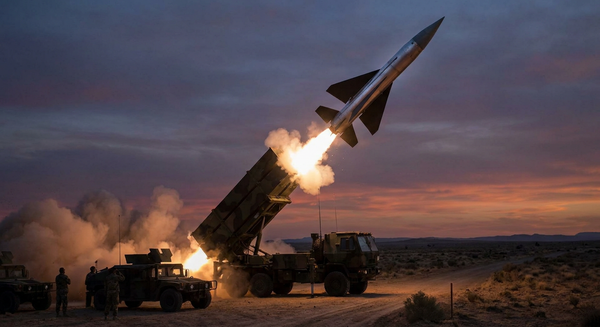
Why the Pentagon Is Hunting for Sub-$750,000 Missile Interceptors
Facing soaring cost-per-shot asymmetry, the military is funding a wave of clean-sheet interceptors and hypersonic strike weapons engineered from scratch for affordable mass.
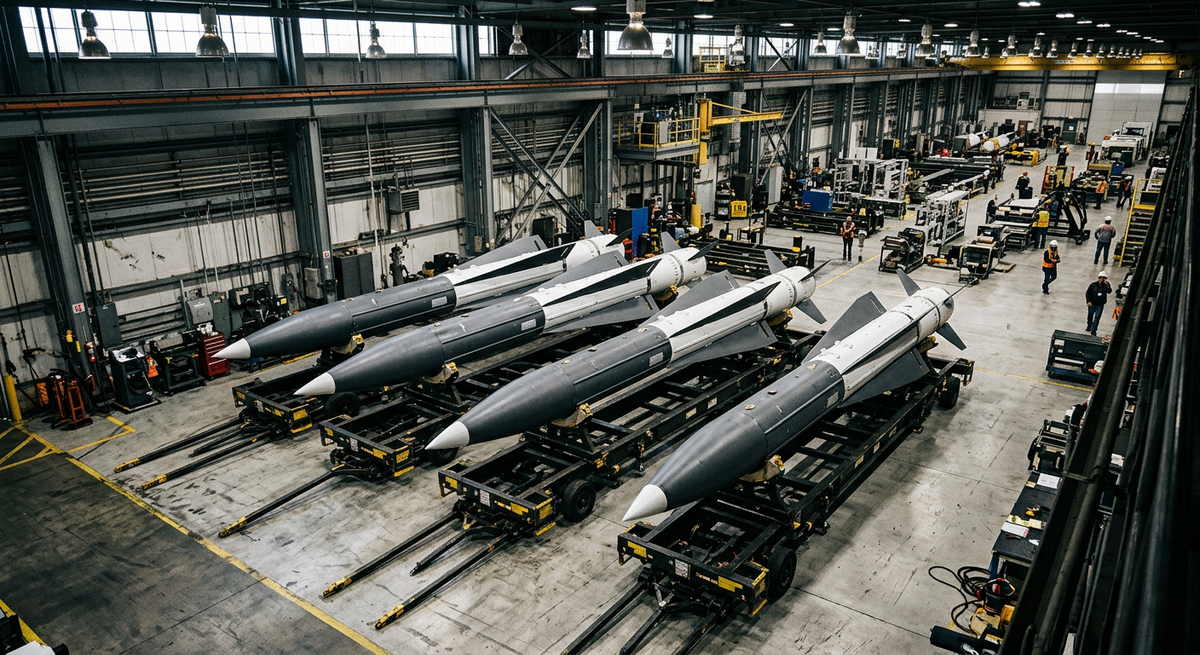
The Pentagon is confronting an uncomfortable mathematical reality across modern combat theaters. Firing multi-million-dollar interceptors to swat down low-cost drones and cruise missiles drains deep munitions magazines far faster than traditional defense industrial lines can replenish them.
Standard air-defense rounds carry heavy price tags. A single Patriot PAC-3 MSE interceptor costs roughly $4 million, while a Terminal High Altitude Area Defense interceptor runs approximately $12.7 million. In response to mounting inventory strain, defense procurement officials across the services are now underwriting a wave of clean-sheet munitions designed from inception to cost under $750,000 each.
The effort marks a deliberate strategic shift toward affordable mass, trading exquisite single-shot performance for high-rate manufacturing volume.
Trading perfection for production scale
The clearest signal of this procurement pivot arrived on August 18, when the Missile Defense Agency tapped non-traditional propulsion builder X-Bow Systems with a $10.98 million Phase II contract under the Rapid Response Small Launcher Technology effort. The award funds the development and flight testing of the Low-Cost Interceptor prototype by early 2028, with deliveries of four to ten test missiles.
What sets the program apart is its binding financial ceiling. The agency’s program solicitation explicitly mandated a unit production cost of less than $750,000, noting that the military is willing to accept a slightly reduced performance rate to achieve magazine depth. X-Bow intends to meet that target by leveraging automated additive manufacturing for solid rocket motor production, circumventing bottlenecks in the legacy energetics industrial base.
Speaking at the Space and Missile Defense Symposium in Huntsville, Alabama, Missile Defense Agency Director Lt. Gen. Heath Collins explained that the Pentagon is examining propulsion and expensive internal components to drive down total interceptor unit costs across upcoming programs.
Applying the formula to offensive strike
The push for affordable volume is not confined to defensive interceptors. On August 26, the U.S. Navy awarded defense tech startup Castelion an $89.99 million firm-fixed-price order to advance its Blackbeard hypersonic strike weapon toward Early Operational Capability by August 2028.
Rather than developing an exquisite hypersonic platform costing tens of millions of dollars per round, Castelion engineered the missile for high-rate mass production, targeting an eventual unit cost below $500,000. Optimized to fly beyond Mach 5 with an operational reach of up to 500 nautical miles, the weapon is slated for carrier air wing integration aboard the F/A-18E/F Super Hornet fleet, giving naval aviation scalable standoff capacity against contested maritime defenses.
A cross-service procurement pivot
Similar low-cost munitions initiatives are proliferating across the Pentagon. The U.S. Army is standing up its own Low-Cost Interceptor line alongside the Affordable High Speed Strike competition, designed to field long-range strike missiles compatible with standard HIMARS launchers. The Air Force is pursuing the Family of Affordable Mass Missiles, while the Defense Innovation Unit coordinates the Ground-Based Affordable Mass challenge.
These service programs share a common doctrine: saturation and sustainable volume now matter as much as individual exquisite capability. For prime contractors whose business models have long centered on high-margin, low-volume programs of record, the rapid rise of low-cost strike and interceptor lines presents a new competitive landscape where unit affordability dictates procurement wins.