Why the Navy Hired an Autonomy Startup to Build Traditional Landing Craft
Three yards just took $280.5 million in prototype agreements to build LCU 1700-class connectors, and one of them is Saronic, a company known for uncrewed boats, not crewed steel.
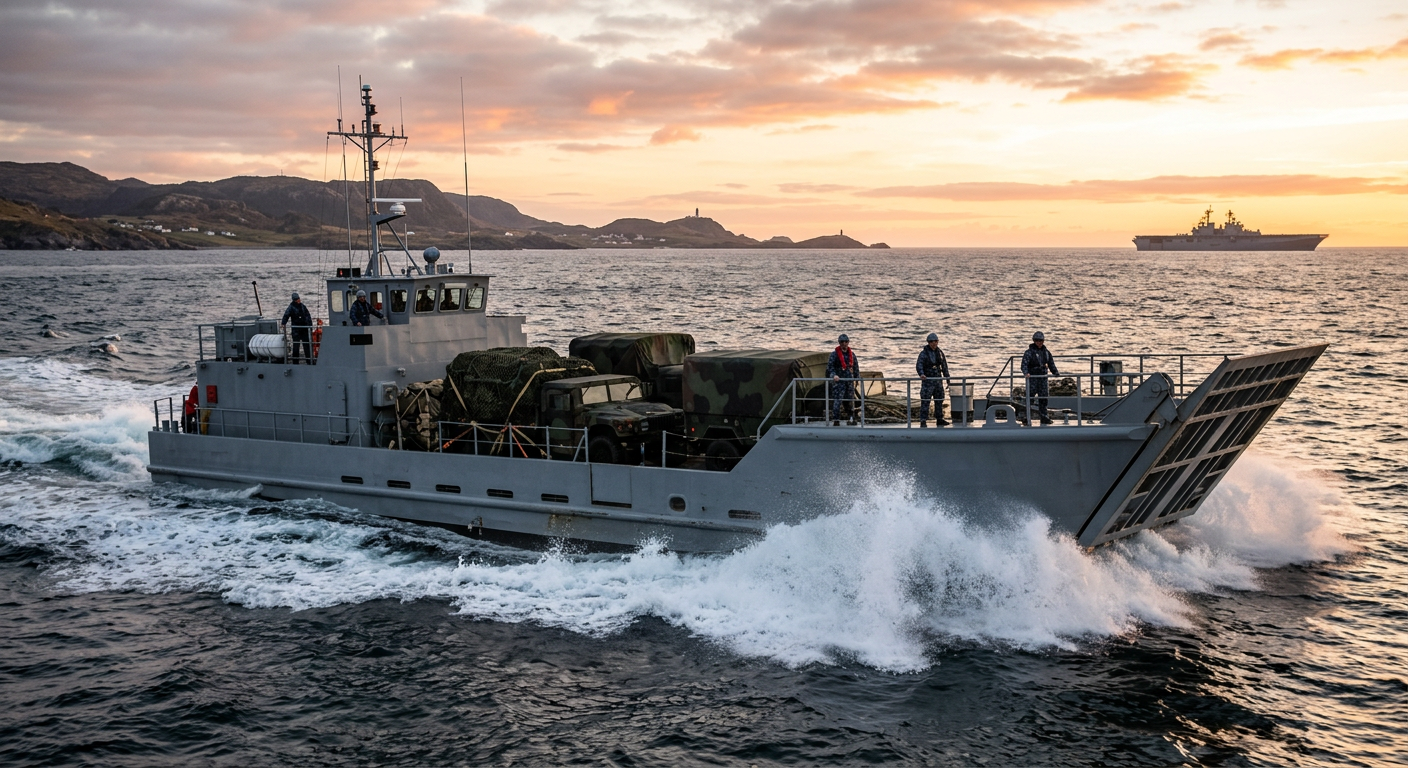
The U.S. Navy just split a job it had been running through one lead yard. Under 10 U.S.C. § 4022, the service awarded three competitive Prototype Other Transaction agreements totaling $280,521,389 to Conrad Shipyard in Orange, Texas, Master Boat Builders in Coden, Alabama, and Saronic Technologies at Port Alpha in Brownsville, Texas. The obligation is funded by the One Big Beautiful Bill Act. Each yard will build two or three prototype Landing Craft, Utility 1700-class vessels and refine manufacturing plans for later high-rate production, with deliveries scheduled from late 2028 through 2029.
In August 2026 the Navy took delivery of LCU 1710, the first production ship of the class, from Austal USA in Mobile, Alabama. Austal remains the lead yard. The new awards add the three yards as a multi-source "second source" so a 139-foot beach connector no longer depends on one production line. William F. Mahan, performing the duties of Assistant Secretary of the Navy for Research, Development and Acquisition, said selecting three distinct shipyards expands industrial-base capacity and builds a resilient second source of supply, and that Other Transaction prototype authority lets the Navy "move at the speed of relevance."
The unexpected name on that list is Saronic. This award is the Austin autonomy company's first traditional, manned shipbuilding contract, and it arrives as the firm builds a $2.5 billion yard on the Texas Gulf.
A 50-year-old connector class finally gets a production hedge
The LCU 1700 is a 139-foot heavy-lift connector replacing the legacy LCU 1610 class, which averages more than 50 years of service. The new craft has a 170-ton payload, enough to carry two M1A1 or M1A2 Abrams tanks or 400 combat troops, plus a 1,200 nautical mile range at 11 knots. It is designed to operate from amphibious warfare ships (LHD, LHA, LPD, and LSD) directly to unimproved shorelines and beaches, according to the Navy's announcement of the three-yard push. Replacing the 1610 class through a single line was always a schedule risk. Three prototype yards turn that into a parallel problem before the old connectors age out of the well deck.
Gulf Coast steel, two industrial cultures
Conrad and Master Boat Builders are the conventional half of the bet. Both are Gulf Coast yards that already cut, weld, and outfit workboats and government small craft. Putting them on prototype LCUs is a classic second-source play: keep the design stable and watch which factory can actually hit rate.
Saronic is the other culture. The company is valued at $9.25 billion after a $1.75 billion Series D in 2026. Its public identity is uncrewed: the 24-foot Corsair, with more than 400 built and a production Other Transaction worth more than $400 million; the 52-foot Mirage; and the 150- to 180-foot Marauder. Port Alpha, the $2.5 billion shipyard it is developing at the Port of Brownsville, is designed to build vessels up to 850 feet, expandable to 1,200 feet, with a workforce that could reach 10,000, as the company described in covering the landing-craft deal. Dino Mavrookas, Saronic's co-founder and CEO, said the award reflects a partnership "where speed, cost discipline, and a modern industrial base reinforce each other," and that Port Alpha is designed to produce large autonomous surface vessels alongside currently manned ships, supporting the Navy's hybrid fleet strategy while adding surge capacity to the broader U.S. maritime industrial base.
Prototype authority, and what still has to be proven
These are competitive Prototype Other Transaction agreements, not conventional shipbuilding contracts. Section 4022 is the same authority the Navy has used to move faster on unmanned systems, now applied to a manned landing craft. The prototype framing lets the service buy two or three hulls from each yard, watch how each factory actually builds them, and then decide which manufacturing plans can scale. If one of the three lines stumbles, two others are still cutting steel.
A second source only exists if the hulls can load the same tanks, beach the same way, and fit the same well decks. Prototype lots of two or three craft can expose welding and test problems. They are not yet a fleet. Deliveries starting in late 2028 leave little slack if a new yard discovers that a 170-ton beaching craft is a different industrial problem from a 24-foot uncrewed surface vessel. For Saronic, Port Alpha still has to put manned steel in the water on a Navy calendar. For Conrad and Master Boat Builders, the test is whether smaller Gulf yards can absorb a prototype cadence. For the Navy, the test is whether Other Transaction speed produces hulls, not just announcements. The LCU 1700 class will not decide the future of unmanned surface warfare. It may decide whether the Navy can replace a 50-year-old beach connector without betting the entire replacement on a single Alabama production line.