How Pentagon Data Privileges Turned Starlink Into Orbit's Traffic Cop
The Space Force granted SpaceX exclusive access to classified Vector Covariance Messages while Starlink offers free collision screening. Competing with that stack is nearly impossible.
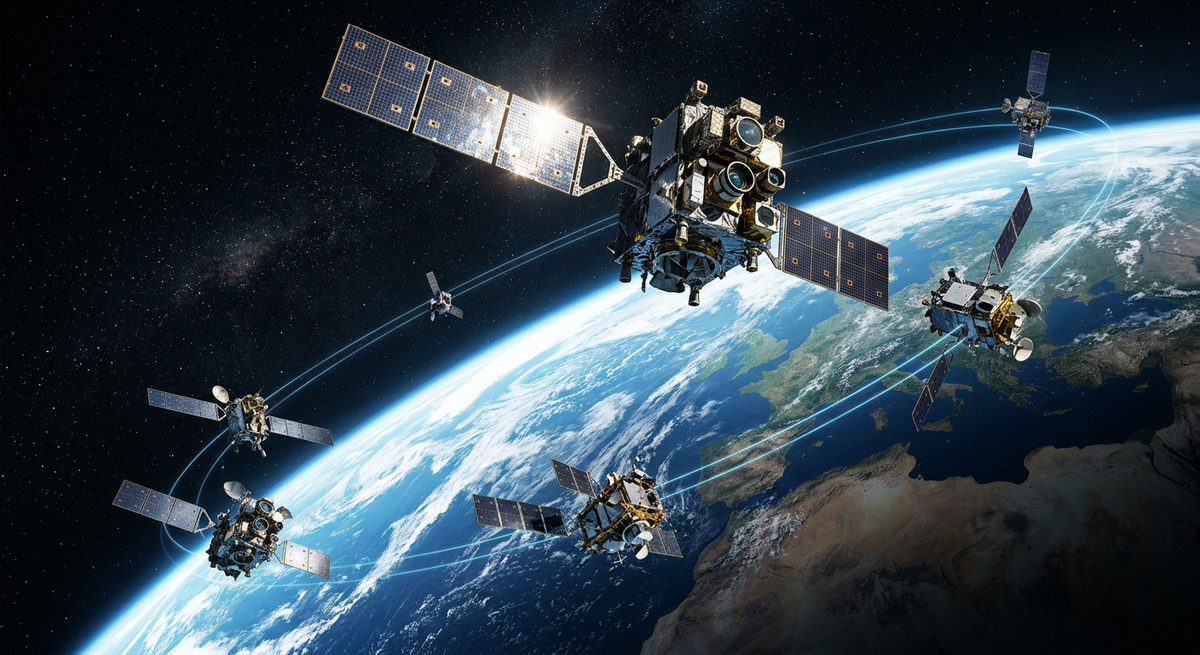
The Pentagon has given SpaceX a data privilege no other commercial operator enjoys, and the company is already converting that access into a free traffic-management service for everyone else in low Earth orbit. Breaking Defense reported an exclusive contractual agreement between the Space Force Joint Commercial Operations Cell (JCO) and SpaceX. Under the deal, the Pentagon provides SpaceX with U.S. Space Command's most classified orbital tracking dataset: Vector Covariance Messages (VCMs) that carry volumetric error bubbles from the High Accuracy Catalog (HAC). In exchange, SpaceX feeds the JCO observational tracking data from Stargaze, its proprietary space-tracking system powered by star-tracking cameras mounted on Starlink satellites. That swap fuses the military's tightest error ellipsoids with the largest privately operated sensor web in orbit, resetting who sees traffic in low Earth orbit and who gets paid to see it.
A constellation that already flies the sensors
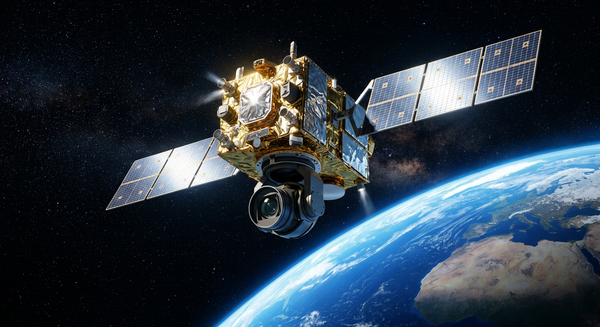
The scale of that sensor web became public at the Advanced Maui Optical and Space Surveillance Technologies (AMOS) conference in Hawaii on Sept 17, 2026. Jon Herman, SpaceX senior director for Starlink constellation engineering, detailed the footprint. Starlink operates about 11,000 satellites in low Earth orbit. The constellation executes roughly 20,000 maneuvers every day, including 1,000 collision-avoidance burns daily, overwhelmingly for non-Starlink objects. Stargaze uses about 30,000 star-tracking cameras and can detect objects down to 0.5 to 1 meter in size below 600 kilometers altitude, covering more than 80 percent of the Space Force catalog in that altitude band. Around 100 commercial and institutional operators have already onboarded to SpaceX's free Stargaze collision screening service.
Those numbers explain why the JCO deal matters far beyond a single classified feed. A company that already flies thousands of cameras, already burns a thousand times a day to miss other people's debris and spacecraft, and already screens conjunctions for about 100 operators now also sees HAC-grade covariance. Operators who would otherwise buy catalogs from specialists can take the Starlink product at no charge. Catalog access is what turns cameras already on the satellites into a traffic cop.
How Space-WATCH paid for the mesh
The surveillance architecture did not appear as a free side effect of broadband. Quilty Space analysis of DARPA contracting found that SpaceX collected $107.7 million in government contracts under the Space-domain Wide Area Tracking and Characterization (Space-WATCH) program launched in 2023. DARPA had originally estimated the entire Space-WATCH program would cost $65 million across all performers. SpaceX's two agreements alone totaled $107.7 million, including a long-wave infrared sensor modification.
Traditional defense contractors and software performers on the fusion track received a sliver of that pot. Peraton got $2.8 million. Riverside Research got $853,800. NextGen Federal Systems and Ansys received $499,900. The split helps explain how a commercial broadband constellation absorbed a military wide-area tracking role that smaller performers were never resourced to match. SpaceX became Space-WATCH's center of gravity, then carried the resulting sensor architecture into a classified data bargain with the Space Force.
What free screening does to a commercial market
Venture-backed commercial tracking firms built their models around selling precision tracking and conjunction analysis. Slingshot Aerospace, LeoLabs, Kayhan Space, and COMSPOC all sell into that stack. Audrey Schaffer, senior vice president for global policy at Slingshot Aerospace and former White House space policy director, warned at AMOS: "It's very very hard to compete with free when you have costs."
The civilian public option has not stepped in. The Traffic Coordination System for Space (TraCSS), managed by the Commerce Department's Office of Space Commerce (OSC), has been stuck in budget battles and evaluation mode, pausing its commercial data purchases. When that program stops buying commercial tracks, remaining private buyers face a rival that already has Starlink's cameras, DARPA money, and now HAC-grade VCMs.
Congress saw a version of this problem coming. A 2020 National Academy of Public Administration report commissioned by Congress warned that "there cannot be, and should not be, a stand-alone provider of STM services." The same study predicted that in a policy vacuum, dominant commercial operators would set rules reinforcing their own advantages. Space-WATCH spending that exceeded the original program estimate, exclusive VCM access, and a free Stargaze screen are that vacuum in practice. The largest operator becomes the default referee of orbital traffic, while independent awareness firms risk losing both government demand and commercial customers.
The national security case for denser tracks is straightforward. The JCO gets Stargaze observations at a moment when a single constellation is already executing a thousand collision-avoidance burns a day. What is unsettled is industrial policy. If independent catalogs atrophy, the United States still has SpaceX's mesh. It may not have a competitive bench of space domain awareness vendors the next time the Pentagon wants a second opinion on what is moving overhead.