Why the U.S. Military Is Helping Fund MediWound’s Next Growth Opportunity (Nasdaq: MDWD)
MediWound (Nasdaq: MDWD) announced on September 22 that it has received another .3 million in U.S. military funding to advance a room-temperature version of NexoBrid, its FDA-approved treatment for severe burns. The award brings total funding for the program to 1.8 million.
MediWound (Nasdaq: MDWD) announced on September 22 that it has received another $3.3 million in U.S. military funding to advance a room-temperature version of NexoBrid, its FDA-approved treatment for severe burns. The award brings total funding for the program to $21.8 million. It adds to a growing body of U.S. government support behind a product that is already commercially available and increasingly embedded in federal emergency-preparedness programs.
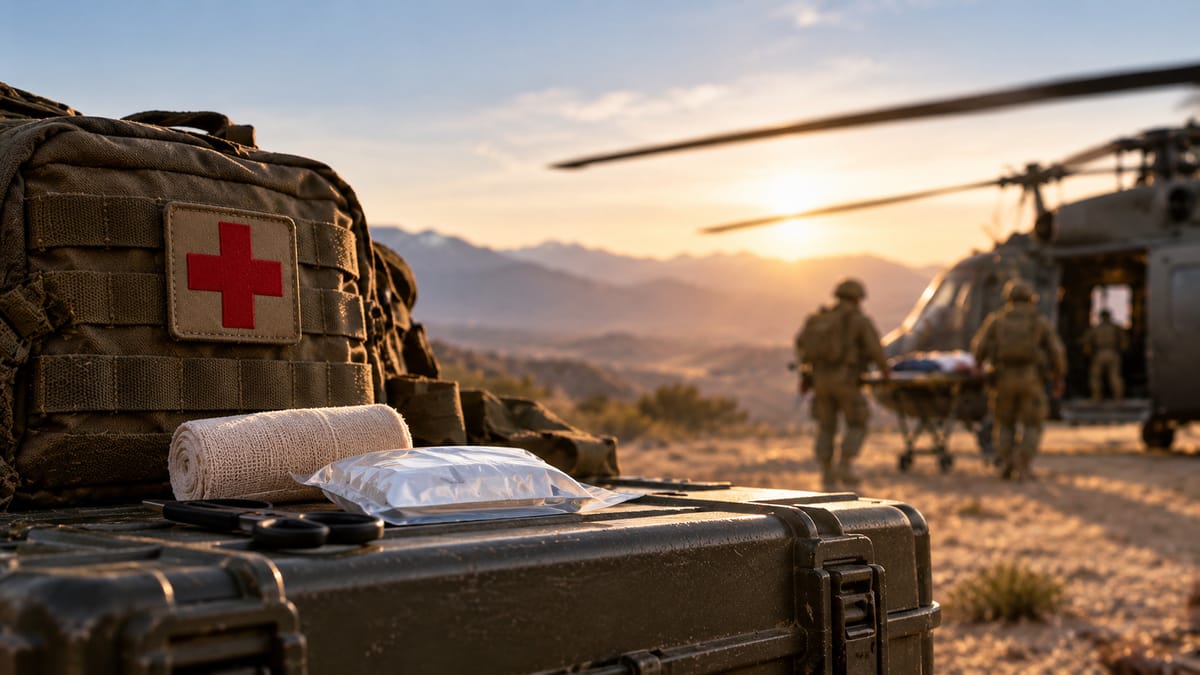
The military interest is easy to understand. NexoBrid can remove dead tissue from severe burns without the surgical excision traditionally performed in an operating room, but the current formulation must be refrigerated. Developing a room-temperature version could make the product significantly easier to store and deploy in field hospitals, forward medical facilities and other settings where reliable cold-chain infrastructure cannot be assumed.
That matters because severe burns create one of the most resource-intensive problems in emergency medicine. Burned tissue, known as eschar, generally has to be removed before the wound can properly heal. Traditionally, that process can require surgery, anesthesia, an operating room and a trained surgeon physically cutting away the damaged tissue. NexoBrid takes a different approach, using an enzymatic treatment applied directly to the burn to selectively remove eschar and reduce the need for surgical intervention in appropriate patients.
The difference becomes especially important when many burn patients arrive at the same time. A battlefield, industrial explosion, large fire or other mass-casualty event can quickly overwhelm available operating rooms and surgical teams. In those situations, a treatment that can perform a critical step in burn care without consuming the same surgical resources becomes valuable not only medically, but operationally. Data collected by the Israel Defense Forces (IDF) suggest that 71% of burn patients are eligible for treatment with NexoBrid. A room-temperature formulation could extend that advantage by making NexoBrid easier to position closer to where patients are injured.
The U.S. government has already built a substantial relationship around the product. NexoBrid is FDA-approved for eschar removal in adults and children with certain deep thermal burns and is commercially available in the United States through MediWound’s North American partner, Vericel. Approximately 80 U.S. burn centers had ordered NexoBrid since launch as of MediWound’s August update, providing an existing hospital market alongside growing government demand.
In April, Vericel received a ten-year BARDA contract worth up to $197 million covering NexoBrid procurement and further development. The $35 million base period includes approximately $10 million for initial product purchases and the establishment of emergency inventory, while additional options include further procurement, development for blast-related injuries, a potential U.S. manufacturing facility and a room-temperature formulation.
The latest military award fits directly into that broader expansion. Today’s NexoBrid must be stored between 2°C and 8°C. Removing that refrigeration requirement could make the product considerably easier to stockpile, transport and use across military and emergency-response environments. The new funding supports development and manufacturing work toward that goal, effectively allowing a major government customer to help finance a capability that could broaden the product’s addressable use.
MediWound is positioned to participate economically as the franchise grows. Vericel holds the North American commercial rights, but MediWound manufactures NexoBrid and earns royalties on sales. Its agreement also provides for up to $125 million in potential sales milestone payments, including an initial $7.5 million milestone if annual North American net sales exceed $75 million, together with separate economics tied to certain government purchases.
The company is also being paid to support the product’s continued development. MediWound signed a services agreement with Vericel to perform work under the BARDA program, with related revenue expected to begin in the second half of 2026. That gives MediWound several potential economic streams from the same growing franchise: manufacturing revenue, royalties, development revenue and commercial milestones.
Taken together, the setup is becoming increasingly compelling. NexoBrid is already FDA-approved, already being ordered by U.S. burn centers and already being incorporated into federal emergency-preparedness programs. BARDA has established a contract framework worth up to nearly $197 million around procurement and development, while the U.S. military is separately funding work designed to make the product easier to deploy closer to the point of injury.
For MediWound, the significance goes well beyond another government award. The company has an existing commercial product with growing hospital adoption, expanding federal procurement and externally funded development programs aimed at broadening where and how that product can be used. If a room-temperature version succeeds, MediWound could emerge with a more deployable NexoBrid franchise whose expansion has been supported in meaningful part by the customers that stand to benefit from it most.
Recent News Highlights from MediWound (Nasdaq: MDWD)
Newly Published U.S. Expert Consensus Aligns with MediWound’s Strategy for Chronic Wound Debridement
MediWound to Present New EscharEx® Data at Leading Wound Care Conferences
Read this Next >>
The Navy Is Putting Mass-Produced Hypersonics on Super Hornets
Important Disclaimers and Disclosures: The author, Wall Street Wire, is a content and media technology platform that connects the market with under-the-radar companies. The platform operates a network of industry-focused media channels spanning finance, biopharma, cyber, AI, and additional sectors, delivering insights on both broader market developments and emerging or overlooked companies. Wall Street Wire is not a broker-dealer or investment adviser. References to market size estimates, valuations, price targets, or other third-party data are provided strictly for informational purposes. Wall Street Wire receives cash compensation from MediWound Ltd. (the “Issuer”) for coverage and awareness services, which are provided on an ongoing subscription basis. The content above is a form of paid advertising and promotion and is for informational purposes only and does not constitute financial or investment advice. This article may contain forward-looking statements about the Issuer’s products, plans, or prospects that are subject to risks and uncertainties; actual results may differ materially, and readers should review the Issuer’s public filings on SEC EDGAR (sec.gov/edgar) for full risk factors. Market size figures, research estimates, or other third-party data referenced in this article are quoted from publicly available sources believed to be reliable; however, we do not independently verify or endorse them, and additional figures or estimates may exist. Full compensation details, information about the operator of Wall Street Wire, and the complete set of disclaimers and disclosures applicable to this content are available at: wallstwire.ai/disclosures. This article should not be considered an official communication of the Issuer. Images may be computer generated and are for entertainment and visualization purposes only, and may not be an accurate or exact depiction of the technology.