Northrop and True Anomaly Win Prototype Deals to Crowd GEO With Watchdogs
DIU and Space Systems Command selected Northrop Grumman and True Anomaly to prototype maneuverable inspectors for GEO, feeding a $1.84B Space Force buy to replace an exquisite six-satellite fleet. Prototypes launch in 2028 before transitioning to operations in 2029.
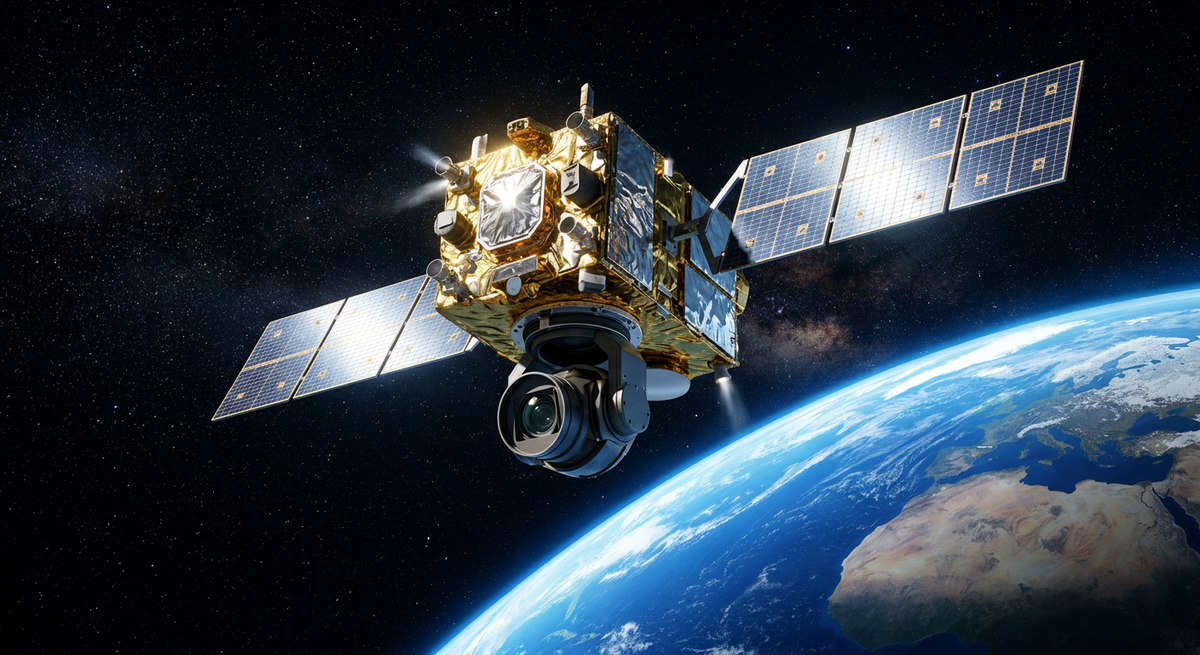
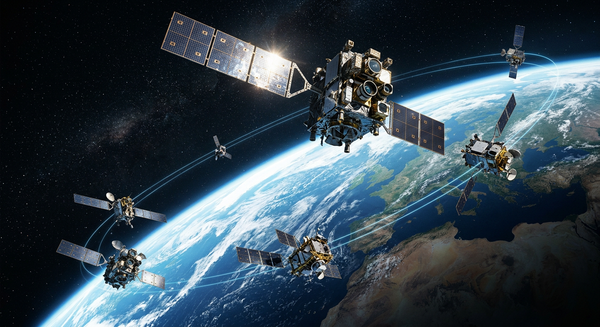
The Defense Innovation Unit and Space Systems Command awarded prototype contracts to Northrop Grumman and commercial startup True Anomaly for the Geosynchronous High-Resolution Optical Space-Based Tactical Reconnaissance effort, known as GHOST-R. The job is space-to-space electro-optical reconnaissance in geostationary orbit, about 36,000 kilometers up, where the Pentagon keeps nuclear command-and-control, missile warning, and secure military communications. Successful prototypes are slated to launch in 2028 and move into Space Force government operations by 2029, providing tactical reconnaissance, battle damage assessment, and positive identification of other spacecraft in that belt.
GHOST-R is not a one-off science project. It feeds RG-XX, also called Andromeda, an indefinite-delivery, indefinite-quantity program of record with a $1.84 billion ceiling to procure commercial space monitoring satellites through 2036. The prototype awards are the first hardware bets on a cheaper, more numerous replacement for the exquisite neighborhood-watch fleet that has owned this mission for a decade.
GSSAP cannot afford every chase
On-orbit surveillance in GEO has rested on six Geosynchronous Space Situational Awareness Program satellites built by Northrop Grumman and launched between 2014 and 2022. Those platforms are capable. They are also expensive, and they carry limited onboard propellant. Maneuvering to inspect an adversary spacecraft burns delta-V and shortens the remaining life of a multi-hundred-million-dollar asset. As other nations field more agile spacecraft in the same orbit, that economics problem has become an operational one. The Space Force needs platforms it can move often without treating each inspection as a decision to retire a national sensor.
Col. Bryon McClain, Space Systems Command's acting portfolio acquisition executive for space combat power, said the GHOST-R initiative burns down technical risk and drives down lifecycle costs to ensure a more resilient architecture. Ryan Tintner, vice president and general manager for Northrop Grumman's space superiority business, said space is increasingly contested and timely insight into GEO activity is vital for joint forces. Both comments point at the same constraint: the current fleet was never sized for a crowded, maneuvering GEO.
Missile warning still rides SBIRS and the Next-Generation Overhead Persistent Infrared architecture. Nuclear command-and-control and protected communications still sit in the same altitude band. Those missions do not pause while a GSSAP vehicle spends fuel on a close look at a new object. The GHOST-R concept is to put the inspection burden on smaller buses that can be replaced, rather than on the last remaining exquisite sentries.
A suitcase bus and a purpose-built hunter
Northrop Grumman is building an ESPASat-L prototype, about the size of a small suitcase, on a 24-month timeline at Dulles, Virginia, and Gilbert, Arizona. Optical payloads come from Irvine, California video specialist TRL11. The company said as much in its release. Northrop already built GSSAP. The industrial play here is to keep the GEO inspection franchise by shrinking the product: same mission class, a bus that can be fielded in numbers instead of a handful of high-end vehicles.
True Anomaly is delivering its Jackal autonomous orbital vehicle, built for rendezvous and proximity operations and flown through the company's Mosaic command-and-control software. Even Rogers, True Anomaly's chief executive, said the architecture can no longer rely on a handful of exquisite assets, and that advantage goes to platforms fielded in numbers so forces can "maneuver without regret." That line is the program in miniature. GSSAP was designed as a small fleet of high-end inspectors. GHOST-R and RG-XX are designed so operators can spend fuel, close on a target, and still have another satellite on station.
The two teams are not interchangeable. Northrop is converting an established space-superiority line and a small ESPA-class bus, plus a specialist optics house, into a proliferated GEO inspector. True Anomaly is selling an RPO vehicle and a software stack that already assume frequent close approaches. The Space Force is buying both prototypes because it does not yet know which industrial path actually survives GEO radiation, power, and the optics required for high-resolution space-to-space imaging at that altitude.
Launch in 2028, operations in 2029
The calendar is tight. GEO is a long way from the proliferated low Earth orbit constellations that have defined commercial space this decade. Communications latency, station-keeping, and the electro-optical aperture needed to identify another spacecraft at geosynchronous distance are a different engineering problem from photographing Earth. A 24-month Northrop build and a 2028 launch leave little margin if payloads, buses, or ground software slip.
If the prototypes work, they become the template for Andromeda buys through 2036. If they slip, the Space Force is left with aging GSSAP vehicles and a growing list of objects in GEO it cannot afford to inspect. Northrop is defending incumbency by making the satellite smaller. True Anomaly is betting that a commercial hunter and a command-and-control layer can do at scale what the exquisite fleet was never meant to do every week.
GEO already needs watching. The open question is whether the United States can put enough maneuverable sensors there that an inspection is a routine tactic, not a one-time expenditure of a national asset.