The U.S. Army Is Turning HIMARS Into a Pacific Anti-Ship Weapon
A $1.21 billion Army IDIQ puts Lockheed Martin's PrSM Increment 2 on HIMARS, giving land batteries a seeker that can hunt moving ships across the First Island Chain.
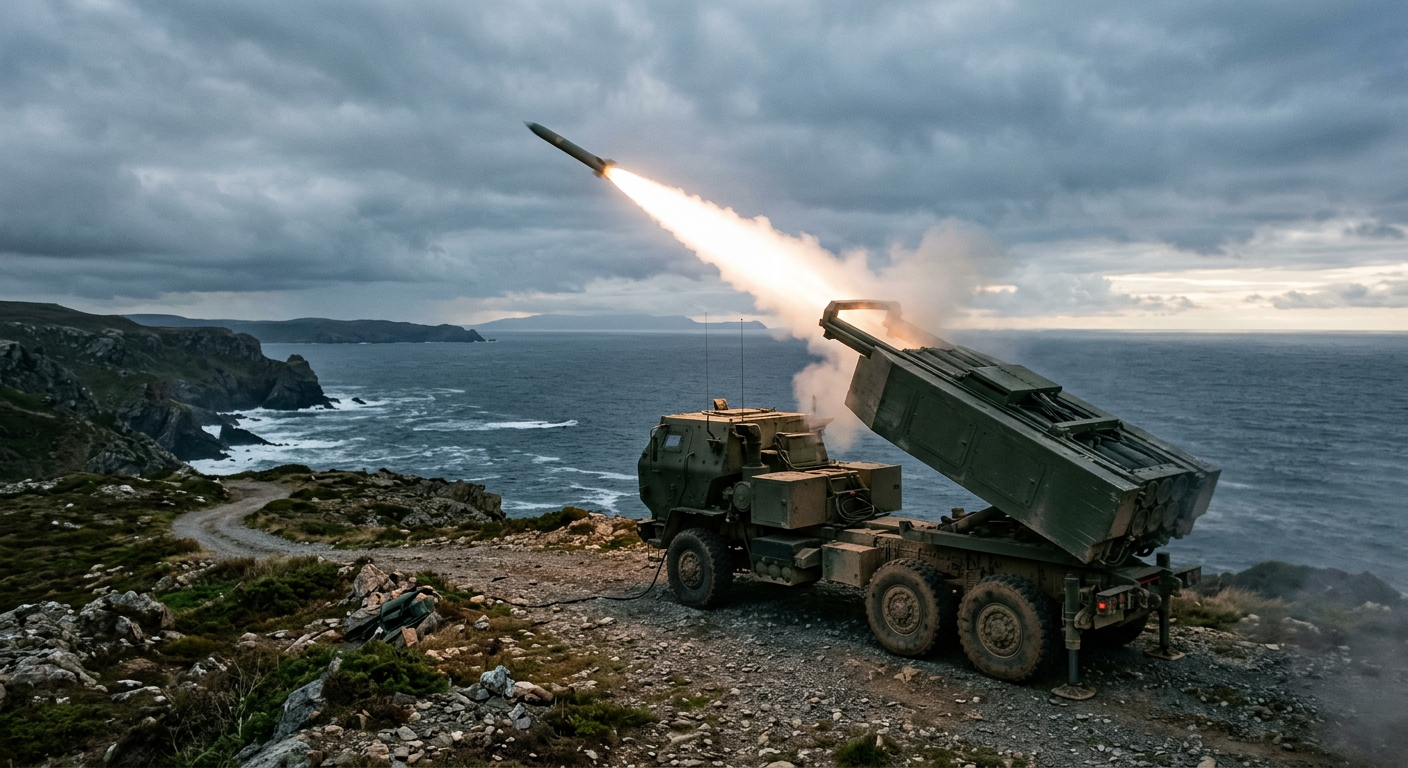
The U.S. Army is no longer treating rocket artillery as a land-only strike tool. On September 14, 2026, Army Contracting Command at Redstone Arsenal awarded Lockheed Martin Corporation an indefinite delivery, indefinite quantity contract to develop and produce Precision Strike Missile Increment 2 Early Operational Capability rounds through September 13, 2031. The ceiling is $1,211,234,988. The award sits on sole-source authority under 10 U.S.C. 3204(a)(1). The practical effect is sharper than the paperwork: HIMARS batteries will soon carry a missile that can find and kill moving ships.
The SAM.gov award notice lists contract W31P4Q-26-D-A001 and an expected initial tranche of about 120 EOC missiles across 2026 and 2027. That is a thin first load for a theater as large as the Western Pacific. It is also the first production path that treats Army artillery as a coastal anti-ship battery rather than a deep-fire complement to Air Force and Navy strike.
A seeker built to chase moving hulls
Increment 2 is the maritime and relocatable-target variant of PrSM. It integrates the Land-Based Anti-Ship Missile multi-mode seeker, combining passive radio-frequency sensing with imaging infrared guidance. The pair lets the round detect, track, and destroy moving maritime surface vessels and relocatable land targets without relying on a static aimpoint loaded before launch.
Lockheed Martin completed the first Increment 2 flight test on March 12, 2026. The round left an M142 HIMARS at White Sands Missile Range, flew a 350-kilometer profile, captured tracking telemetry, and engaged moving target parameters, according to the company's release. A second flight test followed in August 2026. Further shots are planned for 2027, with initial operational capability targeted for 2028. The test cadence is tight relative to the 2031 contract horizon. EOC missiles will start arriving before the seeker has finished its full proving sequence.
Twice the rounds on the same truck
PrSM is the replacement for the Army Tactical Missile System. ATACMS topped out near 300 kilometers. Baseline PrSM configurations reach more than 400 to 500 kilometers. The airframe is also narrower, which changes launcher math as much as it changes range.
An M142 HIMARS carries two PrSM missiles in a pod that previously held a single ATACMS. An M270A2 MLRS carries four PrSM missiles across two pods, versus two ATACMS. In a Pacific fight where reload trucks, airfields, and ports are under fire, doubling the rounds on the rail matters as much as the extra kilometers. A battery can hold more maritime aimpoints without waiting for a second pod.
That density is what turns a HIMARS truck into a useful anti-ship weapon rather than a one-shot demonstration. The seeker finds the ship. The extra cell gives the battery a second shot if the first round is decoyed, jammed, or spent on a decoy hull.
Coastal batteries along the First Island Chain
The Army is positioning mobile HIMARS units with Multi-Domain Task Forces at nodes along the First Island Chain and other Indo-Pacific littorals. The concept is straightforward. Land artillery becomes an anti-access, area-denial coastal defense layer that can engage enemy naval fleets without waiting for a carrier strike group to close the range.
A truck that hides in terrain, shoots, and displaces is harder to find than a destroyer. If those trucks can reach moving surface combatants at 400-plus kilometers, they force an opposing fleet to honor a land-based missile threat while still dealing with U.S. and allied naval aviation. A Defense News report on the award, and a Defense Post analysis, treat the buy as the industrial follow-through on that doctrine.
The constraint is magazine depth at the point of use. One hundred twenty EOC missiles across two years is enough to equip a small set of batteries and to train. It is not a wartime stockpile for a campaign that burns long-range munitions in days. The IDIQ ceiling of $1.21 billion buys time and a production line. It does not by itself fill every MDTF pod in the theater.
Four hundred a year is the real test
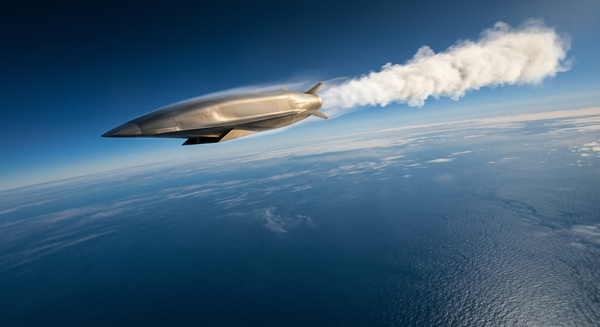
Lockheed Martin is expanding annual PrSM production toward 400 missiles. That rate, if reached, would start to look like a campaign inventory rather than a prototype trickle. Increment 3 is planned to add enhanced lethality payloads. Increment 4 is in development as an air-breathing ramjet with a solid rocket booster, pushing strike range beyond 1,000 kilometers.
Those later increments are not on this contract. W31P4Q-26-D-A001 is Increment 2 EOC through 2031. The industrial question is whether the plant that builds the seeker round can also absorb Increment 3 and 4 without starving the maritime missile the Army just bought. Solid rocket motors, seeker components, and HIMARS pod hardware all compete for the same industrial base that is already trying to refill other Army and Navy magazines.
The Army has now paid for the anti-ship version of its longest-range truck-launched missile. The remaining work is prosaic and harder: fly the remaining tests, deliver the first 120 rounds, and get the line to 400 a year before a Pacific crisis asks for more than a demonstration battery.