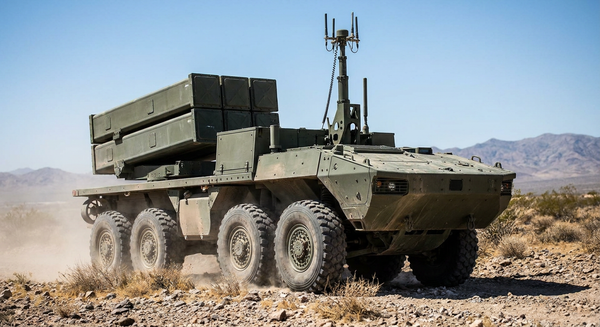
Lockheed Taps Italy's Avio to Break the Pentagon's Rocket Motor Bottleneck
Lockheed Martin is reserving Avio USA solid rocket motor capacity for ER GMLRS and PrSM at a new Virginia plant, using an established European maker to ease the Pentagon's deepest munitions bottleneck.
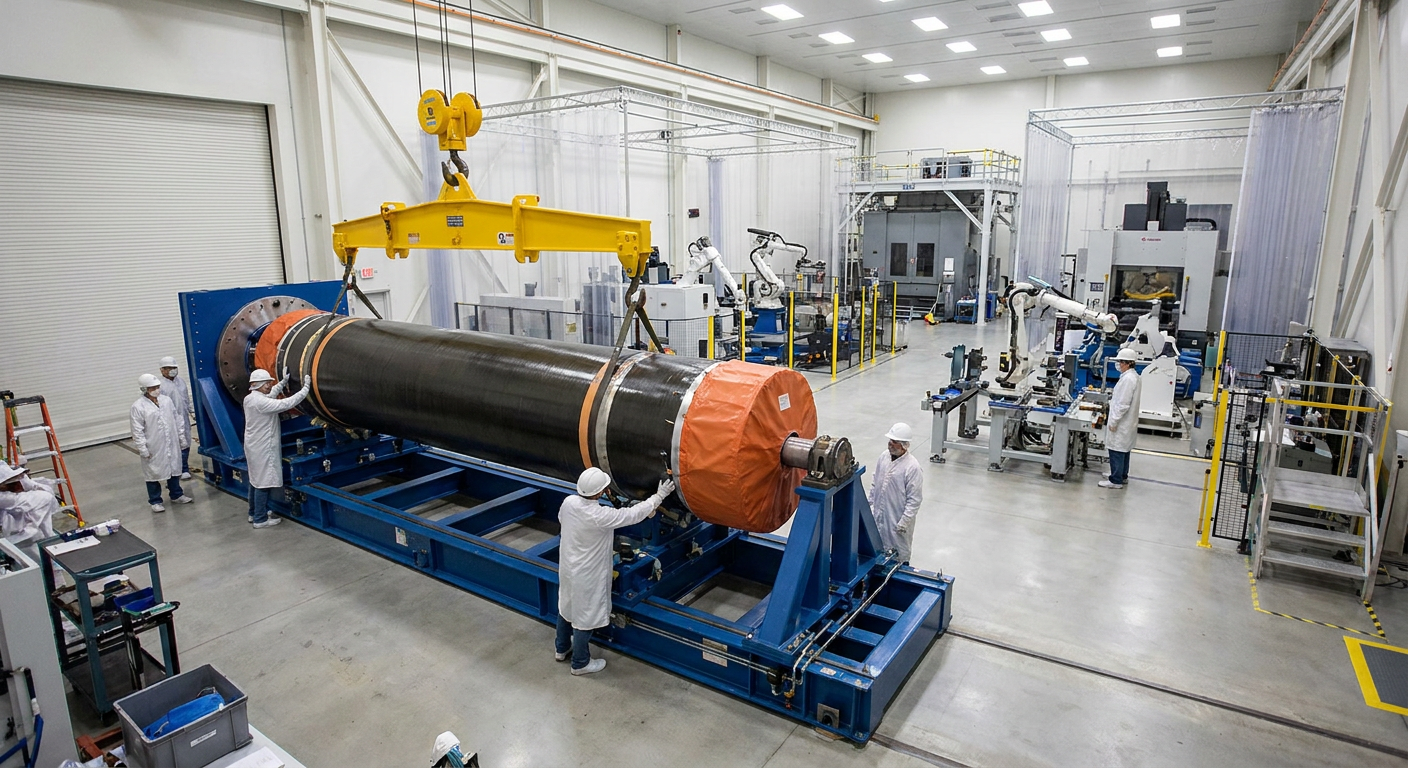
Lockheed Martin is trying to loosen the Pentagon's tightest munitions bottleneck without waiting for a new American propulsion industry to scale. On October 13, 2026, at the Association of the United States Army annual meeting in Washington, the company announced a strategic cooperation agreement with Avio USA, the American subsidiary of Italian aerospace and propulsion firm Avio S.p.A. (Milan: AVI). Lockheed is reserving merchant solid rocket motor capacity for two of the U.S. Army's flagship precision strike weapons: the Extended Range Guided Multiple Launch Rocket System (ER GMLRS) and the Precision Strike Missile (PrSM).
The initial focus, following motor qualification, is production of those motors for Lockheed's two Army lines. Jim Syring, Avio USA's chief executive and a former director of the U.S. Missile Defense Agency, confirmed that Lockheed is "essentially reserving capacity" as a second source for PrSM and an additional source for GMLRS. Tim Cahill, president of Lockheed Martin Missiles and Fire Control, stated that the pact lets Lockheed speed production and diversify its supply base against emerging threats.
A duopoly that cannot feed wartime demand
Solid rocket motors have become the single most crippling industrial constraint across the U.S. munitions complex. Decades of consolidation left an effective duopoly between Northrop Grumman and L3Harris, which absorbed Aerojet Rocketdyne. Those two firms still form the legacy American supplier base for tactical rocket motors. Northrop Grumman's own tactical propulsion portfolio includes motors flown on a successful PrSM test, which underscores how concentrated that base remains even as the Army tries to raise output.
Venture-backed startups such as Anduril, Ursa Major, and X-Bow are standing up propulsion manufacturing from scratch. That work still has to prove rate, yield, and qualification on weapons that already exist. Lockheed is taking a different path: partnering with an established European rocket motor maker that already has decades of operational flight heritage on Aster, CAMM-ER, and Vega space boosters. Avio builds its own nozzles and motor cases. It does not have to invent a factory culture while it invents a motor.
Hurt, Virginia as a merchant shop
The reserved motors will come from Avio USA's 900,000-square-foot defense manufacturing plant in Hurt, in Pittsylvania County, Virginia. The company broke ground in late September 2026. Manufacturing is scheduled to begin in 2029. Parent company Avio S.p.A. has committed more than $500 million to establish a merchant supplier footprint in the United States, according to the company release.
Syring said Avio USA will manufacture cases and nozzles in-house to bypass stressed supply chains, and will send U.S. welders, electricians, and technicians to Italy for three to four months of hands-on training. That is a transfer of process knowledge from Italian lines to the Virginia Piedmont, not a paper claim on a building that has yet to pour propellant. Giulio Ranzo, chief executive of Avio S.p.A., noted that Avio's goal is to serve as an independent merchant supplier to multiple U.S. defense customers. Lockheed is first in line. It is not the only customer Avio intends to serve.
Capacity in 2029, demand now
Avio is also conducting engineering for Raytheon's Mk104 solid rocket motor, used in the Standard Missile family, with a Critical Design review scheduled for spring 2027. If that work holds, the Hurt plant would feed both Army land-attack missiles and Navy air-defense motors from the same allied industrial base. A merchant shop that can support Lockheed and Raytheon is more useful to the Pentagon than a captive line tied to a single prime.
The 2029 start date remains the hard constraint. ER GMLRS and PrSM need more motors in this decade, while the Virginia plant is still being built. Qualification still sits between this announcement and the first U.S.-built Avio motor on an Army round. Lockheed is buying a place in line at a facility that does not yet exist because the existing U.S. shops cannot absorb the surge in Army missile demand on their own. Allied industrial depth is the point. Italy's Avio already casts motors that fly in NATO inventories. Training American trades in Italy, then repeating the process in Virginia, is how a European supplier becomes a U.S. second source without repeating the long stand-up of a greenfield startup.