Why the Air Force Needs Raytheon to Reopen Nuclear Terminal Lines
AFNWC awarded Raytheon an $8.0 billion sole-source IDIQ through 2036 for strategic communications terminals, including production restart, as the Pentagon recapitalizes NC3 airframes and ESS satellites.
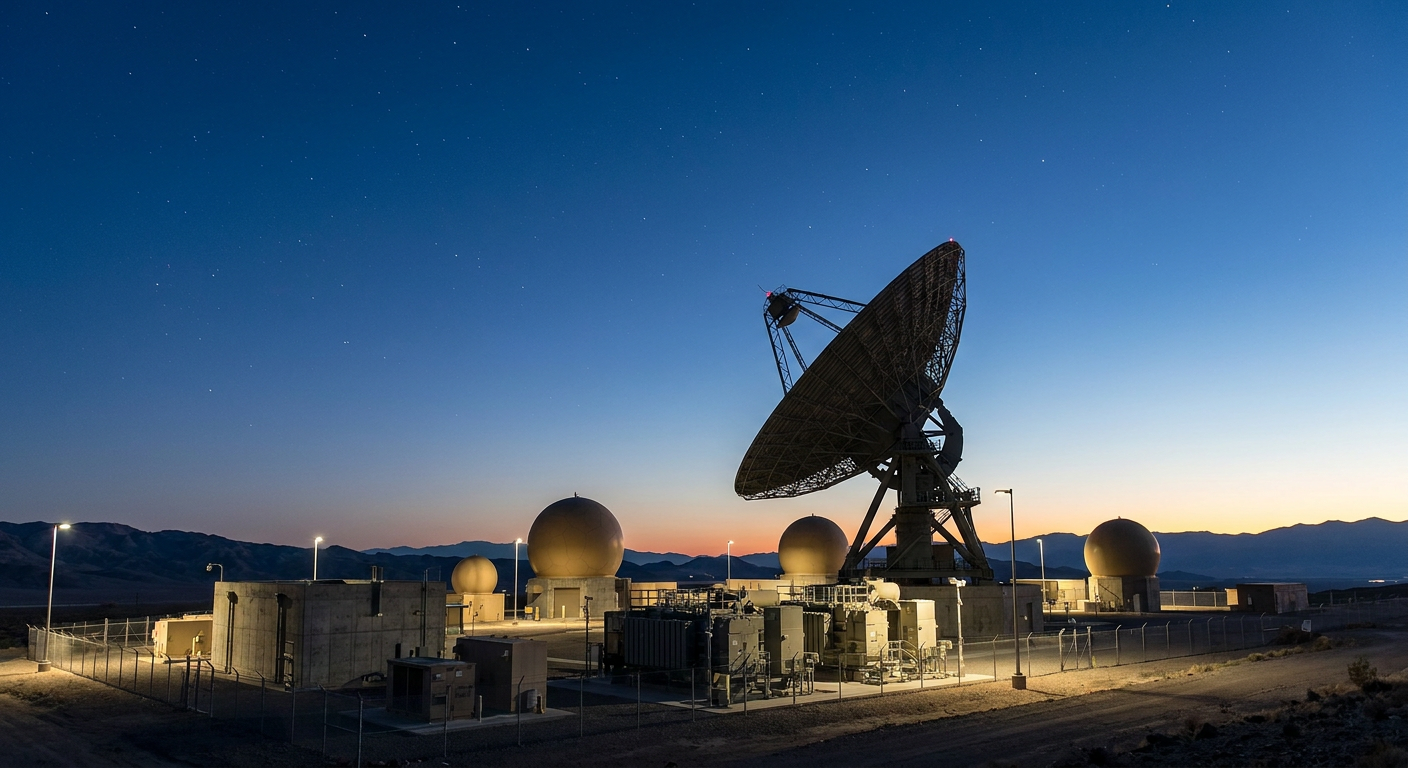
The Air Force Nuclear Weapons Center at Hanscom Air Force Base, Massachusetts, awarded Raytheon Co., an RTX business in Marlborough, Massachusetts, an $8,000,000,000 cost-plus-fixed-fee indefinite-delivery/indefinite-quantity contract for Strategic Communications Terminals that support Nuclear Command, Control, and Communications. The Oct. 13, 2026 announcement identifies the instrument as FA2293-27-D-B001, sets a completion date of Oct. 12, 2036, and records a sole-source acquisition. Work will run in Marlborough and in Largo, Florida. Fiscal 2026 research, development, test and evaluation funds of $800,000 were obligated at award, about 0.01 percent of the maximum ceiling.
That gap between ceiling and cash is how an IDIQ is supposed to look on day one. The more revealing clause is the scope. The vehicle covers terminal developmental modernization, production restart services, and technical studies associated with those terminals. Production restart is not ordinary follow-on sustainment language. It is the Air Force buying the right to reopen, and recast, nuclear-hardened satellite terminal lines that had already carried most of the last generation of fielded units.
The terminal stack Raytheon already owns
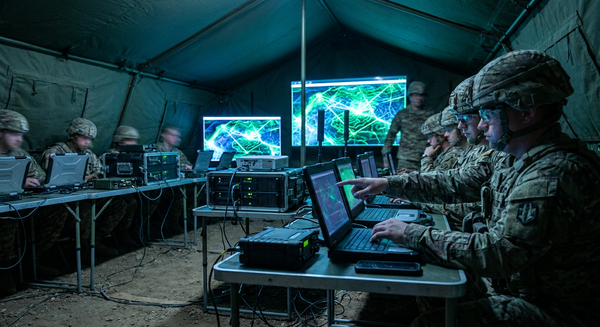
Family of Advanced Beyond Line-of-Sight Terminals, or FAB-T, provides survivable, jam-resistant extremely high frequency and Advanced Extremely High Frequency satellite communications for airborne command posts and strategic bombers. Command Post Terminals were planned at 84 units for the E-4B, the E-6B, and fixed and transportable command posts. Boeing was the original prime contractor until the Air Force shifted CPT production to Raytheon in 2014 following development delays. By the end of 2022, 78 terminals had been delivered, with deliveries exceeding 90 percent.
Force Element Terminals, the airborne variant for the B-52 and RC-135, followed a similar path. Raytheon won a $625 million sole-source production contract for FET in June 2023. On the ground, Global Aircrew Strategic Network Terminal, or Global ASNT, is the alerting network that delivers Emergency Action Messages to bomber, tanker, and missile wings. That program covers 90 fixed and transportable terminals under roughly $600 million in prior contracts.
The protected SATCOM terminal franchise kept growing even before this vehicle. In March 2026, AFNWC increased Raytheon's AEHF terminal IDIQ ceiling by $2.01 billion, lifting total contract value to nearly $2.97 billion. Read together, the CPT transfer, the FET production award, the ASNT ground network, the AEHF ceiling increase, and now an $8.0 billion sole-source IDIQ through 2036 leave Raytheon as the default industrial base for U.S. strategic protected SATCOM terminals.
New airframes and a new constellation
The reason production restart sits in the statement of work is that the rest of the nuclear architecture is being replaced at the same time. Terminals are the last mile of NC3. If the aircraft change and the satellites change, the boxes on the airframe and at the wing have to change with them.
On the space side, the Space Force awarded Boeing a $2.8 billion contract in July 2025 to develop the Evolved Strategic SATCOM space segment that will replace the AEHF constellation. Total ESS lifecycle costs are estimated at $12 billion. Ground and airborne terminals have to talk to that new constellation, which means new terminal baselines, not only spare parts for AEHF-era hardware.
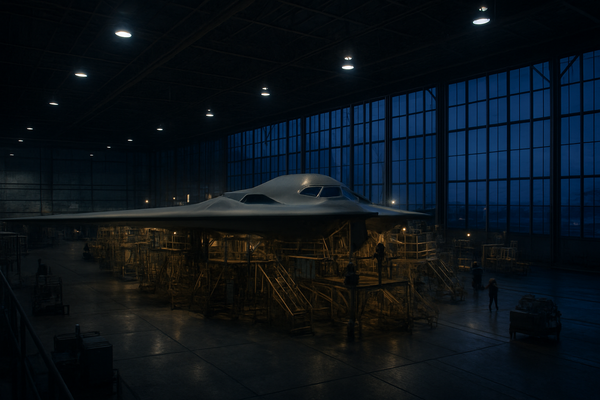
The airborne command posts are changing underneath those terminals. Sierra Nevada Corp. won a $13 billion contract in April 2024 for the Survivable Airborne Operations Center, the replacement for the E-4B. The Navy is developing the E-130J, a modified C-130J-30, to replace the E-6B Mercury in the TACAMO mission. B-52 bombers are taking FET. Each of those airframes needs nuclear-hardened terminals that match both the new aircraft and the coming ESS satellites.
Restart is for the next architecture, not leftover CPT
That is why an $8.0 billion vehicle can call for production restart on terminals that had largely finished deliveries years ago. The CPT line had already pushed past 90 percent of planned units by the end of 2022. The new requirement is not leftover CPT quantity. It is additional, and different, nuclear-hardened terminals for SAOC, the E-130J, updated B-52s, and ESS-compatible ground and airborne sites, plus the developmental modernization and technical studies that come with changing the baseline.
The sole-source decision keeps that work at Raytheon through Oct. 12, 2036. With only $800,000 obligated, the Air Force has not yet shown how much of the $8.0 billion ceiling it will actually order. What it has shown is industrial intent. The same company that absorbed CPT from Boeing, won FET production, built Global ASNT, and just received a multi-billion-dollar AEHF terminal ceiling increase will modernize, study, and, where needed, restart the strategic terminal industrial base for the next decade of NC3 recapitalization. Boeing will build the ESS space segment. Sierra Nevada will build SAOC. The Navy will field the E-130J. The terminals that make those platforms part of the nuclear command chain are Raytheon's problem through 2036.